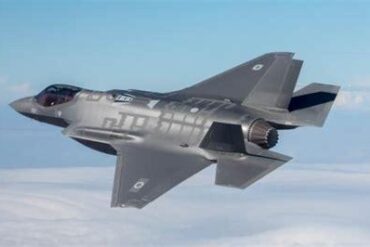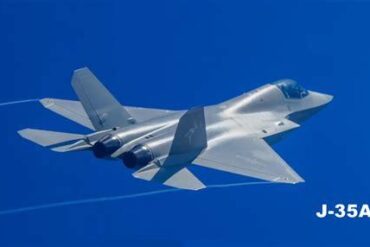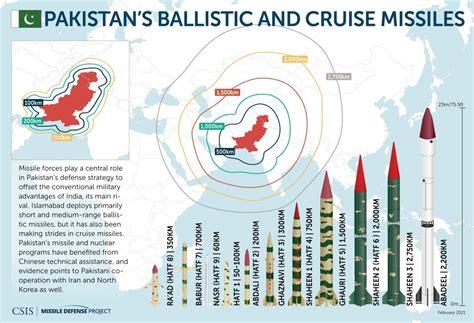
Amid intensifying India-Pakistan tensions, a new dimension has emerged in the subcontinent’s aerial standoff: the Pakistan Air Force (PAF) has reportedly received an express delivery of China’s highly advanced PL-15 air-to-air missiles. This unprecedented move by Beijing not only reaffirms the strength of the Sino-Pak defense alliance but also significantly alters the air power equation in South Asia, posing a credible challenge to India’s Rafale fighter jets armed with European Meteor missiles.
China’s Tactical Shift: The Express Missile Transfer
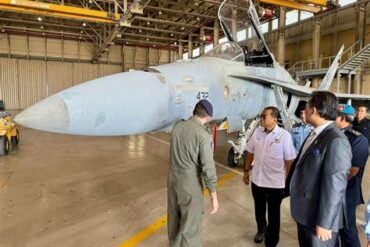
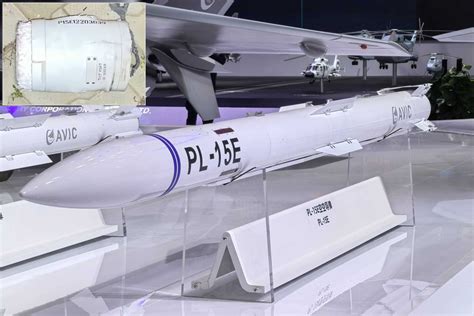
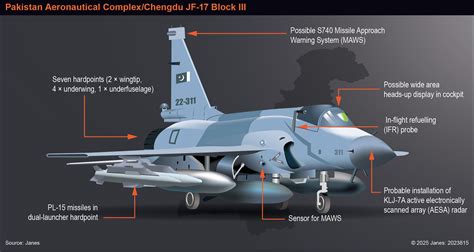
Images recently released by the PAF show the JF-17 Block III fighter jets armed with dual racks of PL-15 Beyond Visual Range (BVR) missiles. These photos, coupled with defense insights from ClashReport, indicate that the PL-15s may not be export-grade PL-15E models but rather standard-issue missiles drawn directly from the People’s Liberation Army Air Force (PLAAF) stockpile.

If verified, this rapid weapons transfer marks a decisive and immediate tactical support from China to Pakistan, circumventing the often drawn-out bureaucratic process typical of international arms deals. It underscores China’s readiness to back Pakistan militarily at pivotal moments and its ability to supply cutting-edge weaponry with minimal delay.
This move comes at a sensitive time, with India-Pakistan relations strained by a series of confrontational developments. The induction of PL-15 missiles, known for their exceptional range and supersonic speeds, gives the PAF a first-strike capability that could threaten Indian aircraft well before they enter combat range.
PL-15: A Missile That Redefines Engagement Boundaries
Developed by China’s Aviation Industry Corporation (AVIC), the PL-15 is among the most advanced air-to-air missiles in the world. Armed with an Active Electronically Scanned Array (AESA) radar and a dual-pulse solid-propellant motor, it delivers a lethal mix of accuracy, speed, and reach. The missile features a two-way datalink for mid-course updates and target adjustments, offering dynamic battlefield flexibility.
The PL-15 boasts an operational range between 200 to 300 kilometers, far exceeding most current air-to-air missiles in service globally. Capable of reaching speeds over Mach 5, the missile allows aircraft to engage adversaries well outside visual range, a decisive advantage in high-altitude, high-speed aerial combat.
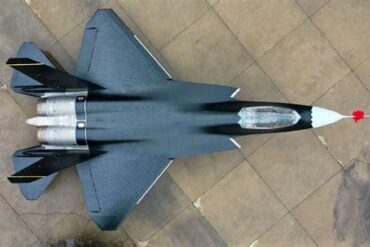
China’s Chengdu J-20 stealth fighter can carry up to six of these missiles internally with folding fins—an enhancement displayed at the recent Zhuhai Air Show. While the export version, the PL-15E, has a range of about 145 km, the standard PL-15’s integration into PAF’s JF-17 Block III platforms extends the operational reach of Pakistani fighters deep into Indian airspace.
Meteor vs PL-15: A High-Stakes Technological Rivalry
India’s acquisition of Dassault Rafale fighters, each capable of carrying MBDA Meteor missiles, was seen as a game-changer in the regional air power balance. The Meteor, powered by a ramjet engine, offers a large no-escape zone and can sustain Mach 4+ speeds throughout its flight envelope. Its real-time two-way data link gives Indian pilots a continuous view of missile status, enhancing operational decision-making.
However, the PL-15’s superior top speed and reported longer range tilt the balance. Although solid-fuel missiles like the PL-15 lose thrust after a high-energy burn, their initial burst speed can outpace ramjet systems in early flight stages, possibly allowing faster intercepts in the critical initial engagement zone.
In contrast, Meteor’s ramjet propulsion provides sustained thrust, keeping the missile fast and agile during its terminal phase—a key consideration during evasive maneuvers by enemy aircraft. While both missiles are highly lethal, the PL-15’s extended range could allow the PAF to target IAF fighters before they can respond, particularly when launched from high altitudes.
Strategic Calculations: India Eyes Russia’s R-37M
Faced with this emerging missile gap, India is reportedly evaluating Russia’s R-37M hypersonic BVR missile, also known as RVV-BD in export configurations. Capable of reaching Mach 6 with an operational range between 300 to 400 km, the R-37M is already in combat use in Ukraine, where Russian MiG-31 aircraft have used them effectively against a variety of aerial targets.
India’s Su-30MKI fleet, which forms the backbone of its air superiority force, is being considered for R-37M integration. At Aero India 2025, Russia not only offered the missile to India but also proposed a joint production initiative, reinforcing India’s emphasis on defense indigenization.
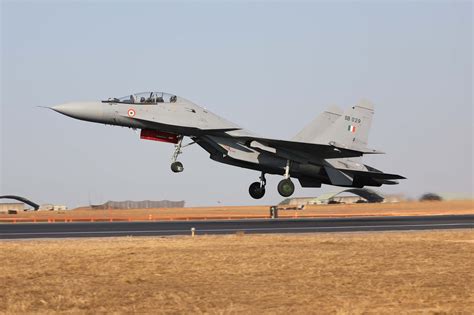
HAL’s recent procurement deal for 12 additional Su-30MKI aircraft and the proposed upgrade of 84 Su-30s to Su-30SM2 standard will potentially allow these fighters to accommodate newer weapon systems, including the R-37M. However, as noted by former IAF Group Captain Ajay Ahlawat, substantial avionics integration would be required, a process that may delay deployment.
Astra Gandhiva: India’s Homegrown Answer
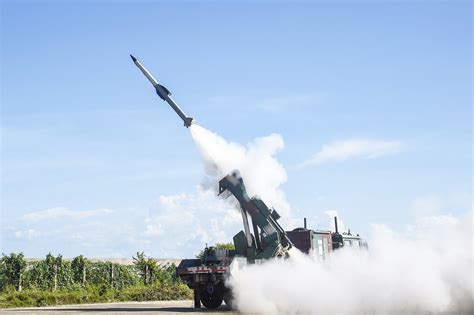
In parallel, India is accelerating development of the Astra Mk-III, now renamed Gandhiva, after the celestial bow of Arjuna. Developed by DRDO, this long-range missile is designed to reach 340 km at high altitude and about 190 km at lower flight levels. Once integrated with India’s Su-30MKI and Tejas platforms, Gandhiva would rival, and potentially surpass, both PL-15 and R-37M capabilities.
The Gandhiva missile program aligns with India’s push for indigenous defense production under the Atmanirbhar Bharat initiative, and could deliver a strategic boost to IAF’s BVR strike capabilities in the coming years.
Revisiting 2019: A Strategic Lesson Still Echoes
The current missile race evokes memories of the 2019 Balakot airstrikes, when an Indian MiG-21 Bison was downed by a Pakistani F-16 using an AIM-120 AMRAAM. That encounter exposed the IAF’s vulnerability due to inadequate BVR capabilities at the time. Since then, India has added Rafales with Meteors and equipped Su-30MKIs with R-77 BVR missiles. Yet, the PL-15’s deployment raises concerns that history could repeat itself unless India closes the range and capability gap.
China-Pakistan Nexus: A Strategic Headache for India
This latest development illustrates the deepening defense entente between China and Pakistan. The ability of Beijing to deliver sensitive, high-performance systems like the PL-15 on short notice demonstrates a strategic convergence aimed at keeping India under sustained pressure. As China continues to leverage its defense-industrial capacity to arm its allies rapidly, the Indo-Pacific balance of power becomes increasingly complex.
From New Delhi’s perspective, countering this evolving threat will require faster integration of advanced missiles, better real-time command and control infrastructure, and stronger surveillance networks to detect and engage long-range missile threats early.
The urgency of modernizing India’s missile arsenal is not a theoretical concern—it is a tactical imperative in the face of an adversary empowered by China’s premier air combat systems.
Conclusion: A New Phase of Aerial Competition
With the deployment of PL-15 missiles to PAF JF-17 Block III fighters, Pakistan has significantly upgraded its ability to counter India’s aerial superiority. Meanwhile, India’s response through the Meteor, the R-37M deal, and the development of Gandhiva represents a multi-pronged approach to reassert deterrence.
As India and Pakistan continue their strategic arms race in the skies, the region teeters on the edge of escalation. Whether this turns into another flashpoint or an uneasy balance of power depends on political will, strategic foresight, and technological edge.
In the age of missiles that outrun sound and target adversaries hundreds of kilometers away, the stakes have never been higher.