The unfolding drama over Greenland has become one of the most striking geopolitical paradoxes of the decade. While Washington openly flirts with the idea of seizing Denmark’s autonomous Arctic territory, it is simultaneously supplying Copenhagen with some of the most lethal American-made weapons in existence. This contradiction has transformed what might once have been dismissed as diplomatic theater into a deeply consequential standoff that touches NATO cohesion, Arctic security, and the future balance of power in the High North.
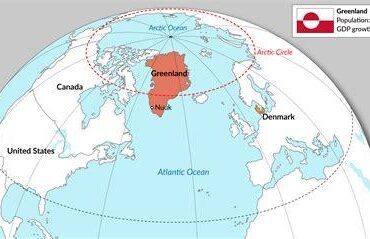
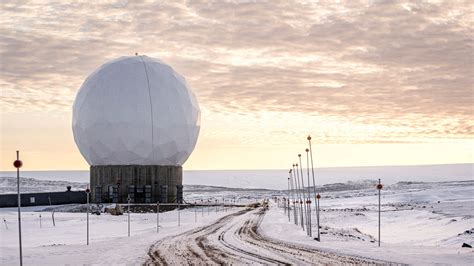
At the heart of the controversy lies Greenland’s strategic value. Vast, ice-covered, and sparsely populated, the island occupies a commanding position between North America and Europe. For decades, it has quietly hosted elements of Western missile defense and early warning infrastructure. Under President Donald Trump’s second administration, however, Greenland has moved from a background strategic asset to a centerpiece of American rhetoric about national survival, global competition, and the looming shadow of Russia and China.
Trump’s insistence that the United States must “own” Greenland, framed as a necessity rather than a choice, has unsettled allies and emboldened critics. His repeated declarations since January 2025 have stripped away diplomatic ambiguity, replacing it with blunt language that suggests coercion rather than cooperation. The irony is impossible to ignore: even as these statements harden Danish resistance, the United States continues to arm Denmark at an accelerated pace, equipping it with weapons theoretically capable of being used against American forces.
This contradiction is not merely rhetorical. It is institutional, contractual, and operational, embedded in billion-dollar arms sales approved by Washington itself. The result is a scenario that feels almost surreal—a superpower arming a smaller ally while openly contemplating action against the ally’s sovereign territory.
Greenland’s Strategic Gravity in a Fracturing Arctic
Greenland’s importance is rooted less in its population than in its geography. Sitting astride transatlantic air and sea routes, the island forms a natural outpost for surveillance, missile tracking, and force projection. As Arctic ice retreats, new shipping lanes and resource prospects have intensified global interest in the region. For Washington, Greenland represents a forward shield; for Moscow and Beijing, it is a potential gap in Western defenses.
Trump’s framing of the issue reflects this logic, but his approach has been uniquely confrontational. By arguing that American control is the only way to prevent Russian or Chinese encroachment, the administration has effectively sidelined Denmark’s sovereignty and Greenland’s own political aspirations. Greenlandic leaders, for their part, have rejected the binary choice presented to them. They have emphasized a desire for self-determination as Greenlanders, not absorption into another power bloc.
This insistence on autonomy has complicated American calculations. Instead of a passive territory waiting to be acquired, Greenland has emerged as a vocal political actor backed by Denmark and supported by European NATO allies. That unity has forced Washington to explore alternative pressure points, from diplomatic persuasion to reported discussions of direct financial incentives aimed at Greenland’s population.
Denmark’s Defiant Posture and Historical Memory
Denmark’s response has been shaped by history as much as by alliance politics. The reported directive to Danish troops to “shoot first, talk later” in the event of an invasion carries heavy symbolic weight. It echoes the trauma of April 1940, when Nazi Germany overran Denmark with little resistance. The message this time is unmistakable: passivity is not an option, even against a vastly superior force.
Yet Denmark’s leaders understand the limits of military resistance. The Danish Armed Forces are professional and technologically advanced, but they are not structured for prolonged high-intensity conflict with a superpower. Any real defense of Greenland would rely on rapid initial resistance, immediate diplomatic escalation, and the mobilization of NATO’s political and military mechanisms.
That reality makes Washington’s ongoing arms approvals even more striking. Rather than restricting advanced systems amid political tension, the United States has continued to deepen Denmark’s dependence on American military technology.
F-35s, Interoperability, and the Shadow of Mirror Conflict
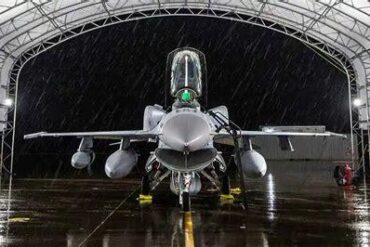
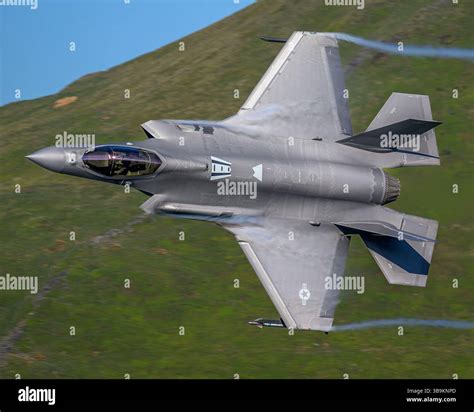
The F-35 Lightning II stands as the most visible symbol of this entanglement. Denmark’s growing fleet—set to reach 43 aircraft—anchors its air combat capability firmly within the American defense ecosystem. These stealth fighters are not merely purchased hardware; they are nodes in a vast network of software, logistics, training, and data-sharing controlled in large part by the United States.
Copenhagen’s consideration of operating F-35s from Greenland adds another layer of complexity. Upgrading Kangerlussuaq airport to support stealth aircraft signals a willingness to militarize the island’s infrastructure more openly. In a hypothetical confrontation, this raises the almost absurd prospect of F-35s facing F-35s, identical platforms flown by pilots trained to similar standards, guided by overlapping doctrines.
Such a scenario underscores how deeply intertwined NATO militaries have become—and how disruptive a political rupture between allies would be.
Missiles, Drones, and the Expanding Arsenal
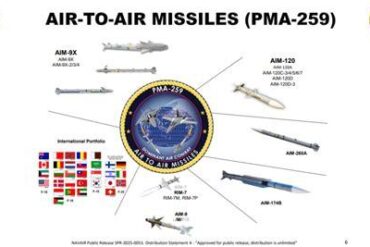
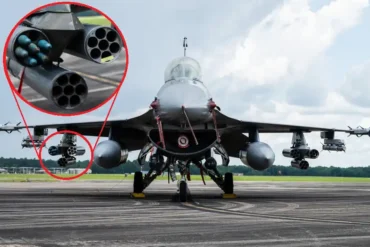
Beyond aircraft, Washington has approved a cascade of missile sales that significantly enhance Denmark’s offensive and defensive reach. The December 2025 approval of AIM-9X Block II Sidewinders and AIM-120C-8 AMRAAM-ERs strengthened Denmark’s air-to-air and ground-based air defense capabilities. Integrated with systems like NASAMS and the Integrated Battle Command System, these weapons extend Denmark’s ability to contest airspace over its territory and surrounding waters.
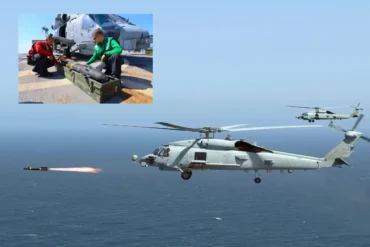
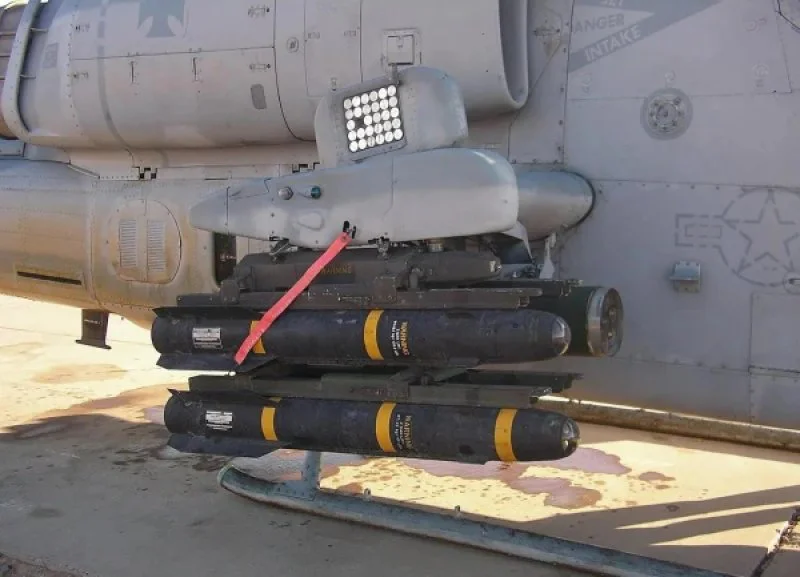
The January 2026 approval of AGM-114R Hellfire missiles marked a particularly stark moment. Valued at $45 million, the sale equips Denmark with precision-guided munitions long associated with American drone warfare and close air support. Whether mounted on MQ-9B SeaGuardian drones or MH-60R Seahawk helicopters, Hellfires provide Denmark with a credible strike option against surface targets.
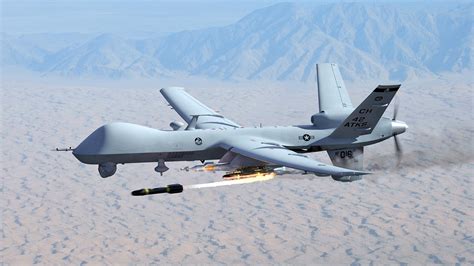
Official statements framed the sale in familiar language about interoperability and shared readiness. Yet the context transforms these words into something sharper. The same missiles designed to enhance cooperation could, in an extreme scenario, be employed in defense against the very power that supplied them.
Maritime Surveillance and the Arctic Chessboard
Denmark’s interest in P-8A Poseidon maritime patrol aircraft further highlights Greenland’s centrality. These platforms are optimized for anti-submarine warfare, surveillance, and intelligence gathering—capabilities increasingly vital as Arctic waters attract more naval activity. Monitoring Greenland’s vast coastline is not merely a Danish concern; it is a NATO imperative.
By approving potential P-8 sales alongside advanced sensors and electronic warfare systems, the United States has effectively reinforced Denmark’s role as a frontline Arctic stakeholder. This investment contradicts any narrative that portrays Denmark as an obstacle to American security interests. Instead, it reveals a deeper truth: Washington benefits from a capable Danish military, even as political rhetoric strains the relationship.
The Ultimate Irony and Its Global Implications
The irony at the center of this saga is not accidental; it is structural. Alliance systems are designed for trust, predictability, and shared threat perceptions. When those assumptions fracture, the machinery of cooperation does not halt overnight. Contracts continue, deliveries proceed, and interoperability deepens—even as political signals point in the opposite direction.
For NATO, the Greenland episode is a stress test. It raises uncomfortable questions about alliance solidarity, the limits of unilateral ambition, and the risks of securitizing territory without the consent of its people. For Denmark, it is a moment of existential calculation: how to assert sovereignty without provoking a confrontation it cannot win alone.
In the end, the spectacle of the United States arming Denmark with “deadly” Hellfire missiles while threatening to seize Greenland encapsulates a broader uncertainty in global politics. Power is no longer exercised solely through force or diplomacy, but through contradictions that expose the fragile balance holding alliances together. Whether this irony becomes a footnote or a turning point will depend on choices yet to be made—by Washington, Copenhagen, and the people of Greenland themselves.