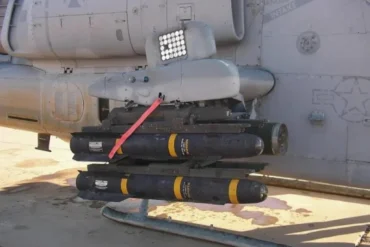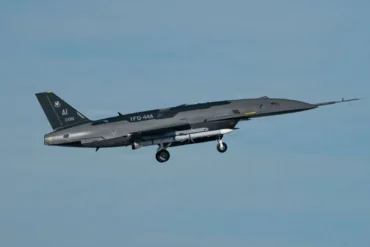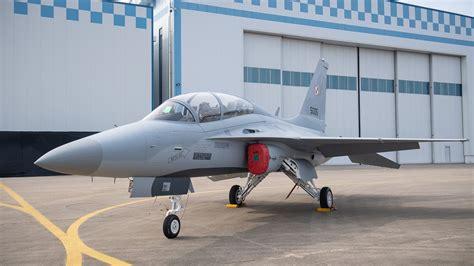
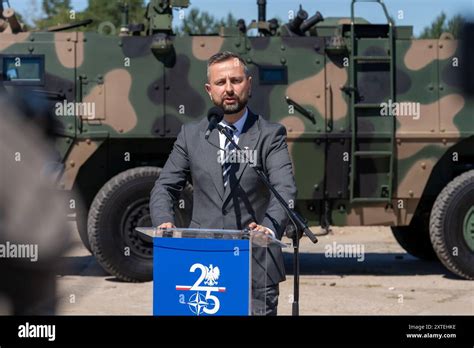
Poland has taken a decisive leap forward in strengthening its air defense posture with the acquisition of AIM-9L Sidewinder missiles for its fleet of FA-50 light combat aircraft. The move, announced by the Polish Ministry of National Defence on June 30, 2025, represents a significant evolution in Poland’s aerial capabilities and its commitment to NATO interoperability. During a formal ceremony held in Warsaw, Deputy Prime Minister and Minister of National Defence Władysław Kosiniak-Kamysz and Secretary of State Paweł Bejda officiated the signing of contracts that will see the integration of these potent missiles onto Poland’s relatively new FA-50 fleet.
The decision addresses prior criticisms regarding the limited armament capabilities of the FA-50, effectively transforming the aircraft from a dual-role trainer/light attacker into a more formidable player in air-to-air engagements. This upgrade not only enhances national airspace defense but also bolsters Poland’s operational role in NATO’s collective security umbrella.
The AIM-9L Sidewinder: A Proven Asset in Air Combat
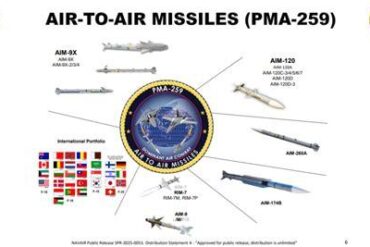
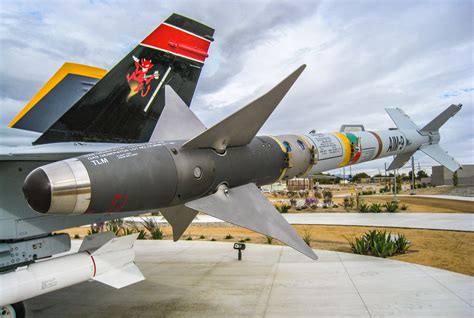
The AIM-9L Sidewinder is a battle-proven, short-range, infrared-guided air-to-air missile originally developed in the United States and manufactured by Raytheon. What sets the AIM-9L apart from earlier variants is its “all-aspect” capability, meaning it can engage enemy aircraft from any direction — including head-on — a dramatic leap in missile combat effectiveness. This is achieved through an advanced infrared seeker head that is resistant to flares and other countermeasures.
With a combat range of approximately 18 kilometers, the AIM-9L features:
- A high-explosive fragmentation warhead
- A solid-propellant rocket motor
- Enhanced electronic counter-countermeasures (ECCM)
- Wide compatibility across NATO aircraft platforms
This missile has long served as a mainstay within Western air forces and is trusted for both its reliability and lethal performance. Its integration into the Polish FA-50 arsenal means the aircraft can now deliver effective air-to-air punch, changing its classification from a light support platform to a front-line interceptor in Poland’s defensive lineup.
FA-50: Compact, Supersonic, and Now Sharpened with Sidewinders
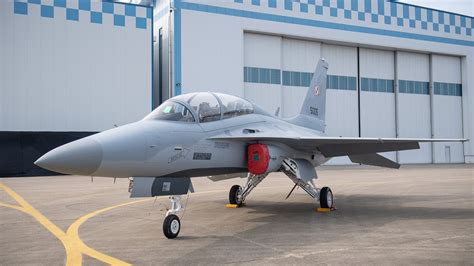
Poland’s current fleet of FA-50 jets stems from a $705 million contract signed with Korea Aerospace Industries (KAI) in 2022, resulting in the delivery of 12 aircraft beginning in July 2023. These jets, based at the 23rd Tactical Air Base in Mińsk Mazowiecki, were procured primarily as advanced trainers and light attack platforms. However, the recent armament upgrade has redefined their utility.
The FA-50 is a supersonic multirole aircraft capable of achieving speeds of up to Mach 1.5 with a range exceeding 1,800 kilometers. Its design borrows heavily from the T-50 Golden Eagle trainer, but incorporates combat-grade enhancements, including:
- A General Electric F404-GE-102 turbofan engine
- Advanced pulse-doppler radar
- Integrated datalink and digital flight control system
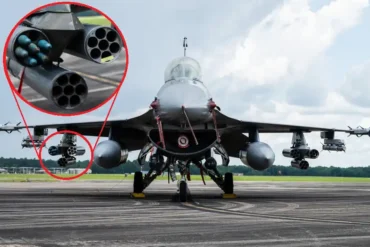
- Seven external hardpoints for weapons and fuel tanks
- A HOTAS-compatible, night-vision-compatible cockpit
These features make the FA-50 a versatile platform for air policing, border defense, and pilot training, all within a cost-effective package. With the addition of the AIM-9L, the FA-50’s combat profile is significantly expanded, especially in air-to-air operations.
Interim Armament: Leasing AIM-9P from South Korea
To prevent operational delays and ensure immediate combat readiness, the Polish Ministry of National Defence has also secured a lease agreement for AIM-9P Sidewinder missiles from South Korea. Although an older variant, the AIM-9P still provides valuable performance characteristics, particularly for training and low-intensity engagements. This tactical decision reflects Poland’s intent to maintain full mission capability even as it transitions to more advanced missile systems.
The AIM-9P retains infrared guidance and is compatible with the FA-50’s launch systems. While not as agile or resistant to countermeasures as the AIM-9L, it provides an essential stopgap solution that complements the nation’s evolving air defense posture.
Looking Ahead: FA-50PL Configuration and Modernization Path
Poland is not stopping at the AIM-9L upgrade. A more comprehensive modernization program is already in motion, aimed at evolving the FA-50 into the FA-50PL configuration by 2027. This future variant will integrate a suite of enhanced electronic systems, including:
- AESA radar with greater range and target discrimination
- Compatibility with AIM-9X and AIM-120 AMRAAM missiles
- Upgraded avionics and threat detection systems
- NATO-standard encrypted communication suites
This pathway ensures that the FA-50 fleet will remain future-proof and fully interoperable with Western combat doctrine, allowing seamless integration with F-16 and F-35 squadrons during joint operations. According to MoND projections, full operational capability for the FA-50PL is expected by 2028.
Strategic Implications: A Multilayered Approach to Deterrence
Poland’s decision to enhance the FA-50 fleet underscores its strategic orientation toward a multilayered air defense model, combining high-end systems with flexible, fast-response platforms. The Polish Air Force’s structure is being deliberately shaped to offer:
- High-end deterrence via the F-35 Lightning II and Patriot missile systems
- Tactical versatility with F-16s and upgraded FA-50s
- Cost-effective readiness through layered air policing and rapid training pipelines
This architecture enables Poland to respond effectively to both conventional and hybrid threats, a necessity given the increasing volatility along NATO’s eastern flank. It also demonstrates Poland’s intent to reduce reliance on legacy Soviet-era platforms and deepen its alignment with U.S. and NATO defense ecosystems.
From Trainer to Combatant: The Expanding Role of the FA-50
Initially conceived as an advanced jet trainer, the FA-50 has evolved into a true multirole combat aircraft. Within the Polish Air Force, its responsibilities now encompass:
- Air policing missions, maintaining the sovereignty of Polish airspace
- Pilot transition training, bridging the gap between ground simulators and high-end fighters like the F-16
- Close air support (CAS) roles, aiding ground forces in asymmetric warfare
- Interception and deterrence, especially along sensitive border zones
With the AIM-9L in its arsenal, the FA-50’s deterrence value has multiplied, giving Polish commanders greater flexibility in both defensive and offensive mission planning. Its smaller radar signature, rapid deployment capabilities, and affordability further cement its role as a keystone in Poland’s 21st-century air strategy.
Conclusion: A Calculated Leap in Air Defense Evolution
The integration of AIM-9L Sidewinder missiles with the Polish FA-50 fleet is not a mere technical upgrade — it is a calculated leap toward strategic modernization. It reflects Poland’s determination to remain agile, capable, and interoperable in an increasingly unpredictable European security environment. Backed by consistent investment and visionary leadership, this move affirms Poland’s role as one of NATO’s most proactive eastern-flank members.
As regional tensions simmer and the need for rapid-response capabilities grows, Poland’s air force transformation — built around platforms like the FA-50 and armaments like the AIM-9L — will likely be seen as a model for middle-power nations balancing cost, capability, and coalition readiness in the modern battlespace.