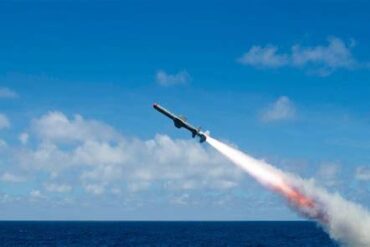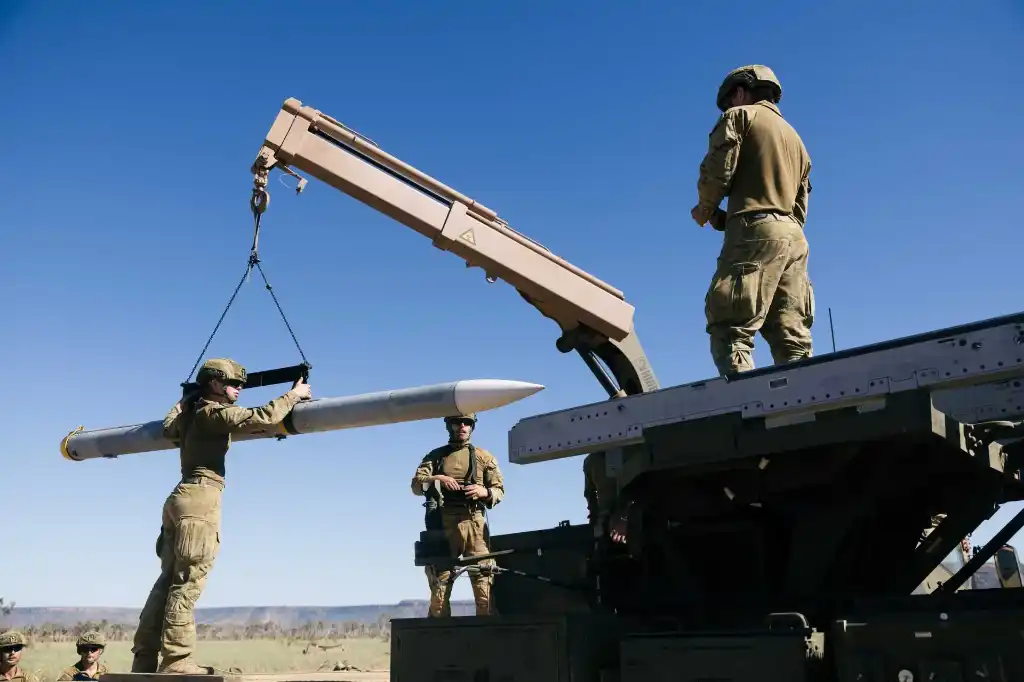
Tensions across the Middle East have intensified sharply as missile and drone attacks attributed to Iran continue to ripple across the region. In response to this growing security challenge, Australia has announced the transfer of AIM-120 Advanced Medium Range Air-to-Air Missiles (AMRAAM) to the United Arab Emirates, reinforcing the Gulf state’s ability to intercept airborne threats. The move represents a significant defensive contribution by Canberra amid a conflict environment where unmanned systems and long-range strike capabilities are reshaping the dynamics of modern warfare.
The decision, revealed on March 10, 2026 by Australian Prime Minister Anthony Albanese, comes as Iranian retaliatory strikes and proxy attacks have expanded across multiple countries. According to regional defense reports, the UAE has already intercepted more than 1,500 rockets and drones since the beginning of the latest escalation. The volume and persistence of these attacks highlight the scale of the threat faced by Gulf air defense networks.
Australia’s assistance is framed explicitly as defensive military support, not an entry into offensive operations. Canberra has emphasized that its primary concern is the safety of Australian nationals living and working throughout the Middle East, a population estimated at around 115,000 people, including roughly 24,000 residents in the UAE alone. Protecting civilian communities and stabilizing airspace over critical economic hubs has become a central element of allied cooperation in the region.
Strategic Air Defense Reinforcement for the Gulf
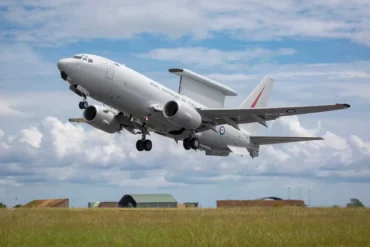
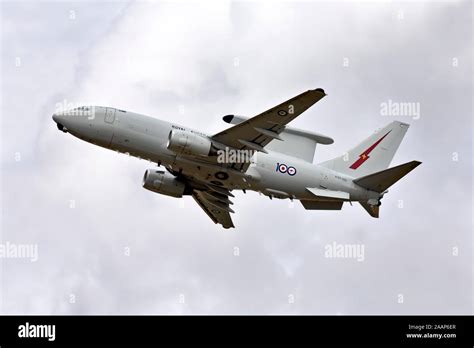
The missile transfer is only one element of a broader Australian contribution to regional security. Alongside the delivery of AMRAAM missiles, the Royal Australian Air Force (RAAF) is deploying an E-7A Wedgetail airborne early warning and control aircraft. This advanced surveillance platform will monitor airspace across the Gulf and provide critical situational awareness to allied air forces.
The Wedgetail aircraft serves as a flying command center. Equipped with a powerful multi-role electronically scanned array radar, it can detect aircraft, drones, and missiles hundreds of kilometers away while coordinating defensive responses between fighters and ground-based air defense systems. In a region increasingly saturated with unmanned threats, such early warning capability significantly improves interception success rates.
The Australian deployment will initially last four weeks, during which Australian Defence Force personnel will support collective self-defense operations conducted by regional partners. Officials in Canberra have carefully clarified that this mission will focus exclusively on airspace monitoring and defensive coordination, avoiding direct participation in strikes against Iranian territory.
For the UAE, the reinforcement arrives at a moment when drone warfare is evolving rapidly. Iranian-developed loitering munitions and long-range unmanned systems have demonstrated the ability to penetrate traditional air defense networks by attacking in large, coordinated swarms.
AIM-120 AMRAAM: The Backbone of Western Air Combat
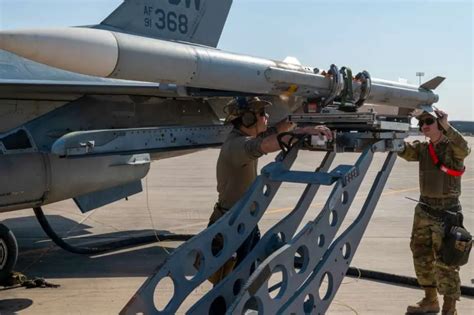
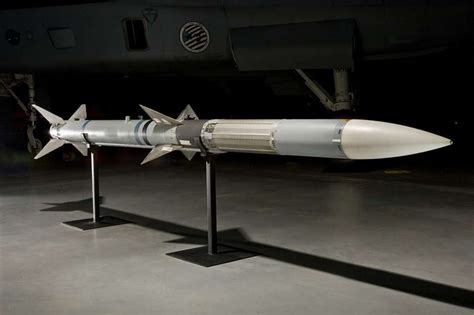
The AIM-120 AMRAAM is one of the most widely deployed air-to-air missiles in the world. Developed by the United States and introduced into operational service in September 1991, the weapon replaced the earlier AIM-7 Sparrow as the primary beyond-visual-range missile used by Western fighter aircraft.
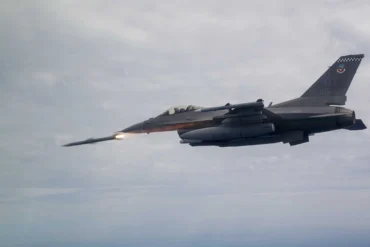
Its defining advantage lies in its active radar homing system, which allows the missile to guide itself independently during the final phase of flight. Once fired, the launching aircraft can disengage or engage other targets instead of continuously illuminating the target with radar. This capability is commonly referred to as “fire-and-forget.”
AMRAAM’s guidance sequence unfolds in several stages. Before launch, the missile receives target information—such as speed, heading, and location—from the fighter’s radar or other sensors. During the initial portion of the flight, the missile follows a predicted intercept path using an inertial navigation system, a guidance method that relies on internal sensors to calculate its position and trajectory.
As the missile approaches the target area, its onboard radar seeker activates, scanning the surrounding airspace until it locks onto the designated target. Once locked, the missile autonomously tracks the aircraft or drone until detonation through either a proximity fuse or direct impact.
This combination of autonomous targeting, high speed, and mid-course data link updates allows modern fighters to engage multiple targets simultaneously, a crucial advantage in battles involving drone swarms or coordinated missile attacks.
Technical Capabilities and Performance
Several generations of the AMRAAM missile are currently in service, and Australia operates multiple variants simultaneously. These range from the older AIM-120B to more advanced versions such as the AIM-120C-5, AIM-120C-7, and AIM-120C-8, culminating in the newest AIM-120D-3 configuration.
The AIM-120C family measures approximately 3.65 meters in length and weighs around 161.5 kilograms. Its slender cylindrical body, with a diameter of 178 millimeters, houses a solid-fuel rocket motor, advanced guidance electronics, and a 20-kilogram high-explosive blast-fragmentation warhead designed to destroy aircraft or drones through a lethal fragmentation pattern.
Speed is another defining feature. The missile can reach Mach 4, roughly 1,372 meters per second, allowing it to rapidly close the distance to maneuvering targets. Control surfaces positioned at the front and rear of the missile provide exceptional agility, enabling maneuver loads approaching 40 times the force of gravity.
Range varies significantly between variants. Early models such as the AIM-120A and AIM-120B offered operational engagement distances of around 75 kilometers, while the AIM-120C series expanded that envelope to roughly 90 kilometers. The latest AIM-120D versions extend the range dramatically, with maximum engagement distances estimated between 130 and 160 kilometers depending on launch conditions.
Electronic Warfare Resistance and Counter-Countermeasures
Modern aerial combat increasingly involves intense electronic warfare, where aircraft attempt to disrupt incoming missiles using radar jamming. The AMRAAM family incorporates several sophisticated features designed to counter such tactics.
One of the most notable is home-on-jamming capability. When an enemy aircraft attempts to blind the missile’s radar seeker by broadcasting powerful electronic interference, the missile can detect the source of the jamming signal and guide itself toward the emitter. In essence, the act of jamming becomes a beacon guiding the weapon directly to the target.
Another important feature is the two-way data link introduced in later variants. This communication channel allows the missile to receive updated targeting information from the launching aircraft or other networked sensors during flight. In complex combat scenarios involving evasive maneuvers or shifting targets, these updates significantly improve the probability of interception.
These upgrades reflect a broader modernization architecture known as Form-Fit-Function Refresh, which replaces outdated electronics with modular digital components. This approach extends the missile’s service life and allows future software improvements without redesigning the entire weapon.
Compatibility with Modern Fighter Fleets
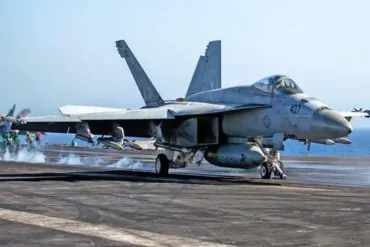
The global popularity of the AMRAAM stems partly from its extensive integration across a wide range of aircraft. The missile is compatible with fighters including the F-16 Fighting Falcon, F-15 Eagle, F/A-18 Hornet, Eurofighter Typhoon, and F-35 Lightning II. It is also used in ground-based air defense systems such as NASAMS, where it serves as a surface-launched interceptor against aircraft and drones.
Australia’s own fighter fleet—comprising F-35A Lightning II stealth fighters, F/A-18F Super Hornets, and EA-18G Growler electronic attack aircraft—relies heavily on the AMRAAM family. The newest AIM-120D-3 variant ordered by Canberra represents a hardware refresh designed specifically to support these advanced platforms.
By transferring compatible missiles to the UAE, Australia ensures that existing Emirati fighter jets can immediately deploy the weapons without requiring extensive modifications or new training programs.
UAE Air Force and the Growing Drone Threat
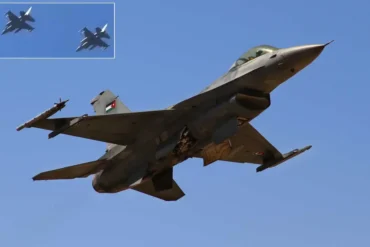
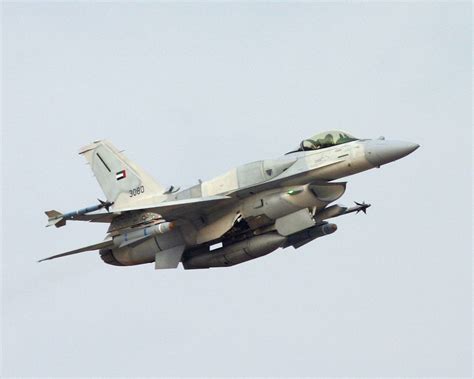
The United Arab Emirates Air Force operates a technologically advanced fleet capable of integrating AMRAAM missiles. Its primary combat aircraft include the F-16 Block 60 Desert Falcon and the Mirage 2000-9E, both of which are equipped with sophisticated radar systems and beyond-visual-range combat capabilities.
Across its network of air bases, including the strategic Al Dhafra Air Base, the UAE maintains a force of approximately 560 aircraft supported by around 4,000 personnel. In addition to fighters, the fleet includes surveillance platforms, aerial refueling tankers, transport aircraft, and rotary-wing assets.
The transfer of AMRAAM missiles enhances the air-to-air interception capacity of these fighters at a time when the region faces sustained drone and missile attacks. Iranian and proxy forces have increasingly relied on loitering munitions and long-range drones, which can travel hundreds of kilometers before striking infrastructure, military installations, or urban centers.
By equipping Emirati fighters with additional beyond-visual-range interception capability, the Australian contribution strengthens the layered defense system protecting the Gulf’s airspace. In modern warfare, where inexpensive drones can threaten strategic targets, the ability to detect and destroy incoming threats far from their intended targets has become a decisive element of national security.