The F/A-18 Super Hornet and the AIM-120 AMRAAM (Advanced Medium-Range Air-to-Air Missile) represent a formidable combination in modern aerial warfare. Together, they provide unmatched versatility and lethality for the U.S. Navy and allied air forces. This article explores the integration, capabilities, and operational uses of the F/A-18 and AIM-120 AMRAAM, their tactical advantages, and the continuous improvements in their respective technologies.
F/A-18 and AIM-120 AMRAAM Weapon Configuration
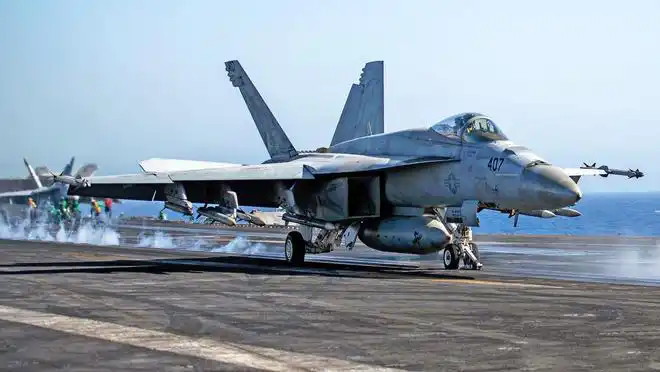
The F/A-18E/F Super Hornet, often referred to as the Killer Hornet, is a multirole fighter jet primarily designed for carrier operations. When paired with the AIM-120 AMRAAM, it achieves a powerful combination of long-range precision strikes and close-range dogfighting capabilities. The typical weapons configuration for the Super Hornet includes up to five AIM-120 AMRAAMs and four AIM-9X Sidewinder missiles. This setup maximizes the aircraft’s capability to engage a wide range of targets across various combat environments.
Maximum Payload Capacity
While the standard configuration is highly effective, the F/A-18E/F can theoretically carry up to 12 AIM-120 AMRAAMs and 2 AIM-9X Sidewinders. However, such a heavy load is rarely used in operational scenarios, primarily due to the aircraft’s need for optimal maneuverability, range, and fuel efficiency. Additionally, the weight of such a payload can hinder the aircraft’s agility and performance, making this configuration impractical for sustained combat operations.
AIM-120 AMRAAM Performance Characteristics
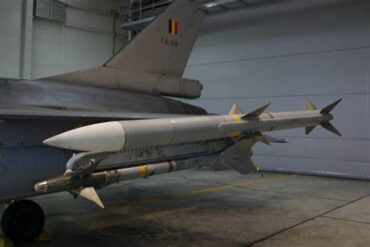
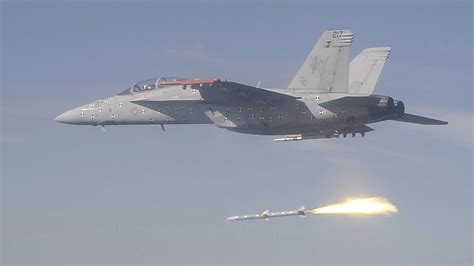
The AIM-120 AMRAAM has significantly enhanced the air-to-air combat capabilities of the F/A-18 and other fighter jets. The missile’s ability to engage targets beyond visual range (BVR) has revolutionized modern aerial warfare. Here are the key features of the AIM-120:
Range and Guidance
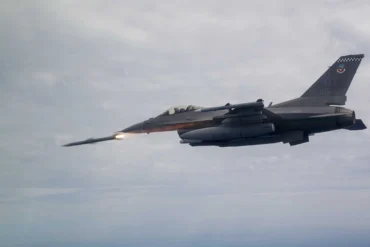
The AIM-120C-5 variant has a range exceeding 110 kilometers, making it one of the longest-range air-to-air missiles in the world. Its active radar homing guidance system ensures it can engage targets at extended distances without the need for the launching aircraft to maintain radar lock after missile launch. This capability, known as fire-and-forget, increases the survivability of the launching aircraft by allowing it to break away from the target after missile launch and avoid enemy counterattacks.
In addition to its active radar homing, the missile uses inertial navigation during its midcourse flight, further enhancing accuracy and reducing the likelihood of interception by enemy electronic countermeasures.
Operational History
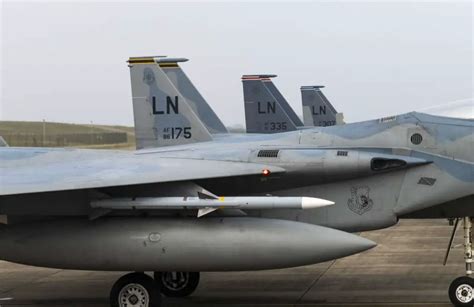
Since its introduction in 1991, the AIM-120 AMRAAM has become a staple in the U.S. military’s arsenal, with significant successes in combat. It has been credited with several kills in conflicts such as the Iraq War and the Yugoslav Wars, including the downing of MiG-25 aircraft. Its effectiveness in these environments has led to its adoption by multiple air forces worldwide.
Upgrades and Evolution
The latest version, the AIM-120D, features an extended range (with specific figures classified) and improved resistance to electronic warfare. It also incorporates a bidirectional data link that allows for in-flight updates, providing a significant advantage when engaging highly maneuverable or low-observable targets like stealth aircraft.
F/A-18’s Tactical Role and Upgrades
The F/A-18 Super Hornet is a true multirole fighter capable of switching between air-to-air and air-to-ground operations at the push of a button. This flexibility makes it a critical asset in carrier strike groups and allows it to dominate in both offensive and defensive operations.
Countering Emerging Threats
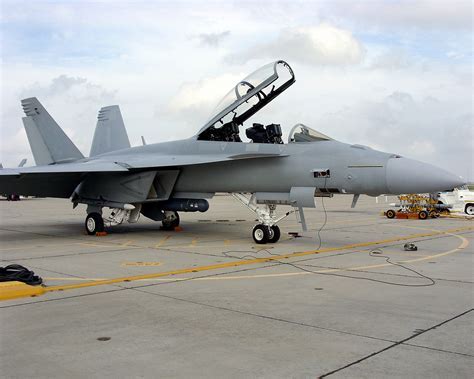
As threats evolve, the F/A-18 continues to adapt. In particular, the increasing presence of unmanned aerial vehicles (UAVs) and stealth aircraft requires sophisticated detection and engagement strategies. The Super Hornet’s integration with advanced sensor systems, such as the AN/ASQ-228 ATFLIR targeting pod, enhances its ability to detect and target low-observable aircraft and UAVs.
In the near future, F/A-18s will likely be equipped with Infrared Search and Track (IRST) systems on external fuel tanks, providing enhanced situational awareness in environments where radar emissions must be minimized to avoid detection by enemy radar-guided missiles.
New Weapons Systems
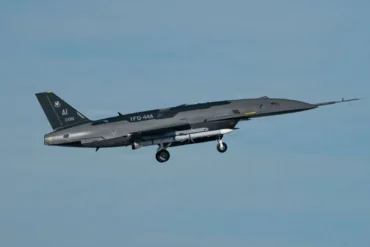
Beyond the AIM-120 AMRAAM, the F/A-18 can carry AIM-174B missiles (based on the SM-6 surface-to-air missile), which can strike targets at ranges exceeding 300 kilometers. These long-range interceptors complement the AMRAAM, allowing the Super Hornet to engage targets beyond the range of traditional air-to-air missiles.
Real-World Deployments and Controversies
The F/A-18E/F Super Hornet, equipped with the AIM-120 AMRAAM, has demonstrated its capabilities in numerous high-profile military operations. A notable example occurred in 2024, when Super Hornets launched from the USS Eisenhower aircraft carrier to intercept drones and missiles fired by Houthi militants in Yemen. This operation showcased the Super Hornet’s ability to provide regional defense and protect naval assets in high-threat environments.
U.S.-China Comparisons
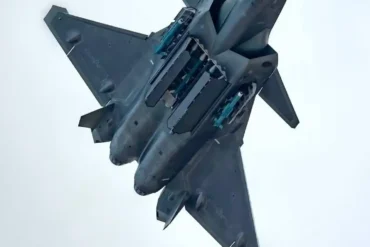
In recent years, there has been controversy regarding the effectiveness of the F/A-18 Super Hornet against newer fifth-generation aircraft like the Chinese J-20. Some analysts claim that the F/A-18 could potentially engage Chinese fighter jets at ranges of up to 200 kilometers using upgraded AMRAAMs, but its reliance on older radar systems and stealth characteristics limits its effectiveness against stealth fighters like the J-20. Critics argue that the F/A-18 is at a significant disadvantage in terms of low observability and advanced avionics compared to modern fourth and fifth-generation platforms.
Historical Context and Future Outlook
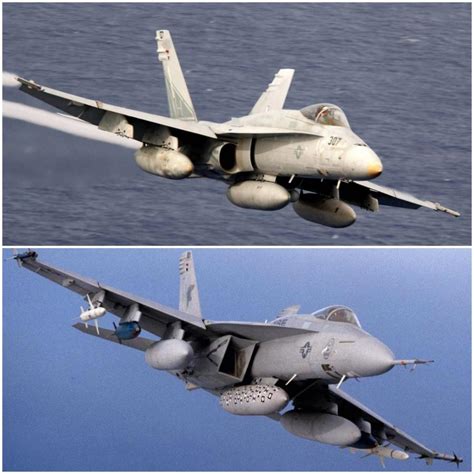
The F/A-18 has served the U.S. Navy since its introduction in 1983 and has undergone numerous upgrades to maintain relevance in modern combat. The transition from the original A/B models to the advanced E/F Super Hornet has ensured that the aircraft continues to meet the increasing demands of modern air combat.
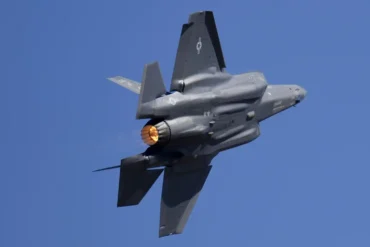
As the F-35C stealth fighter enters service, the F/A-18 will gradually be phased out. However, its reliability, cost-effectiveness, and combat proven capabilities will ensure that it remains a valuable asset for the foreseeable future. The integration of new weapons systems, including the AIM-120D and AIM-174B, ensures that the Super Hornet remains a formidable adversary even as next-generation aircraft become more prevalent.
Conclusion
The F/A-18 Super Hornet, paired with the AIM-120 AMRAAM, forms one of the most powerful air combat platforms in the world. Its versatility, range, and integration of cutting-edge technologies have made it indispensable to modern air forces. While the future of air combat is shifting toward newer, stealthier platforms, the Super Hornet‘s ability to evolve with technological advancements ensures that it will continue to play a vital role in global military operations.
FAQ
1. What is the maximum range of the AIM-120 AMRAAM missile?
The AIM-120 AMRAAM has a maximum range of over 110 kilometers, depending on the specific variant used, such as the AIM-120C-5.
2. How does the F/A-18 Super Hornet compare to newer stealth fighters?
While the F/A-18 Super Hornet is highly capable, it is less stealthy and has older radar systems compared to newer fifth-generation fighters like the F-35 or Chinese J-20. However, its weapons systems, like the AIM-120D, enhance its effectiveness in certain combat scenarios.
3. How many AIM-120 AMRAAMs can the F/A-18 Super Hornet carry?
The F/A-18E/F Super Hornet can typically carry five AIM-120 AMRAAMs as part of its standard configuration, though it has the capacity to carry up to 12 in theoretical configurations, depending on mission requirements.