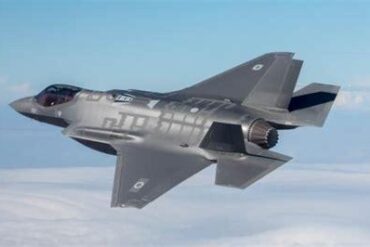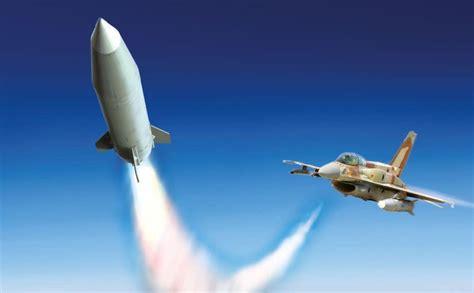
The Indian Air Force (IAF) is preparing for a significant leap in its long-range strike capabilities by considering the induction of the AIR LORA missile, a cutting-edge air-launched ballistic missile developed by Israel Aerospace Industries (IAI). The development marks a strategic pivot in India’s aerial doctrine following the success of the Rampage missile during Operation Sindoor, which saw precision strikes on eleven Pakistani air bases.
A Strategic Pivot Post-Operation Sindoor
The efficacy of the Rampage missile, which boasts a range of 250 kilometers, has prompted the IAF to seek even more formidable long-range options. Rampage proved instrumental during Operation Sindoor, offering high-precision, stand-off strike capability from outside the range of hostile air defences. However, the operational experience has revealed the need for a missile with deeper reach, enhanced survivability, and mid-flight flexibility.
Enter the AIR LORA, a 400-kilometre-range, supersonic, fire-and-forget missile designed to devastate high-value and heavily defended enemy targets.
AIR LORA: Supersonic Reach with Surgical Precision
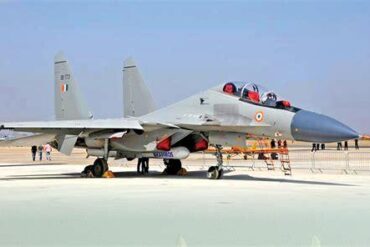
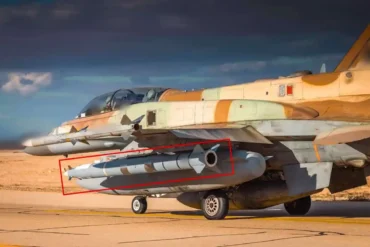
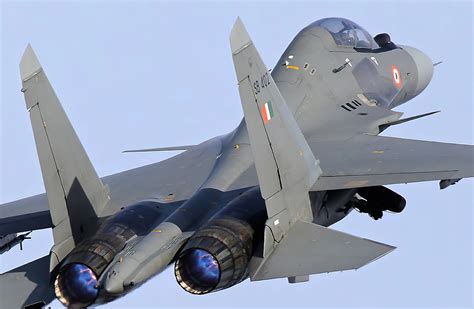
Part of the LORA missile family, the AIR LORA (Air-Launched Long Range Artillery) is engineered for precision strike missions against critical military infrastructure. Designed for rapid deployment from multi-role fighters such as the Sukhoi Su-30MKI, the missile offers a lethal blend of supersonic speed, pinpoint accuracy, and deep-strike flexibility. With a launch weight of 1,600 kilograms, the missile is capable of hitting targets at 400 km with a Circular Error Probable (CEP) of less than 10 meters, an accuracy benchmark rarely achieved in the ballistic missile category.
This level of precision ensures minimal collateral damage even when neutralising hardened targets like airbases, command centres, naval platforms, and critical logistics hubs.
Fire-and-Forget Meets Real-Time Adaptability
One of the most striking attributes of the AIR LORA is its fire-and-forget architecture, which allows the launching aircraft to disengage immediately after missile release, preserving stealth and pilot safety. Unlike traditional ballistic systems, the AIR LORA comes with in-flight target update capability, empowering the missile to adjust its trajectory and reassign its strike coordinates mid-course.
This real-time adaptability makes AIR LORA uniquely suited for dynamic war scenarios, where mobile threats or shifting battlefield conditions require on-the-fly decisions. According to IAI, this feature “transforms the missile into an intelligent projectile capable of independent mission success.”
Engineered for Survivability in Contested Skies
In a world where electronic warfare and anti-access/area denial (A2/AD) strategies dominate aerial theatres, survivability is non-negotiable. AIR LORA incorporates a GPS/INS guidance system enhanced with anti-jamming features, safeguarding it against EW systems that may attempt to scramble satellite signals. Its seekerless design and high-speed, steep-angle dive attack profiles further reduce the probability of interception.
This design philosophy ensures that AIR LORA retains full operational capability even in environments bristling with integrated air defence systems (IADS).
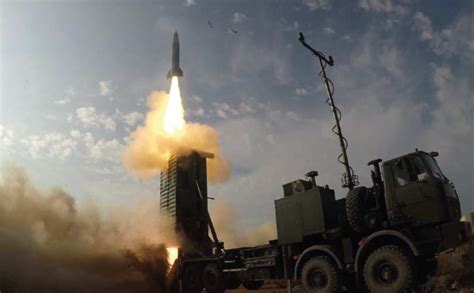
All-Weather, All-Mission Capability
The missile’s rugged construction and guidance system enable it to function across extreme climates and weather patterns. All-weather operability ensures it remains effective under cloud cover, during night operations, or amidst sandstorms—conditions often exploited by adversaries to hide or reposition.
Additionally, its modular warhead options allow tailored applications depending on mission parameters. From blast-fragmentation to deep-penetration payloads, AIR LORA supports both tactical interdiction and strategic disruption, making it a versatile force multiplier for both first-strike and retaliatory missions.
Seamless Integration with Indian Fighter Fleet
One of the most compelling reasons the IAF is evaluating AIR LORA is its cross-platform compatibility. The missile is designed to be mounted on a range of Eastern and Western-origin aircraft, offering seamless deployment from India’s existing fighter platforms like the Su-30MKI, Mirage 2000, and potentially even Tejas Mk1A in the future.
Its standalone functionality means minimal modifications are required to operationalize it, reducing training overheads and avoiding costly platform-specific integrations.
Lessons from Rampage and the Road Ahead
India’s embrace of indigenous and foreign missile technologies has rapidly evolved, especially after the success of munitions like the Rampage, which demonstrated the strategic advantage of stand-off strike weapons during Operation Sindoor. However, the need to maintain superiority in a regional arms race—especially in light of China’s long-range Rocket Force and Pakistan’s expanding cruise missile arsenal—has made next-generation systems like AIR LORA imperative.
Rampage missiles are limited by their range and lack of dynamic targeting capabilities. AIR LORA, with its additional 150 km reach and real-time re-targeting, effectively bridges this capability gap, ensuring that India can strike from deeper within its own airspace while retaining strategic surprise and survivability.
Geopolitical and Industrial Significance
The acquisition of AIR LORA, if finalized, would mark another milestone in the deepening India-Israel defence partnership, which already encompasses projects like the Barak missile system, Phalcon AWACS, and Heron UAVs. This partnership benefits from the Make in India initiative, with potential for local assembly, transfer of technology (ToT), and long-term sustainment contracts.
In strategic terms, integrating AIR LORA into India’s missile portfolio would signal to adversaries that India is not only modernising its force structure but also prioritising rapid, decisive, and surgically precise strike options.
Operational Scenarios and Tactical Impact
In a hypothetical future confrontation, AIR LORA could be the first strike tool used to neutralise key enemy installations like long-range radar arrays, air defence clusters, ammunition depots, and naval command nodes. By disabling such assets early in a conflict, India would achieve air dominance more swiftly, giving its strike aircraft and naval assets freedom of movement and operational initiative.
Moreover, with its ability to be launched from relatively secure altitudes and distances, AIR LORA ensures that Indian aircrews face minimal exposure to enemy counter-measures—a crucial advantage in a theatre where speed, survivability, and strike precision dictate victory.
The Future of Indian Aerial Warfare
The IAF’s potential procurement of AIR LORA is a strategic response to a rapidly evolving threat matrix. In an era where multi-domain operations require close coordination between air, space, and cyber elements, missiles like AIR LORA represent the future of stand-off warfare—blending range, speed, autonomy, and adaptability.
As India modernises its offensive doctrines with tools like BrahMos-A, SCALP, and the indigenous Rudram series, the introduction of AIR LORA will not only plug existing capability gaps but also provide an asymmetric edge in a high-stakes regional conflict.
While the final decision is yet to be confirmed, the momentum is clear: India is preparing for the next generation of aerial combat, where every second counts and every strike must be lethal, accurate, and game-changing.