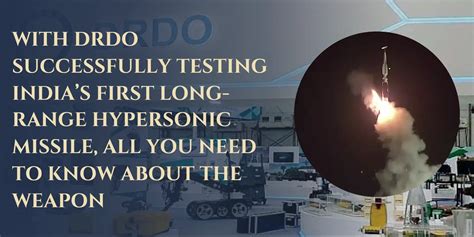
India’s strategic defense posture entered a new era in July 2025 with the reported successful testing of a next-generation hypersonic cruise missile under the ambitious and classified Project Vishnu. Spearheaded by the Defence Research and Development Organisation (DRDO), this milestone elevates India into an elite group of nations—alongside the United States, Russia, and China—capable of developing and testing operational hypersonic technologies.
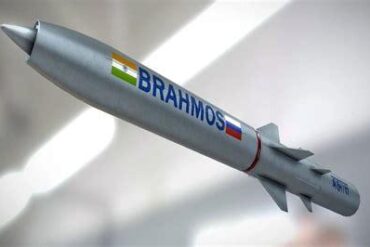
The new missile, known internally as the Extended Trajectory–Long Duration Hypersonic Cruise Missile (ET-LDHCM), is engineered to achieve speeds of Mach 8 to Mach 10, significantly outpacing the world-renowned BrahMos cruise missile, which tops out at Mach 3.
Project Vishnu: India’s Hypersonic Leap Forward
Named after the Hindu deity Vishnu, a symbol of preservation and supreme power, Project Vishnu is a fitting representation of India’s aspiration to develop a domestically manufactured, hypersonic weapons platform that can ensure rapid, precise, and unstoppable strike capabilities.
This program reflects not just an evolutionary improvement over previous efforts like the Shaurya missile or the Hypersonic Technology Demonstrator Vehicle (HSTDV), but rather a quantum leap. Project Vishnu signifies the convergence of decades of indigenous research in aerodynamics, advanced propulsion, and materials science into one cutting-edge weapon system.
Inside the ET-LDHCM: Speed, Stealth, and Strategic Reach
The ET-LDHCM represents a triad of extreme velocity, low radar visibility, and platform versatility, creating a missile that is both fast and nearly impossible to intercept. It is propelled by an indigenous scramjet engine—an advanced air-breathing propulsion system that uses atmospheric oxygen rather than carrying its own oxidizer. This innovation drastically reduces the missile’s weight while boosting range and fuel efficiency.
Unlike traditional cruise or ballistic missiles, the ET-LDHCM maintains sustained flight at hypersonic speeds while navigating at low altitudes, which makes detection and interception extremely difficult. The plasma stealth effect, where the ionized air formed around the missile absorbs radar signals, further shrinks its radar cross-section, rendering it nearly invisible to conventional tracking systems.
Key Technical Capabilities of the ET-LDHCM
At its core, Project Vishnu’s flagship missile stands as a powerhouse of modern warfare with the following specifications:
- Speed: Mach 8 to Mach 10
- Range: 1,500 km standard, extendable to 2,500 km for surface-to-surface roles
- Payload: 1,000 to 2,000 kg; includes both conventional and nuclear warheads
- Propulsion: Indigenous scramjet engine using atmospheric oxygen
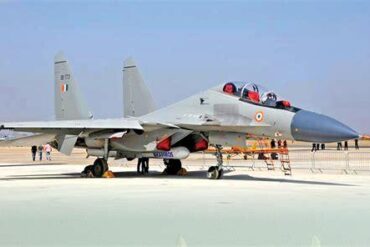
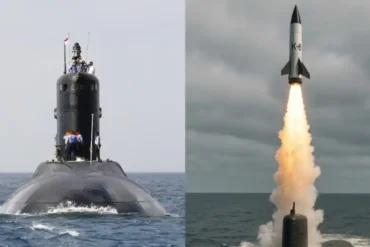
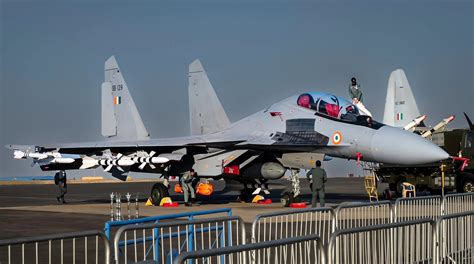
- Launch Platforms: Land-based TELs, air-launch via fighters like Su-30MKI, and naval ships/submarines
- Stealth: Low altitude trajectory + plasma stealth + maneuvering mid-flight
Advanced Materials for Hypersonic Durability
One of the most challenging aspects of hypersonic technology lies in managing the intense heat and stress endured during flight. Traveling at speeds up to 12,000 km/h subjects the missile’s surface to temperatures exceeding 2,000°C. DRDO scientists have reportedly developed heat-resistant alloys and oxidation-proof coatings to mitigate these effects.
These specialized materials make the missile not only capable of hypersonic endurance but also suitable for maritime deployment, where environmental conditions such as salt-laden air and UV radiation can degrade conventional armament systems. The durability of the ET-LDHCM means it could be deployed in naval strike missions, targeting aircraft carriers and surface warships.
From BrahMos to Vishnu: A Strategic Evolution
The BrahMos, co-developed with Russia and renowned as the world’s fastest supersonic cruise missile, served as a technological springboard. With the ET-LDHCM reaching three times BrahMos’ velocity, Project Vishnu ushers in a new generation of strategic deterrence. This transition underscores India’s evolution from import-dependent military systems to self-reliant, high-end indigenous innovation.
The HSTDV program, tested successfully in recent years, laid much of the groundwork. The 1,000-second ground test of the scramjet propulsion module was pivotal, proving India could sustain hypersonic speeds with homegrown technology. The ET-LDHCM is now the embodiment of this technological maturity.
Strategic Significance in a Volatile Neighborhood
India’s geographic realities make strategic deterrence a central pillar of its defense doctrine. The development of the ET-LDHCM is clearly informed by growing concerns over China’s hypersonic programs, such as the DF-21D and DF-26 missiles, and Pakistan’s expanding arsenal of tactical and strategic delivery platforms.
Project Vishnu sends an unambiguous signal that India can match or exceed the capabilities of regional adversaries. The ability to strike deep into adversary territory within minutes, destroying high-value targets such as missile batteries, command centers, or airfields, redefines India’s offensive and pre-emptive options.
Beyond Defense: Aerospace and Economic Spillover
Project Vishnu is not only about missiles. It also represents a broader technological platform that will drive innovation in India’s civilian and space sectors. The same propulsion and materials technologies can enhance satellite launch capabilities, enabling faster and cheaper access to low Earth orbit (LEO).
Furthermore, the project incentivizes a national ecosystem of innovation. Collaborations between DRDO, private defense firms, and micro, small, and medium enterprises (MSMEs) are accelerating knowledge transfer and creating thousands of high-skill jobs.
Integration Challenges and the Road Ahead
Despite its successful test, operationalizing the ET-LDHCM involves complex hurdles. These include flight reliability, platform integration, mass production, and real-time targeting systems that can fully exploit its speed. Public-private partnerships will be crucial, as will international technology monitoring to prevent proliferation concerns.
India’s Chief of Defence Staff, senior DRDO engineers, and leadership from the Integrated Defence Staff are now reportedly fast-tracking the program to achieve Initial Operational Capability (IOC) by 2028, with extended variants in the pipeline.
Conclusion: The Hypersonic Future Has Arrived
Project Vishnu symbolizes India’s technological assertion, not merely within Asia, but on the global strategic stage. The successful demonstration of a hypersonic cruise missile system capable of traveling 3X faster than BrahMos, combined with indigenous scramjet propulsion, stealth, and versatile launch capability, represents a critical enhancement in India’s military toolkit.
It shifts the balance from reactive defense to proactive deterrence, securing a place for India among hypersonic superpowers. But more than a weapon, Vishnu is a technological statement—one that asserts sovereignty, innovation, and strategic foresight in an increasingly unpredictable world.