Indonesia has formally approved an agreement with India to acquire the BrahMos supersonic cruise missile system, marking a significant step in Jakarta’s long-term maritime defense modernization. The decision reflects Indonesia’s increasing focus on protecting its vast archipelagic territory and safeguarding strategic sea lanes that carry a large share of global trade. By introducing one of the world’s fastest operational cruise missiles into its arsenal, Indonesia aims to strengthen deterrence and improve its ability to respond rapidly to potential threats in surrounding waters.
The announcement signals the culmination of several years of discussions between Jakarta and New Delhi. While negotiations previously remained in the exploratory stage, Indonesia’s public confirmation of the agreement now places the procurement within an active defense program. The move also expands India’s role as a growing defense exporter in Southeast Asia, reinforcing strategic ties between the two Indo-Pacific powers.
Indonesia’s geography makes maritime security a constant priority. The country spans more than 17,000 islands, creating an immense coastline and a complex network of straits, sea lanes, and economic zones. This geography demands defense systems capable of covering large distances quickly, a requirement that the BrahMos missile was designed to meet.
Indonesia’s Maritime Defense Modernization
Jakarta has been gradually transforming its armed forces through a series of modernization initiatives aimed at strengthening territorial defense and maritime domain awareness. The BrahMos procurement fits directly into that broader strategy, which emphasizes sea denial capabilities—the ability to prevent adversaries from freely operating in national waters.
Indonesia’s Ministry of Defence has stated that the missile system will enhance the country’s maritime strike capacity while supporting the modernization of naval and coastal defense units. Officials did not publicly disclose the final contract value, but earlier reports suggested negotiations involving a package worth between $200 million and $350 million.
The new agreement marks a clear shift from tentative discussions to a defined procurement plan. In previous years, Indonesian officials had indicated that both shore-based missile batteries and ship-mounted launch systems were under evaluation. While final deployment details have not been publicly confirmed, the decision to proceed indicates Jakarta’s intention to integrate high-speed precision strike capabilities into its maritime defense network.
The BrahMos Missile: Speed as a Strategic Advantage
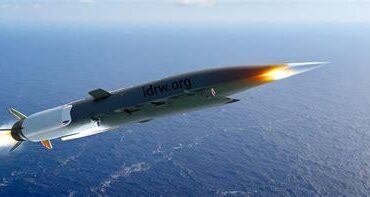
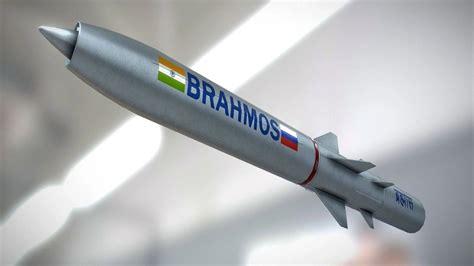
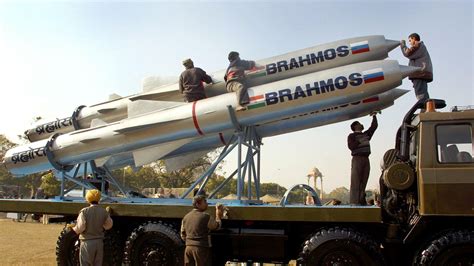
The BrahMos cruise missile, jointly developed by India and Russia through BrahMos Aerospace, has gained international recognition as one of the fastest operational cruise missiles in service today. Unlike many conventional cruise missiles that travel at subsonic speeds, BrahMos operates at roughly Mach 2.8, nearly three times the speed of sound.
This remarkable velocity is achieved through a two-stage propulsion system. A solid-fuel booster accelerates the missile shortly after launch, propelling it to supersonic speeds. Once airborne, a liquid-fuel ramjet engine sustains high-speed cruise flight toward the target.
The missile’s performance characteristics make it particularly effective against maritime targets:
- Range: Up to approximately 290 kilometers in export configuration
- Cruising altitude: Up to 15 kilometers during mid-course flight
- Terminal approach: As low as 5 meters above sea level
- Warhead capacity: Around 200 kilograms of conventional explosive payload
The combination of speed, low-altitude terminal flight, and maneuverability significantly reduces an opponent’s reaction time. Defending ships have only a narrow window to detect, track, and intercept a supersonic incoming missile traveling at nearly 3,000 kilometers per hour.
For coastal defense forces, this translates into a powerful deterrent. Even a small number of well-positioned missile batteries can threaten hostile vessels operating hundreds of kilometers away.
Operational History and Global Adoption
The BrahMos missile is far from an experimental weapon. It has been in operational service with the Indian Armed Forces for nearly two decades, gradually expanding across multiple branches.
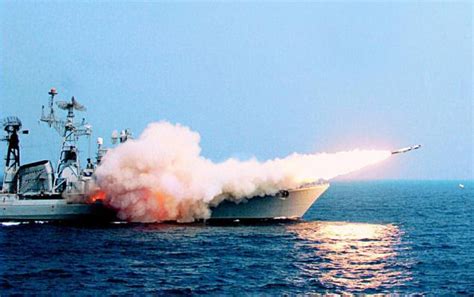
The Indian Navy first deployed BrahMos aboard the destroyer INS Rajput in 2005, marking the missile’s initial operational induction. Shortly afterward, the Indian Army began fielding BrahMos-equipped missile regiments designed to provide long-range precision strike capability against both maritime and land targets.
By the mid-2010s, BrahMos had matured into a widely deployed system within India’s military structure, operating from ships, land-based mobile launchers, and other platforms. Its adaptability across multiple launch environments made it particularly attractive for countries seeking flexible coastal defense systems.
International interest soon followed. In 2022, the Philippines became the first foreign buyer, signing a coastal defense contract worth roughly $375 million. The first delivery batch arrived in 2024, establishing BrahMos as a proven export system within Southeast Asia.
Indonesia’s new agreement therefore represents the second major export success for the missile program, strengthening India’s position as an emerging supplier of advanced defense technology.
Strategic Value for an Archipelagic Nation
Indonesia’s geography makes maritime deterrence not merely a policy preference but a national necessity. The country sits astride several of the world’s most important sea routes, including passages connecting the Indian Ocean and the Pacific Ocean. These waterways carry massive volumes of commercial shipping and energy transport every year.
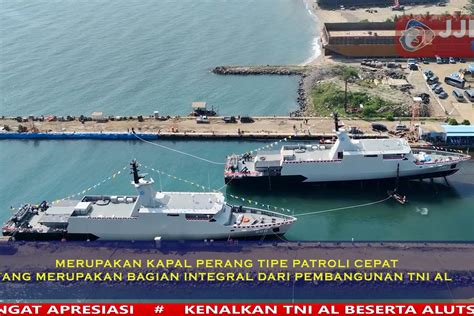
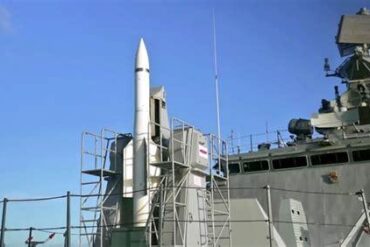
Protecting these maritime approaches requires the ability to monitor, deter, and if necessary respond quickly to intrusions. A shore-based BrahMos system would allow Indonesian forces to strike hostile vessels from protected coastal positions, extending defensive coverage across wide maritime zones.
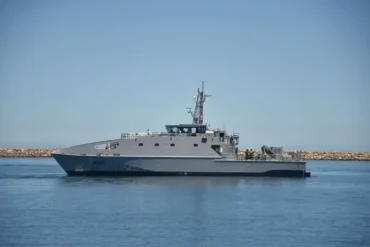
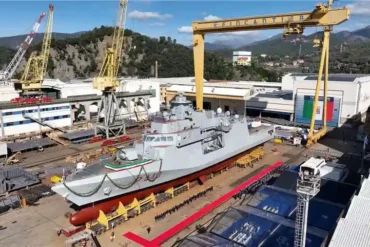
If integrated onto naval vessels, the missile would further enhance the strike power of Indonesia’s surface fleet. Warships equipped with BrahMos could engage targets at long distances, giving commanders a powerful offensive option during maritime patrol operations.
Such capabilities are particularly relevant for an archipelagic state. Instead of relying solely on large centralized bases, mobile missile batteries can be deployed across multiple islands, creating a distributed defensive network that complicates enemy planning.
Regional Tensions and the South China Sea Factor
Although Indonesia does not officially classify itself as a claimant in the South China Sea territorial disputes, tensions in nearby waters have periodically affected Jakarta’s security calculations. The North Natuna Sea, located near Indonesia’s northern maritime boundary, has witnessed occasional confrontations involving foreign vessels and maritime law enforcement agencies.
These incidents have underscored the importance of maintaining credible maritime defense capabilities. Indonesia has repeatedly emphasized its commitment to protecting its territorial waters and exclusive economic zone, particularly in areas where fishing fleets, energy exploration activities, and coast guard operations overlap.
A supersonic anti-ship missile system like BrahMos contributes to deterrence by increasing the potential cost of aggressive actions. While it does not fundamentally alter the regional balance of power, it introduces a high-speed strike capability that potential adversaries must consider when operating near Indonesian waters.
India’s Expanding Defense Diplomacy
For India, the Indonesian procurement represents more than a commercial success. It reflects a broader strategy in which defense cooperation and arms exports serve as tools of diplomacy across the Indo-Pacific region.
New Delhi has increasingly promoted indigenous defense systems to partners seeking alternatives to traditional suppliers. The BrahMos program, backed by a joint venture involving Indian and Russian industrial participation, stands at the center of this effort.
Each export agreement strengthens India’s role as a technology partner and security contributor in Asia. By supplying advanced systems to regional militaries, India deepens strategic relationships while expanding the reach of its defense industry.
Indonesia, as Southeast Asia’s largest economy and one of its most influential maritime nations, represents a particularly significant partner. The BrahMos agreement therefore carries both industrial and geopolitical importance.
A Signal of Indonesia’s Future Defense Posture
Indonesia’s approval of the BrahMos missile deal sends a clear message about the direction of its defense strategy. The country is gradually shifting toward a more capable maritime deterrent, combining surveillance systems, naval assets, and long-range strike weapons.
The acquisition also reflects a broader trend across the Indo-Pacific, where nations are investing in anti-ship missile systems to strengthen coastal defense and protect vital sea lanes. In an era when maritime competition is intensifying, high-speed precision weapons provide smaller or geographically dispersed states with a powerful defensive equalizer.
For Indonesia, the arrival of BrahMos would not simply add another weapon to its arsenal. It would introduce a rapid-response maritime strike capability capable of covering large sections of its coastline and strategic waterways.
Positioned across one of the world’s most critical maritime crossroads, Indonesia’s evolving defense posture underscores a simple strategic reality: in the complex waters of the Indo-Pacific, speed, reach, and deterrence increasingly define maritime security.