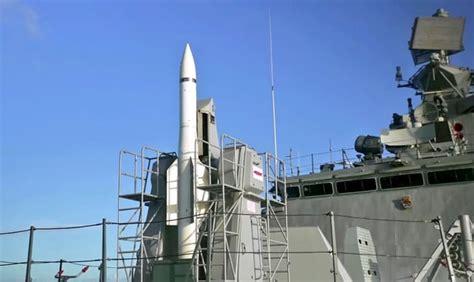
India has formalized a $238.5 million agreement with Russia to procure additional Shtil-1 vertical-launch surface-to-air missiles (VL-SAMs), reinforcing the Indian Navy’s layered defensive architecture at a time of intensifying maritime competition across the Indo-Pacific. The contract, valued at approximately 21.8 billion Indian rupees, was concluded with Russia’s state arms exporter Rosoboronexport, underscoring the continued operational integration of Russian-origin air defense systems within India’s frontline fleet.
The acquisition directly supports the Indian Navy’s requirement to protect major surface combatants against a rapidly evolving spectrum of threats, including combat aircraft, maritime patrol platforms, armed drones, attack helicopters, and sea-skimming anti-ship cruise missiles. Modern naval engagements unfold at high velocity and often at low altitude, where reaction windows shrink to seconds. Strengthening medium-range interception capability is therefore not a matter of enhancement alone—it is a strategic necessity.
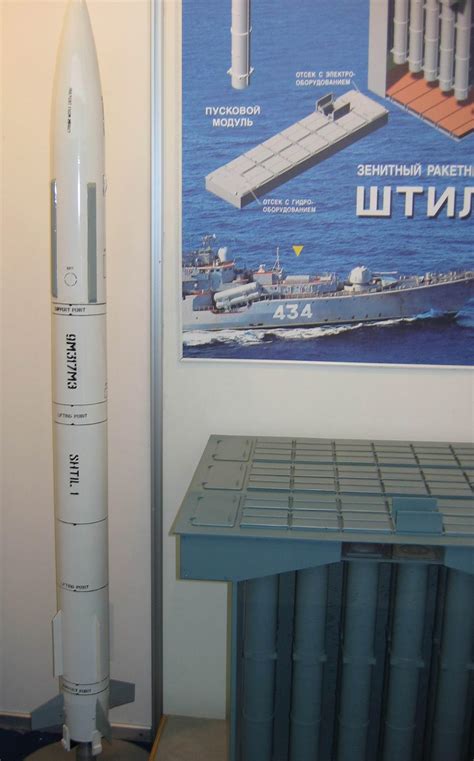
The Shtil-1 system represents the naval vertical-launch evolution of Russia’s Buk family of medium-range air defense systems, adapted specifically for shipboard integration. In Indian naval service, the system typically deploys the 9M317ME interceptor missile, engineered to engage maneuvering aerial targets at ranges of up to 50 kilometers and altitudes reaching approximately 15 kilometers. This envelope places Shtil-1 squarely within the medium-range tier of a multi-layered defensive shield.
Shtil-1: Medium-Range Shield Against High-Speed Maritime Threats
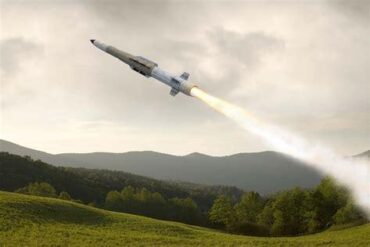
The 9M317ME missile travels at speeds exceeding Mach 3, enabling rapid interception of high-velocity inbound threats. It utilizes semi-active radar homing guidance, relying on shipborne fire-control radars to illuminate targets during engagement. This method allows precise tracking of fast, low-flying cruise missiles that exploit the curvature of the Earth and sea clutter to evade detection.
Sea-skimming missiles remain among the most dangerous weapons in modern naval warfare. Flying at altitudes often below 10 meters, these weapons drastically compress defensive response times. A capable medium-range interceptor such as Shtil-1 extends the defensive perimeter outward, neutralizing threats before they enter the terminal phase where close-in weapon systems must engage under extreme time pressure.
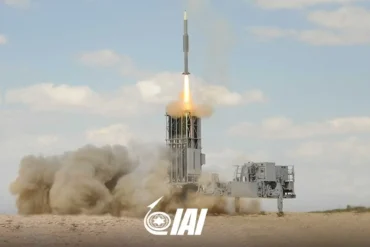
A defining feature of the Shtil-1 configuration is its vertical launch architecture. Unlike earlier naval Buk derivatives that relied on trainable launcher rails, vertical launch cells permit missiles to be fired in any direction immediately after ignition. This ensures full 360-degree engagement coverage and significantly reduces mechanical delay. In combat conditions where seconds determine survivability, the elimination of launcher rotation time can decisively enhance ship defense effectiveness.
Integration Within India’s Layered Naval Defense Structure
Naval air defense is built upon layered interception principles. Long-range fleet air defense missiles aim to destroy threats at maximum distance, medium-range systems like Shtil-1 intercept surviving targets, and short-range point-defense systems provide the final protective barrier. Shtil-1 occupies the critical middle tier, absorbing saturation attacks and preventing hostile platforms from reaching optimal launch positions.
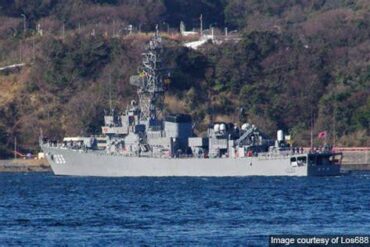
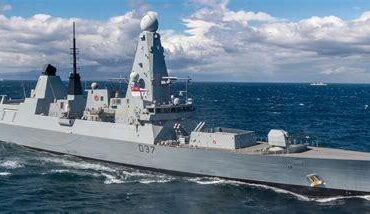
The newly contracted missiles are intended to replenish and sustain stocks aboard Indian Navy vessels already equipped with the system, particularly the Project 11356-derived Talwar-class frigates. These stealth-guided missile frigates form a central component of India’s escort fleet and are tasked with safeguarding aircraft carriers, amphibious assault groups, and high-value maritime assets.
Each Talwar-class frigate typically carries around 24 vertical-launch Shtil interceptors integrated into its combat management system. This loadout enables simultaneous engagement of multiple aerial threats during high-intensity scenarios. Maintaining adequate missile inventories is essential not only for deterrence but also for sustained deployment endurance during extended maritime operations across the Arabian Sea and beyond.
Strategic Context: Sustaining a Longstanding Defense Partnership
The agreement highlights the durability of the India–Russia defense relationship, which has spanned decades and encompasses submarines, frigates, aircraft, and missile systems. Despite India’s increasing diversification of suppliers, Russian-origin platforms remain deeply embedded within its naval order of battle. Operational familiarity, logistical integration, and established maintenance ecosystems continue to shape procurement decisions.
At the same time, the Indo-Pacific maritime environment is witnessing accelerated proliferation of advanced anti-ship missile systems, including supersonic and potentially hypersonic variants. Regional naval modernization programs have intensified competition, raising the premium on survivability and electronic warfare resilience. Strengthening medium-range air defense directly contributes to fleet survivability in contested waters.
India’s broader naval modernization strategy aims to expand blue-water capabilities, enhance carrier battle group protection, and secure vital sea lines of communication. Reinforcing the Shtil-based defensive umbrella aligns with these objectives by ensuring that frontline surface combatants retain credible protection against evolving aerial threats.
The $238.5 million Shtil-1 procurement is therefore more than a routine resupply contract. It reflects a calculated investment in maritime deterrence, operational readiness, and layered defensive resilience. As naval warfare becomes increasingly defined by speed, precision, and electronic sophistication, the ability to intercept hostile aircraft and missiles before they penetrate defensive perimeters will remain a decisive factor in sea control operations.