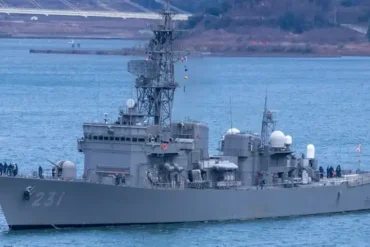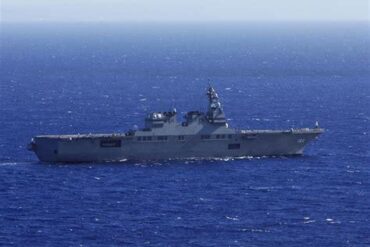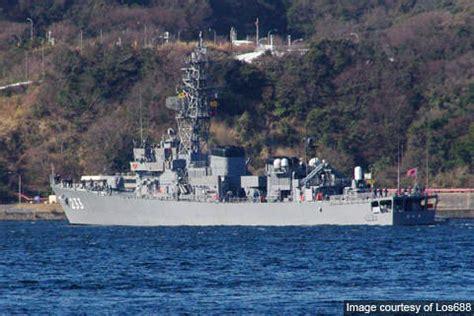
On July 6, 2025, a landmark defense agreement was officially confirmed between Japan and the Philippines, marking a dramatic shift in the Indo-Pacific security landscape. Japan’s Defense Minister Gen Nakatani and Philippine Defense Secretary Gilberto Teodoro jointly announced the transfer of six Abukuma-class destroyer escorts from the Japan Maritime Self-Defense Force (JMSDF) to the Philippine Navy, a strategic move widely interpreted as a response to China’s expanding maritime assertiveness in the South China Sea.
Strategic Maritime Realignment in the Indo-Pacific
The transfer, finalized during a bilateral defense meeting in Singapore in early June 2025, represents the most significant naval reinforcement to the Philippine fleet in over a decade. These Abukuma-class ships, though retired from Japanese service, bring advanced capability and enhanced operational readiness to a fleet that has long struggled with outdated platforms and limited deterrence options against regional threats.
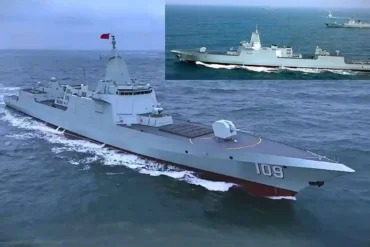
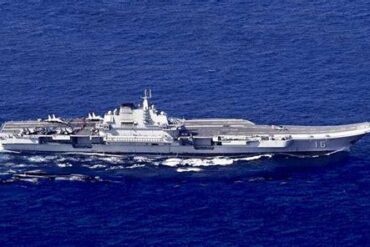
China’s growing presence in disputed maritime territories has compelled Tokyo and Manila to deepen their defense ties. According to the 2025 Military Balance report by the International Institute for Strategic Studies, China now commands over 100 modern surface combatants, whereas the Philippine Navy has only two newly built frigates. This drastic disparity has intensified strategic vulnerability in Manila, and the acquisition of the six destroyers is widely seen as a game-changer in restoring some degree of maritime balance.
Capabilities of the Abukuma-Class Destroyers
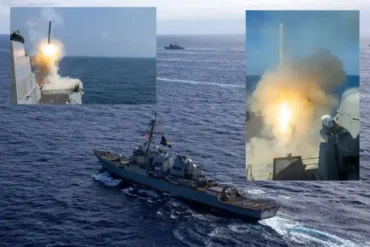
Designed in the waning years of the Cold War, the Abukuma-class destroyer escorts were commissioned between 1989 and 1993. Though no longer at the forefront of JMSDF modernization plans, these ships are far from obsolete. Each vessel displaces 2,550 tons at full load, measures 109 meters in length, and is powered by a CODOG (Combined Diesel or Gas) propulsion system, giving it a top speed of 27 knots. Their crew capacity stands at approximately 120, suitable for multi-role operations without the logistical burden of larger warships.
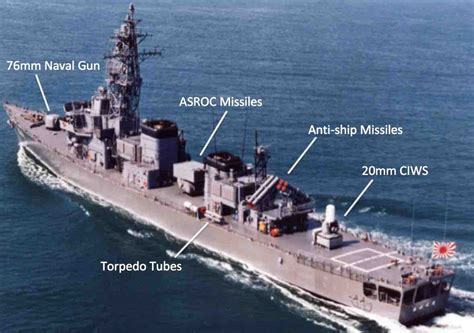
Equipped for anti-submarine warfare, surface engagements, and limited air defense, the Abukuma-class ships carry a versatile arsenal:
- Otobreda 76 mm naval gun for surface and aerial threats
- Triple 324 mm torpedo tubes for anti-submarine warfare
- Phalanx CIWS (20 mm) for close-in air defense
- Optional RGM-84 Harpoon missiles and ASROC launchers for extended offensive capability
Their sensor and combat suites—featuring the OPS-14 air-search radar, OPS-28 surface radar, OQS-8 sonar, and the OYQ-7 combat direction system—enable high degrees of situational awareness, especially in littoral and archipelagic environments like the Philippine Exclusive Economic Zone (EEZ).
Reinforcing Regional Security and Interoperability
Beyond hardware, the transfer symbolizes a deepening strategic alliance between Japan and the Philippines. In April 2025, the two countries opened negotiations on an Acquisition and Cross-Servicing Agreement (ACSA), aiming to streamline logistics support, fuel provisioning, ammunition sharing, and even joint maintenance infrastructure. These talks lay the foundation for what analysts describe as a “quasi-alliance,” driven by mutual concerns over Chinese military maneuvers in disputed maritime zones.
A senior JMSDF official remarked that the move would significantly improve joint interoperability, making it easier for the two navies to conduct coordinated patrols, exercises, and surveillance missions. The Abukuma-class destroyers, built to JMSDF standards, will integrate more seamlessly into coalition maritime formations, particularly in missions involving freedom of navigation operations (FONOPs), exclusive economic zone patrols, and counter-submarine operations in the South China Sea.
Philippine Naval Modernization at a Crossroads
This development comes as part of a broader effort by Manila to modernize its military under the Revised AFP Modernization Program (RAFPMP). Despite notable acquisitions such as the Jose Rizal-class frigates, the navy has lagged behind regional peers. The inclusion of six relatively modern and operationally capable vessels is a leap forward, expanding the Navy’s capacity to perform multi-domain operations.
The Abukuma-class ships are expected to be refitted and upgraded in Japanese shipyards before transfer, with localized training and joint exercises already scheduled for late 2025. These upgrades will likely include communications integration, navigation system alignment, and minor hull repairs, ensuring optimal compatibility with existing Philippine naval systems.
Tokyo’s Maritime Calculus: Containing China through Partnerships
For Japan, the transfer solves two strategic problems simultaneously: reducing logistical strain from aging fleet assets and bolstering a key security partner in the First Island Chain. The decision to offload six destroyers—rather than scrap or mothball them—demonstrates Tokyo’s growing willingness to take a front-line role in Southeast Asian maritime security, leveraging its naval assets to shape regional deterrence architecture.
Tokyo has also been a vocal proponent of the Free and Open Indo-Pacific strategy, and this deal is a tangible extension of that doctrine. It reflects a trend where Japan increasingly views its security interdependence with Southeast Asia as pivotal to its national defense. The China Coast Guard’s aggressive tactics, the PLA Navy’s gray zone operations, and repeated encroachments into Philippine-claimed waters have prompted an assertive, forward-deployed mindset in Japanese defense planning.
Chinese Reaction and Strategic Implications
As expected, the move has drawn condemnation from Beijing, which called the transfer “a dangerous provocation that undermines regional peace.” However, for the Philippines and Japan, the calculus is rooted not in escalation but in rebalancing power and preserving the rules-based maritime order.
This initiative could also prompt similar moves by other U.S. allies in the region. Already, Australia, South Korea, and India have increased naval cooperation with the Philippines, creating a multilateral network of maritime partnerships aimed at constraining China’s maritime dominance.
Long-Term Vision: Building a Resilient Philippine Navy
The integration of Abukuma-class destroyers is only the first step in a long-term effort to build a credible maritime deterrent. The Philippine Navy is exploring the future procurement of submarines, unmanned surface vessels (USVs), and advanced surveillance drones to round out its maritime strategy. Japan’s support—both in equipment and training—places it at the core of this vision.
The deployment of these ships, once fully operational, will dramatically increase the Navy’s ability to secure its territorial waters, monitor illegal maritime activities, and conduct joint patrols with regional allies. As tensions in the Indo-Pacific continue to simmer, the arrival of the Abukuma-class vessels could not be more timely.
Conclusion: A New Era of Maritime Synergy
This unprecedented naval transfer underscores a shifting reality in Asia’s maritime balance. It moves the Japan-Philippine partnership beyond symbolic alignment into real, operational synergy. As the first of the six destroyers sails under the Philippine flag by year’s end, the message will be unmistakable: the Indo-Pacific’s smaller democracies are no longer standing alone in the face of coercion. Instead, they are uniting under a shared strategic vision—a secure, sovereign, and stable maritime region anchored by enduring partnerships and capable fleets.