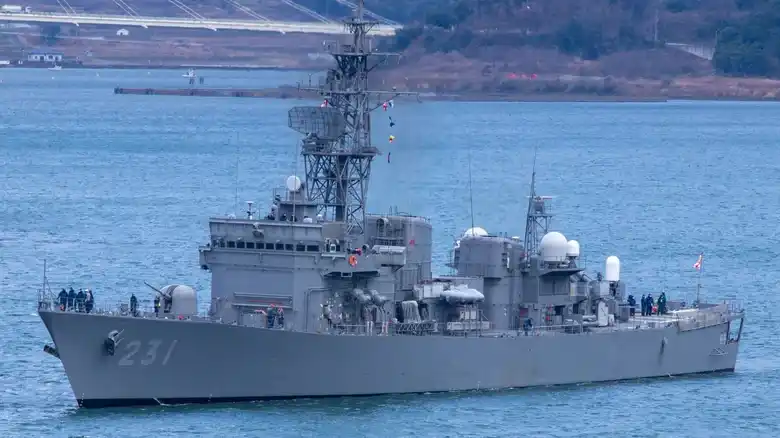
Japan’s decision to loosen decades-old restrictions on arms exports has triggered a dramatic new chapter in Asian defense politics. For the first time in generations, decommissioned warships from the Japan Maritime Self-Defense Force are becoming available to foreign partners, and several countries are already showing strong interest. At the center of this shift are Japan’s aging but highly capable destroyers, vessels that were once designed solely for homeland defense but are now emerging as valuable strategic assets for allied nations facing growing maritime pressure.
The policy reversal marks one of the most significant changes in Japan’s postwar defense posture. Since the end of World War II, Tokyo maintained extremely tight controls on military exports, limiting overseas transfers to non-lethal support equipment such as rescue systems, transport gear, and surveillance technology. The new framework approved in April 2026 changes that equation by permitting the export of lethal military hardware to nations with formal defense partnerships with Japan.
The timing is no coincidence. Across the Indo-Pacific, military tensions have intensified as China expands its naval footprint in disputed waters. Governments from Southeast Asia to the Pacific now face urgent pressure to strengthen coastal defense capabilities without spending billions on entirely new fleets. Japan’s retired destroyers suddenly offer an attractive solution: modern enough to remain combat-effective, cheaper than new warships, and backed by one of the world’s most technologically advanced naval industries.
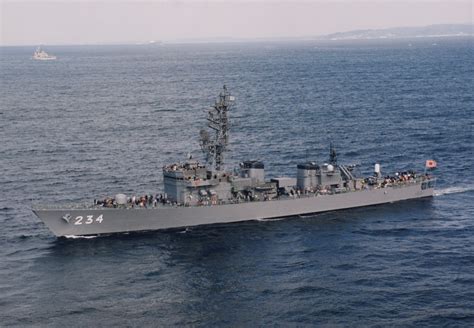
Why Japan’s Abukuma-Class Destroyers Are Drawing Attention
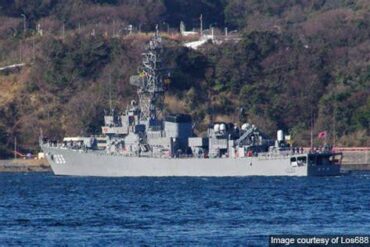
Among the most sought-after vessels are the Abukuma-class escort destroyers, a fleet introduced between the late 1980s and early 1990s. Although Japan is gradually replacing them with newer multi-mission platforms, these ships still possess considerable operational value. Built specifically for coastal defense and maritime patrol missions, the destroyers were designed for the exact type of security environment now dominating the South China Sea.
Each Abukuma-class vessel measures more than 357 feet in length and displaces roughly 2,200 tons. Despite their modest size compared to major guided missile destroyers, the ships carry a surprisingly capable weapons package. Their systems include Phalanx Close-In Weapon Systems, Type 90 anti-ship missiles, torpedoes, and Italian-made 76 mm OTO Melara naval guns. Combined with advanced radar and anti-submarine capabilities, the vessels remain highly credible deterrents for regional navies.
For countries with limited defense budgets, acquiring secondhand Japanese destroyers could dramatically accelerate naval modernization. Purchasing newly built frigates or destroyers from Western shipyards often requires years of construction and enormous financial commitments. Japan’s retired fleet offers a faster path to operational readiness while still delivering proven reliability and strong maintenance standards.
The Philippines and the South China Sea Factor
The Philippines has emerged as the most likely early recipient of Japan’s retired naval assets. Manila has become increasingly alarmed by Chinese activity in disputed waters, particularly around artificial islands and contested maritime zones in the South China Sea. Japanese defense cooperation with the Philippines has steadily expanded over the last decade, making a destroyer transfer a logical next step.
In 2025, Tokyo and Manila reportedly finalized an agreement involving six used Abukuma-class ships. The deal fits into a broader strategic partnership aimed at improving Philippine maritime security and strengthening regional deterrence against coercive naval activity.
Japan has already supplied patrol vessels and surveillance assistance to the Philippines since 2013, but transferring destroyers represents a major escalation in military cooperation. Unlike lightly armed coast guard ships, these vessels possess genuine combat capability, enabling the Philippine Navy to patrol disputed waters with far greater confidence.
The move also highlights Japan’s growing willingness to play a larger security role in Asia. While Japanese leaders continue emphasizing the country’s commitment to peace, Tokyo increasingly views defense exports as essential to maintaining regional stability. By helping allies strengthen their maritime forces, Japan can indirectly counter aggressive expansion without deploying its own forces into frontline confrontations.
A New Era for Japan’s Defense Industry
Japan’s decommissioned destroyers are becoming more than surplus hardware. They represent a geopolitical signal that Tokyo is entering a new strategic era, one where defense exports, regional partnerships, and naval diplomacy are central tools of influence.
As aging Japanese warships prepare for second careers under foreign flags, they are also reshaping Asia’s military balance. For smaller nations facing increasingly contested seas, these vessels offer something difficult to obtain elsewhere: affordable firepower backed by Japanese engineering and political support.