The United Kingdom and Germany have taken a decisive step toward redefining Europe’s long-range strike capabilities, advancing a joint program to develop a next-generation family of cruise and hypersonic missiles capable of striking targets beyond 2,000 kilometers. More than a weapons project, this initiative signals a structural shift in NATO’s conventional deterrence posture—one rooted in range, survivability, and sovereign industrial power.
Announced following high-level defense talks in Berlin, the Deep Precision Strike (DPS) program is designed to deliver a multi-domain, scalable strike ecosystem entering service in the 2030s. It builds on prior bilateral agreements and integrates into Europe’s broader Long-range Strike Approach, reflecting a strategic urgency shaped by evolving threats and lessons drawn from modern conflict environments.
At its core, the program aims to close a critical capability gap: the ability to conduct deep, precise, and survivable strikes against high-value targets far beyond the front line—without reliance on non-European systems.
A “Missile Family” Built for Modern Warfare
The defining feature of the UK-Germany initiative is its emphasis on a “family” of missiles, rather than a single platform. This distinction is not semantic—it is operationally transformative.
Instead of developing one weapon optimized for a narrow mission, the program envisions a modular ecosystem of effectors sharing core technologies such as guidance systems, mission planning software, and potentially launch infrastructure. This architecture enables flexibility across mission profiles while reducing development complexity and cost.
Two primary branches are expected:
- A stealth cruise missile variant, optimized for low observability, fuel efficiency, and terrain-following flight to penetrate defended airspace.
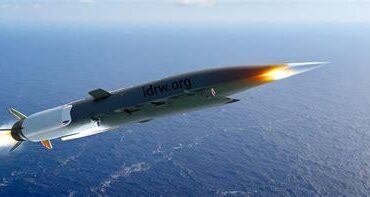
- A hypersonic variant, prioritizing extreme speed, maneuverability, and rapid time-to-target against mobile or heavily fortified objectives.
This dual-track approach mirrors emerging European missile concepts and reflects a deeper understanding of modern air defense challenges. Stealth degrades detection; hypersonic speed compresses reaction time—together forming a layered offensive capability that is significantly harder to counter.
From Tactical Strike to Strategic Reach
For decades, both the UK and Germany have relied on proven long-range systems such as the Storm Shadow/SCALP and Taurus KEPD 350. These weapons, with ranges in the 500-kilometer class, are highly effective against hardened infrastructure and strategic targets within a theater of operations.
However, the leap to a 2,000-kilometer strike capability fundamentally changes the equation.
This is not merely an incremental upgrade—it represents a transition from theater-level standoff strike to true deep-interdiction capability. Targets that were once beyond reach—rear-area logistics hubs, command centers, airbases, and critical infrastructure—can now be engaged directly from secure, dispersed positions.
Such reach introduces a new dimension of deterrence. Adversaries must now account for the possibility that critical assets far behind their defensive lines are no longer safe, even without air superiority.
Ground Launch: The Strategic Game-Changer
One of the most significant design choices in the DPS program is its initial focus on ground-based launch systems.
Unlike air-launched platforms, which depend on vulnerable airbases and sortie generation cycles, land-based systems offer mobility, concealment, and persistence. Launchers can be dispersed across wide areas, hidden in complex terrain, and rapidly repositioned, making them far more survivable in high-threat environments.
This mobility transforms these missiles into strategic assets that blur the line between artillery and theater-level strike systems. They are not merely weapons—they are tools of sustained pressure, capable of shaping the battlespace over extended periods.
In operational terms, such systems would be used to:
- Disrupt enemy air defense networks
- Neutralize command and control nodes
- Strike logistics and supply chains deep behind the front
- Target critical infrastructure enabling sustained operations
This aligns closely with NATO’s evolving doctrine, which emphasizes distributed operations and resilience under contested conditions.
Hypersonic Edge: Speed as a Strategic Weapon
The inclusion of hypersonic technology is perhaps the most consequential aspect of the program.
Hypersonic missiles—typically defined as traveling at speeds greater than Mach 5—introduce a radical compression of decision-making timelines for defenders. Traditional air and missile defense systems rely on detection, tracking, and interception sequences that become exponentially more difficult when facing a maneuvering, high-speed target.
In practical terms, this means:
- Less time to detect and classify incoming threats
- Reduced interception windows
- Increased likelihood of penetration against advanced defenses
When combined with stealth cruise missiles, the effect is multiplicative. Cruise missiles can saturate and confuse defensive networks, while hypersonic weapons exploit the resulting gaps to strike critical targets with minimal warning.
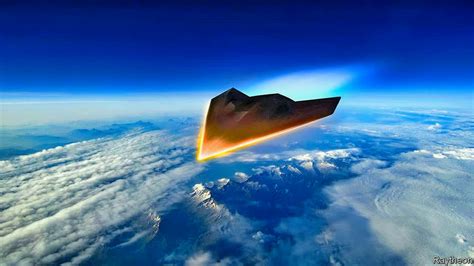
This layered approach reflects a sophisticated understanding of modern integrated air defense systems and underscores why the program is viewed as a cornerstone of future deterrence.
European Sovereignty and Industrial Power
Beyond its operational implications, the DPS program carries profound industrial significance. It is a clear statement of intent: Europe aims to regain full-spectrum capability in designing, producing, and sustaining advanced strike systems.
For years, European defense has leaned heavily on external suppliers for critical technologies. This dependence has raised concerns about supply chain vulnerability, export restrictions, and strategic autonomy.
The UK and Germany are now moving in the opposite direction—investing heavily in domestic and collaborative production. The UK alone has committed substantial funding to long-range and hypersonic weapons development, with ambitions to scale production to thousands of units.
Germany, meanwhile, sees the program as part of a broader effort to revitalize its defense-industrial base, ensuring that Europe can independently produce the systems required for its own security.
This industrial dimension is not secondary—it is central. Deterrence is not just about possessing advanced weapons; it is about the ability to produce, replenish, and adapt them at scale.
Integration into NATO’s Strategic Architecture
The Deep Precision Strike program is not an isolated initiative. It is deeply embedded within NATO’s evolving strategic framework, particularly efforts to strengthen the alliance’s eastern flank and enhance integrated air and missile defense.
By introducing a long-range conventional strike layer, the UK-Germany system fills a critical gap between traditional cruise missiles and nuclear deterrence. It provides NATO with a credible, non-nuclear option for deep strike, enabling escalation control while maintaining strategic pressure.
This capability is especially relevant in scenarios where rapid response is required but nuclear escalation is neither desirable nor necessary. It allows NATO to hold high-value targets at risk without crossing the nuclear threshold, reinforcing deterrence through flexibility.
Moreover, the program aligns with multinational efforts to harmonize requirements, streamline development, and foster interoperability across allied forces. This ensures that the system is not only powerful but also integrated into a broader network of sensors, platforms, and command systems.
Future Expansion: Air and Naval Dimensions
While the initial focus is on ground launch, the long-term vision for the DPS program extends far beyond.
Future variants are expected to include:
- Air-launched missiles, integrated into next-generation combat aircraft and digital targeting networks
- Naval-launched systems, deployed from surface vessels and submarines to create additional strike vectors
This expansion would transform the missile family into a truly multi-domain capability, capable of launching from land, sea, and air. Such flexibility complicates adversary planning and enhances survivability by distributing launch platforms across multiple domains.
In effect, the system becomes not just a weapon, but a networked strike architecture, capable of delivering precision effects from virtually any direction.
Engineering the Balance: Range, Precision, and Scale
Despite its promise, the program faces a formidable challenge: balancing performance, cost, and producibility.
Developing a missile that combines:
- Long-range capability (2,000+ km)
- High survivability in contested environments
- Precision targeting under electronic warfare conditions
- Affordable production at scale
is a complex engineering problem.
Europe has demonstrated its ability to design sophisticated standoff weapons. The real test now is whether it can deliver those capabilities in sufficient numbers to sustain prolonged operations.
This requires not only technological innovation but also efficient procurement models, streamlined supply chains, and rapid development cycles—areas where both the UK and Germany are actively investing.
A New Era of Conventional Deterrence
The UK-Germany Deep Precision Strike program represents more than a technological milestone—it marks the emergence of a new paradigm in European defense strategy.
By combining stealth, speed, range, and industrial autonomy, the program creates a capability that is both operationally potent and strategically stabilizing. It reinforces NATO’s deterrence posture while reducing reliance on nuclear signaling, offering a flexible and scalable response to modern threats.
In an era defined by contested environments, rapid escalation risks, and evolving adversary capabilities, such systems are no longer optional—they are essential.
The success of this initiative will not be measured solely by technical specifications, but by its ability to reshape the strategic landscape, ensuring that Europe can defend its interests with confidence, independence, and precision.