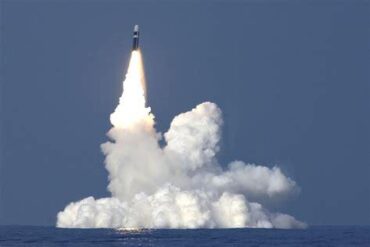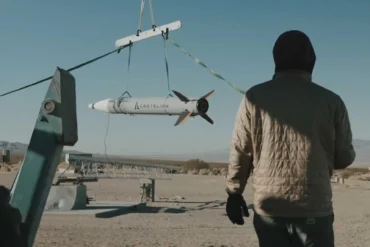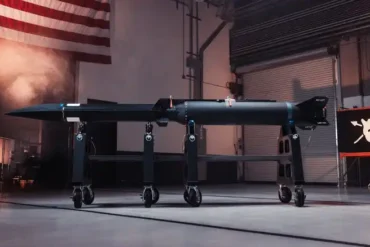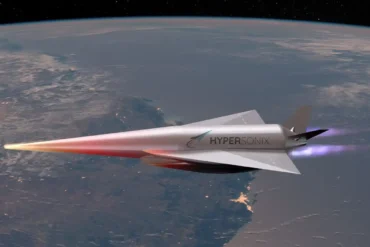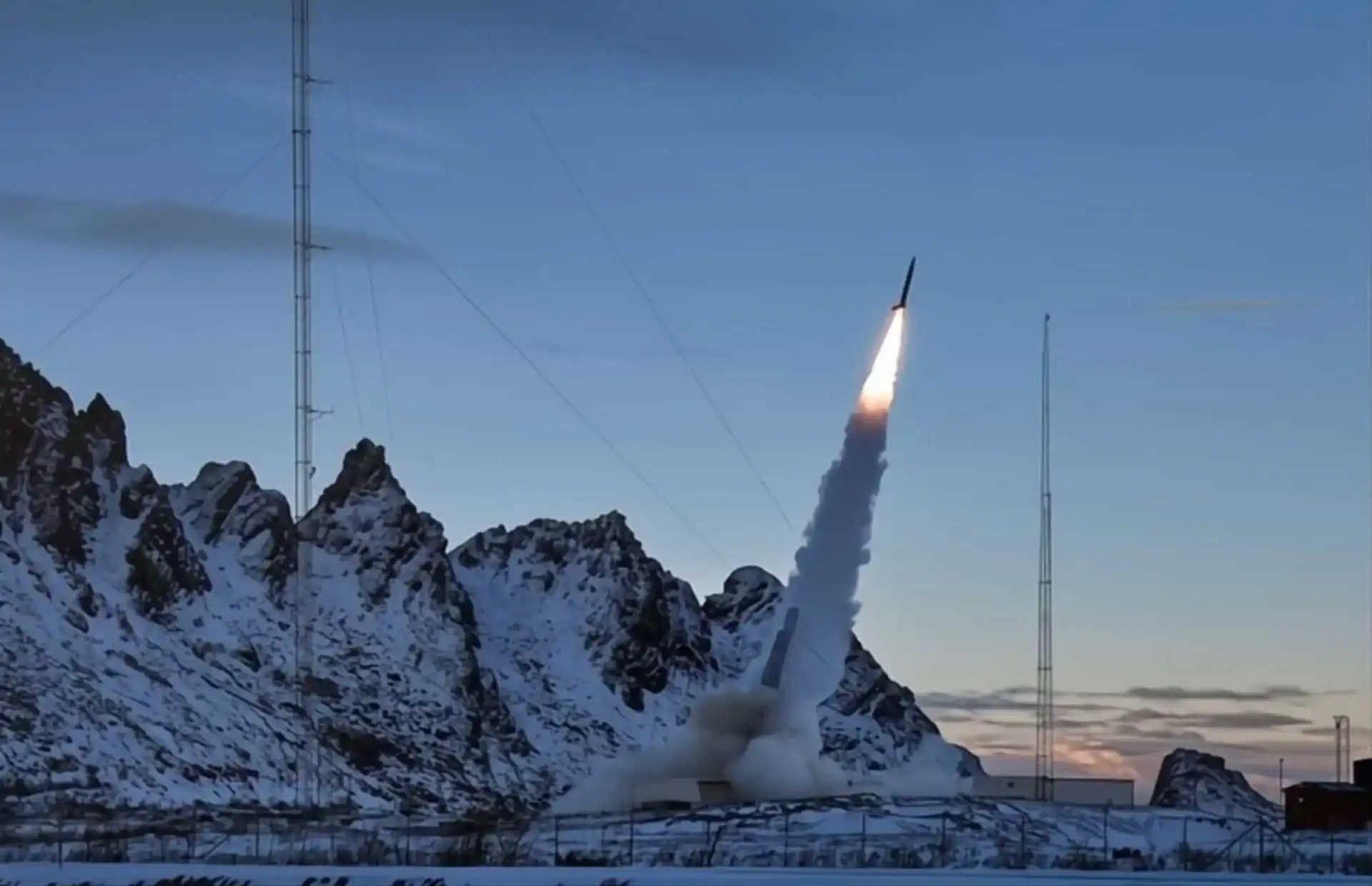
The European hypersonic race has shifted from theory to hardware. A joint UK–Germany backed effort, led by private defence firm Hypersonica, has successfully tested the SCOOTER HS-1 hypersonic strike demonstrator, marking the first confirmed flight of a sovereign European system exceeding Mach 6. Conducted at Andøya Space Range in Norway in February 2026, the test represents more than a speed milestone—it signals Europe’s intent to field an independent long-range hypersonic strike capability within the decade.
For years, hypersonic weapons have been dominated by the United States, Russia, and China, each pursuing manoeuvrable, ultra-fast systems designed to compress response timelines and evade missile defences. Europe’s entry into this technological arena reflects a growing recognition that strategic autonomy now depends not only on conventional forces, but also on mastering extreme-velocity precision strike systems.
The HS-1 flight travelled over 300 kilometers downrange and surpassed Mach 6, validating core subsystems under real hypersonic stress conditions. Hypersonica framed the mission as an engineering demonstrator rather than a weapons deployment test, but the implications are unmistakably operational.
Engineering the Hypersonic Envelope
Hypersonic flight begins where conventional aerodynamics start to break down. At speeds above Mach 5, airflow behaves less like a smooth fluid and more like a compressible shock furnace. The HS-1 demonstrator’s success therefore hinged not merely on propulsion, but on surviving the brutal physics of sustained hypersonic travel.
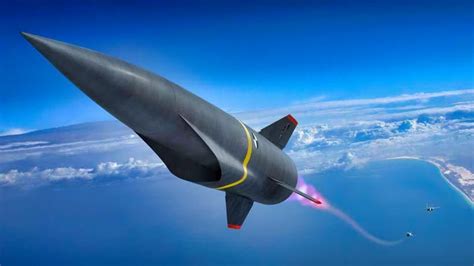
During ascent and glide phases, the vehicle’s leading edges and nosecone experienced extreme aerodynamic heating, with temperatures rising high enough to weaken metals, degrade sensors, and destabilize coatings. Thermal protection systems—layered composites, ablative materials, and heat-resistant ceramics—formed the missile’s first line of survival.
Equally critical was structural integrity. Hypersonic vehicles endure violent vibration, fluctuating pressure loads, and rapid thermal expansion. Hypersonica reported that onboard instrumentation captured detailed telemetry on guidance stability, avionics resilience, and inertial navigation performance under these stresses. This data is the lifeblood of hypersonic development, feeding simulation models and design refinements.
Why Andøya Space Matters
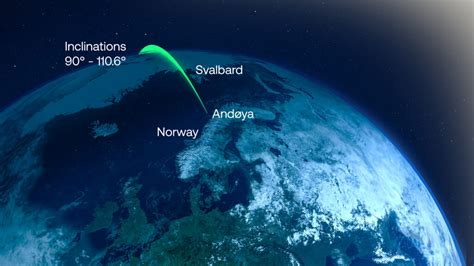
The choice of Andøya Space Range was strategic. Located in northern Norway, the facility offers expansive downrange corridors over the Norwegian Sea, enabling long-distance test flights with controlled splashdown zones. Range operators confirmed precise launch timing, velocity benchmarks beyond Mach 6, and a safe impact within designated parameters.
That controlled splashdown is more important than it sounds. Hypersonic testing isn’t only about speed records—it’s about repeatability, tracking fidelity, and range safety discipline. Demonstrating that the vehicle can be launched, monitored, and recovered within predictable envelopes is essential for future operational certification.
Propulsion Ambiguity and What It Suggests
Hypersonica has not disclosed propulsion specifics, a silence that invites technical inference. The vehicle is described as single-stage, suggesting a rocket-boosted architecture rather than an air-breathing scramjet (supersonic combustion ramjet).
Rocket-powered demonstrators are common in early hypersonic programs. They provide the brute force acceleration needed to push vehicles into hypersonic regimes quickly, allowing engineers to test thermal shielding, guidance systems, and structural performance before integrating more complex propulsion solutions.
In developmental logic, the sequence is methodical:
First achieve stable hypersonic exposure.
Then refine manoeuvrability.
Then integrate mission systems—seekers, warheads, and targeting packages.
The HS-1 appears positioned at the data-harvesting stage of this progression.
Deep-Strike Implications for NATO
Should the program mature into an operational missile by its stated 2029 target, its battlefield role would center on deep precision strike—hitting high-value targets far behind enemy lines with minimal warning.
Hypersonic weapons alter combat geometry in three decisive ways:
- They compress decision timelines from minutes to seconds.
- They manoeuvre unpredictably within the atmosphere.
- They approach targets from unconventional vectors.
Potential targets include air defence batteries, hardened command bunkers, mobile missile launchers, and theatre logistics hubs. Even without nuclear payloads, the kinetic and explosive impact of a hypersonic strike carries strategic weight due to its near-inescapable arrival profile.
Thermal Plasma and Guidance Challenges
One of hypersonic warfare’s strangest technical hurdles sounds like science fiction: plasma blindness. As vehicles slice through the atmosphere at extreme velocity, friction ionizes surrounding air, forming a plasma sheath that can disrupt communications and sensor function.
Guidance systems must therefore operate through intermittent signal loss and sensor distortion. Solutions include hardened inertial navigation systems, predictive flight algorithms, and jam-resistant satellite updates.
Terminal seekers—whether radar, infrared, or multi-mode—must also function through intense heat and ionization. Achieving this fusion of survivability and accuracy is what separates experimental hypersonic craft from battlefield-ready weapons.
Europe’s Strategic Catch-Up Moment
Operational hypersonic arsenals remain rare. Russia has fielded systems such as Kinzhal and Avangard, while China has integrated hypersonic glide vehicles into regional anti-access strategies. The United States continues large-scale development, though fielding timelines—such as the Army’s Dark Eagle program—have faced adjustments.
Europe, by contrast, has focused heavily on research and defensive countermeasures rather than deployable strike weapons. The HS-1 test therefore marks a psychological as well as technological shift: Europe is no longer content to only intercept hypersonics—it intends to launch them.
Parallel European Hypersonic Programs
The continent’s hypersonic ecosystem is broader than a single demonstrator.
France’s V-MAX glide vehicle has already tested atmospheric manoeuvrability and re-entry survivability. The United Kingdom has established a national Hypersonic Technologies and Capability Development Framework, designed to accelerate sovereign strike systems through industry and academic partnerships.
At the multinational level, European defence funds have supported counter-hypersonic intercept research, focusing on detection, tracking, and interception of manoeuvring high-speed threats.
The HS-1 program slots into this landscape as a privately driven strike initiative—faster moving, more iterative, and potentially more exportable.
The Sovereignty Factor
When defence officials use the word “sovereign,” they’re talking about industrial independence as much as military capability.
A sovereign hypersonic missile requires domestic control over:
- Airframe design
- Thermal protection materials
- Flight software
- Guidance electronics
- Supply chains for critical components
Reliance on foreign suppliers introduces vulnerability—export controls, sanctions, or wartime shortages can paralyze production. Hypersonica’s messaging emphasizes a fully European design and manufacturing base, positioning the missile as both a weapon and an industrial asset.
Modular Design and Cost Disruption
One of the firm’s boldest claims is economic rather than aerodynamic: a projected 80% cost reduction versus traditional hypersonic development models.
This stems from a modular architecture—standardized subsystems that can be upgraded rapidly without redesigning the entire vehicle. If validated, this approach could transform hypersonics from boutique, limited-inventory weapons into scalable strike assets.
Rapid iteration cycles—measured in months rather than years—would allow software updates, seeker improvements, and mission tailoring at unprecedented speed.
A Startup in a State-Dominated Arena
Hypersonic weapons have historically been the domain of state laboratories and classified mega-programs. Hypersonica’s emergence as a private European contender signals a structural shift in defence innovation.
Startups operate differently: faster prototyping, commercial manufacturing techniques, and risk-tolerant engineering cultures. If integrated effectively with government procurement, they can compress development timelines dramatically.
The HS-1 test suggests that Europe’s hypersonic future may not come solely from legacy defence giants—but from agile firms blending commercial aerospace practices with military requirements.
From Demonstrator to Weapon System
Turning a hypersonic test article into a deployable missile requires layered maturation.
Future flights will likely focus on controlled manoeuvres at sustained hypersonic speed, validating flight control algorithms and structural endurance. Subsequent phases would integrate targeting systems, hardened communications links, and warhead configurations.
Only after repeated, instrumented successes would the platform transition into operational service trials.
Each step reduces uncertainty—engineering, tactical, and strategic.
The Strategic Signal
The HS-1 flight is not merely a technological proof. It is a geopolitical communiqué written in plasma and shockwaves.
It tells allies that Europe intends to shoulder more of its strategic strike burden. It tells adversaries that hypersonic asymmetry is narrowing. And it tells defence industries that the era of European hypersonic dependency may be ending.
Speed, in this context, is influence. The nation—or alliance—that can strike fastest reshapes deterrence mathematics.
Europe’s entry into sovereign hypersonic capability does not yet rebalance the global arsenal. But it redraws the trajectory. The Mach-6 barrier, once symbolic, is now procedural—another engineering threshold crossed on the road from experimental flight to operational power projection.