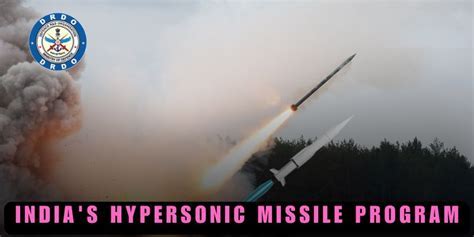
India has vaulted into an elite club of nations possessing indigenous hypersonic cruise missile capabilities, following the successful July 2025 test of the Extended Trajectory Long Duration Hypersonic Cruise Missile (ET-LDHCM). Developed under the highly classified Project Vishnu by the Defence Research and Development Organisation (DRDO), this next-generation weapon system signals a paradigm shift in India’s strategic deterrence and battlefield reach. With a tested top speed of Mach 8, equivalent to approximately 11,000 km/h, and an extended strike range up to 2,500 kilometers, the ET-LDHCM is engineered to penetrate and bypass advanced enemy air defense systems with agility and stealth.
DRDO’s Technological Leap: The Birth of Project Vishnu
The ET-LDHCM did not emerge in isolation. It is the product of years of accumulated expertise in hypersonic propulsion, stemming from India’s earlier success with the Hypersonic Technology Demonstrator Vehicle (HSTDV), which proved sustained Mach 5+ flight using a scramjet engine in 2020. The latest test builds directly upon that legacy, pushing the operational envelope further into the hypersonic regime and delivering a weapon system capable of real-time maneuverability, deep-strike capability, and survivability in contested domains.
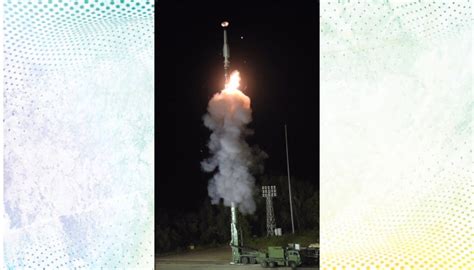
The July 14 launch from India’s eastern coast not only confirmed successful flight parameters but also validated the missile’s integrated scramjet propulsion, advanced thermal resistance coatings, and plasma-based stealth capabilities. Project Vishnu, under which this missile was developed, aims to produce a family of 12 hypersonic platforms for both offensive and interceptor roles, and the ET-LDHCM represents the tip of this high-velocity spear.
Propulsion and Design: Sustained Atmospheric Hypersonic Flight
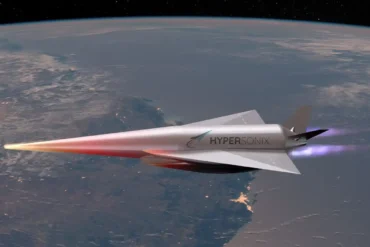
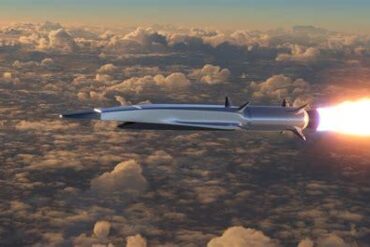
At the core of the ET-LDHCM lies its air-breathing scramjet engine, a critical differentiator from traditional ballistic systems. Unlike rocket engines that rely on stored oxidizers, the scramjet draws atmospheric oxygen during flight, allowing extended propulsion at hypersonic speeds. In November 2024, a 1,000-second ground test of this scramjet validated its functionality under extreme conditions, including sustained exposure to temperatures exceeding 2,000°C.
The missile’s body employs cutting-edge, oxidation- and heat-resistant materials, co-developed with the Department of Science and Technology. These materials, paired with active thermal coatings, ensure structural integrity during both ascent and atmospheric cruise. This engineering permits not only speed and endurance, but also repeated survivability under operational stress—critical for multiple-platform deployments and long-range missions.
Range, Payload, and Warhead Flexibility
The ET-LDHCM is designed with multi-role adaptability, offering strike radii from 1,500 km in standard mode to potentially 2,500 km in optimized configurations. This makes it suitable for regional counter-force roles as well as strategic deterrence.
The missile can carry warheads between 1,000 and 2,000 kilograms, with compatibility for both conventional and nuclear payloads. This dual-capable nature significantly amplifies its deterrent value. Targeting systems include inertial navigation with satellite-based augmentation, either through India’s NavIC or GPS networks. Combined with low-altitude cruise profiles and high maneuverability, these systems render the missile difficult to detect, track, or intercept.
Additionally, at hypersonic speeds, the missile ionizes surrounding air, creating a plasma sheath that absorbs radar waves. This contributes to a reduced radar cross-section, making it highly stealthy in flight. These design choices equip the ET-LDHCM for engagements against hardened, mobile, and high-value targets such as naval assets, radar nodes, command bunkers, and strategic air bases.
Multi-Platform Deployment and Strike Versatility
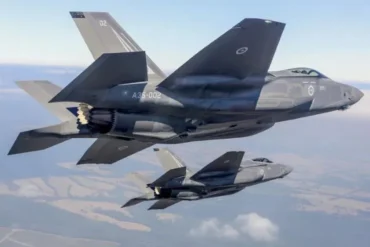
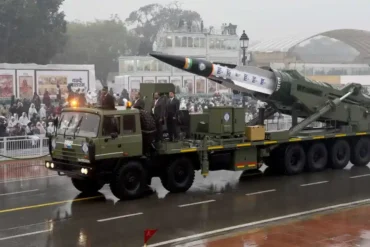
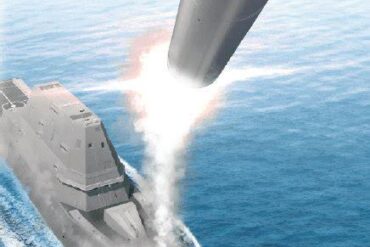
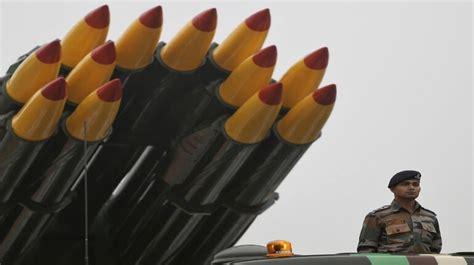
Unlike legacy ballistic missiles that require fixed or silo-based launching, the ET-LDHCM is a multi-platform missile, compatible with land-based mobile launchers, naval warships, and air-launched platforms like the Su-30MKI and Rafale fighter jets. This multi-domain integration introduces unprecedented flexibility into India’s warfighting strategy.
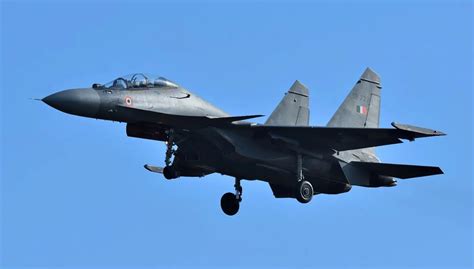
Such adaptability enhances India’s second-strike survivability, rapid response options, and cross-theater deployment readiness, especially critical given the increasing maritime competition in the Indian Ocean Region (IOR) and China’s expanding Indo-Pacific posture.
Strategic Context: Responding to a Tense Regional Landscape
The test’s timing is not incidental. Regional dynamics are heating up. China’s advancement of the DF-ZF glide vehicle and DF-21D anti-ship missiles, combined with Pakistan’s defense partnership with Turkey, are shifting threat perceptions. India’s development of ET-LDHCM is both a technological achievement and a clear signaling instrument aimed at bolstering deterrence through credibility and survivability.
The ET-LDHCM’s design explicitly counters modern air defense architectures like Israel’s Iron Dome, the U.S. THAAD, and Russia’s S-500. These systems are optimized for high-arc, predictable missile trajectories. In contrast, the ET-LDHCM operates at low altitudes, unpredictable courses, and extreme speeds, giving defenders little time to react.
Civilian Spin-offs and Indigenous Industrial Impact
While the missile’s primary focus is strategic military superiority, its development also contributes to broader Indian scientific and industrial goals. Materials science innovations, heat shielding technologies, and miniaturized inertial systems have applications in aerospace, satellite launch systems, and civilian supersonic transport.
The project has been a collaborative effort involving Indian private defense firms and SMEs, in line with India’s “Make in India” doctrine. This reduces dependency on foreign suppliers while nurturing a resilient defense manufacturing ecosystem. The ripple effect includes job creation, tech transfer, and export opportunities, particularly for friendly nations seeking advanced strike capabilities.
Comparative Analysis: ET-LDHCM vs Global Hypersonic Missiles
Compared to its own arsenal, India’s previous hypersonic-like assets such as BrahMos (Mach 3) or Agni-5 (ballistic, non-maneuverable) fall short in speed, altitude control, and platform flexibility. Even the Shaurya missile, although hypersonic, lacks sustained atmospheric cruise and mid-flight evasiveness.
In contrast, the ET-LDHCM maintains powered flight at hypersonic velocity, enabling real-time adjustments to course and altitude. Against the global backdrop:
- Russia’s 3M22 Zircon is scramjet-powered and reaches Mach 8, but reportedly has a shorter operational range.
- U.S. LRHW (Dark Eagle) uses boost-glide tech for Mach 17 speeds and 2,776 km range, with sophisticated satellite tracking.
- China’s DF-ZF and DF-27 are also glide-based, sacrificing sustained powered flight for long-range maneuvers.
India’s approach emphasizes continuous propulsion, plasma stealth, and atmospheric maneuverability, aligning it more closely with U.S. and Russian scramjet-powered cruise missiles rather than Chinese glide vehicles.
What Comes Next: Toward Operational Readiness
The ET-LDHCM is currently transitioning from testbed to combat readiness. Further validation will include:
- Electronic countermeasure (ECM) resistance trials
- Guidance refinement and sensor fusion with satellite/aerial ISR assets
- Platform integration stress tests, particularly with naval vessels and air-launched configurations
- Live-fire exercises in multi-domain war games
Full operational capability is expected before 2030, with DRDO’s roadmap indicating new variants, including hypersonic glide vehicles (HGVs) by 2027–28. India’s focus will remain on enhancing deterrence, precision strike, and survivability, both in peacetime posture and potential active engagements.
Final Word: A Hypersonic Threshold Crossed
The successful test of the ET-LDHCM marks not only a technological milestone but a strategic inflection point. By mastering scramjet propulsion, high-temperature survivability, low observability, and multi-platform deployment, India has established itself as a serious player in the hypersonic domain. As the regional arms race evolves, ET-LDHCM serves as a formidable instrument of power projection, deterrence, and future warfare readiness—a missile designed not just for today’s battlespaces but for tomorrow’s multi-domain conflicts.