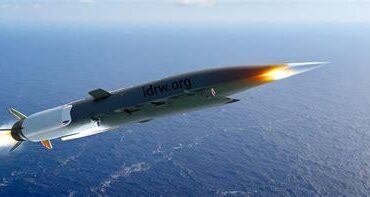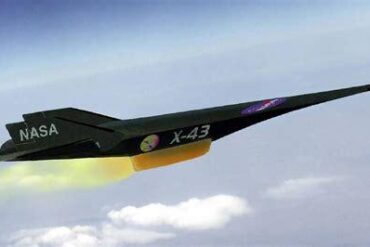
The prospect of crossing the Pacific Ocean in under two hours has shifted from speculative fiction to a tangible engineering milestone, as Japan’s aerospace sector delivers a critical breakthrough in hypersonic propulsion. A collaborative effort led by Japan Aerospace Exploration Agency alongside leading academic institutions has successfully demonstrated a ground-based combustion test of a Mach-5 ramjet engine, marking a decisive step toward ultra-fast commercial aviation.
This achievement signals more than incremental progress. It redefines the performance ceiling of air travel, introducing a propulsion concept capable of sustained hypersonic speeds while maintaining structural integrity under extreme thermal stress. Engineers validated the engine’s combustion stability, airflow dynamics, and thermal shielding in a controlled environment designed to replicate flight conditions at altitudes nearing 25 kilometers—far beyond conventional cruising levels.
The implications are immediate and profound. A future aircraft powered by this system could reduce a Tokyo–Los Angeles journey from nearly 10 hours to just two, collapsing intercontinental distance into a time frame previously reserved for regional flights.
Inside the Mach-5 Ramjet Propulsion System
At the heart of this development lies the ramjet engine, a propulsion system distinguished by its elegant simplicity and extreme capability. Unlike turbofan engines that rely on rotating compressors and turbines, ramjets operate without moving parts. Instead, they depend on high-speed forward motion to compress incoming air, which is then mixed with fuel and ignited to produce thrust.
This design eliminates mechanical complexity while unlocking performance at speeds far beyond traditional jet engines. However, the trade-off is equally demanding: ramjets require an initial boost to supersonic velocity before they can function efficiently, making them part of a broader propulsion architecture rather than a standalone solution.
During testing at JAXA’s Kakuda Space Center, engineers simulated Mach-5 conditions, where airflow compresses violently and temperatures surge beyond 1,000 degrees Celsius along the aircraft’s leading edges. These extreme conditions represent one of the most formidable barriers in hypersonic flight—thermal management.
Engineering for Extreme Heat and Structural Survival
Sustaining controlled flight at Mach-5 demands more than propulsion; it requires materials and systems capable of enduring relentless thermal and aerodynamic stress. The Japanese team addressed this challenge with an advanced thermal protection system designed to shield critical onboard systems from heat exposure that would otherwise render electronics inoperable.
Sensors embedded across the test structure mapped temperature gradients in real time, allowing engineers to validate predictive models and refine heat distribution strategies. Maintaining stable internal conditions despite external extremes is essential for scaling the technology into a passenger-capable aircraft.
This focus on survivability aligns with parallel developments such as NASA X-59 QueSST, which explores noise reduction in supersonic travel. Together, these advancements signal a broader transformation in how aerospace engineers approach high-speed flight—balancing performance with safety, efficiency, and regulatory feasibility.
From Ground Tests to Hypersonic Passenger Travel
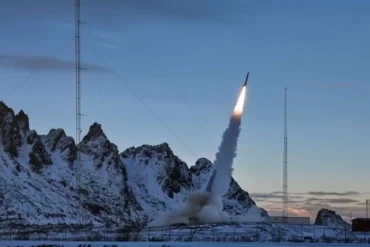
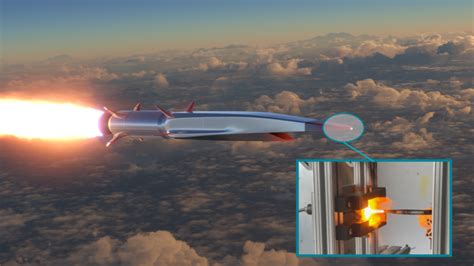
Despite the successful ground trial, the journey toward commercial hypersonic aviation remains complex. The next phase involves mounting the experimental vehicle on a sounding rocket to validate performance in real flight conditions. This step will test not only propulsion efficiency but also guidance systems, aerodynamic stability, and real-world thermal resilience.
Sounding rockets, typically used for suborbital research, provide a cost-effective platform for high-speed experimentation without the full complexity of orbital launch systems. If these tests succeed, they will bridge the gap between controlled simulations and operational aircraft design.
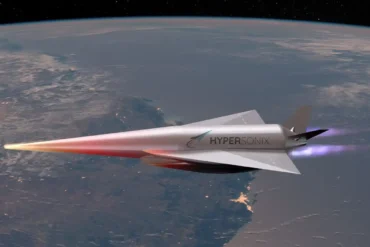
The long-term vision extends toward the 2040s, when hypersonic passenger aircraft could enter commercial service. At cruising altitudes nearly double those of today’s airliners, these vehicles would operate in thinner atmospheric conditions, reducing drag while enabling unprecedented speeds.
Redefining Global Mobility and Aviation Economics
The ability to traverse continents in hours rather than half a day carries transformative implications for business, tourism, and global connectivity. A same-day round trip between Asia and North America would no longer be a logistical strain but a practical reality, reshaping expectations around distance and time.
However, challenges remain. Regulatory frameworks, environmental concerns, and cost structures must evolve alongside technological progress. Hypersonic travel demands new air traffic management systems, advanced materials supply chains, and rigorous safety certification protocols.
Yet the trajectory is unmistakable. Japan’s successful Mach-5 engine test represents a foundational leap—one that brings the aviation industry closer to a future where speed is no longer a constraint, but a defining feature of global mobility.