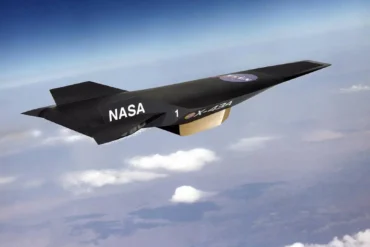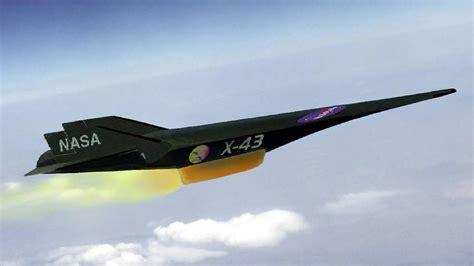
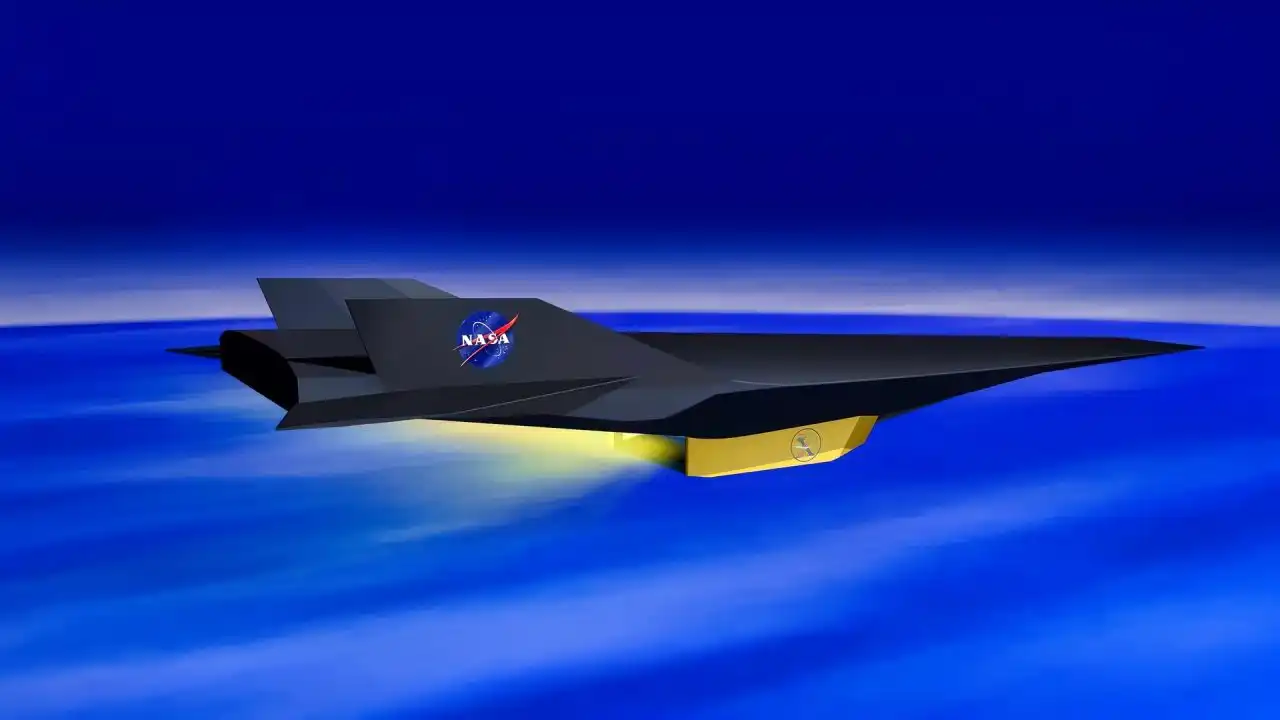
NASA’s fastest aircraft ever built remains the extraordinary X-43, a tiny unmanned hypersonic research vehicle that reshaped the boundaries of atmospheric flight. The X-43 was engineered as a single-use experimental platform, carried aloft by a B-52 Superfortress, boosted by a Pegasus-derived rocket stage, and then ignited into unprecedented velocity using a scramjet engine. While only 12 feet long and five feet wide, this deceptively small vehicle became a monument in aerospace engineering by reaching Mach 9.6, faster than any air-breathing aircraft in history.
The X-43 program was conceived during the late 1990s as a daring attempt to demonstrate air-breathing propulsion at hypersonic speeds beyond Mach 5. Its mission was uncompromising: to validate technologies that no aerospace agency had ever tested under real atmospheric conditions. Hypersonic experiments had previously relied on rockets, but rockets carried their own oxidizer supply and lacked the operational elegance of an engine that could simply breathe Earth’s atmosphere. NASA set out to change that paradigm.
The Hypersonic Benchmark: Inside the X-43 Program
The X-43 program cost roughly $230 million and lasted eight years, culminating in three flight attempts, two of which succeeded and set new global speed records. Each X-43 was built as a disposable research craft, intended to gather data for a single ten-second engine burn before gliding into the Pacific Ocean. The concept was radical: use a scramjet engine—supersonic combustion ramjet—to propel an aircraft faster than any jet or rocket-powered atmospheric vehicle had ever flown.
Unlike rockets, which carry heavy oxidizer tanks that reduce payload efficiency, scramjets rely entirely on atmospheric oxygen. Air enters the inlet at hypersonic speeds, compresses from sheer velocity alone, mixes with fuel, and combusts supersonically. This design allows for lighter, smaller vehicles capable of carrying more payload and achieving greater operational flexibility. During the X-43’s brief but electrifying engine burn, it proved that air-breathing engines could function at speeds approaching Mach 10.
How the Scramjet Enabled Record-Breaking Flight
The scramjet architecture builds upon ramjet principles but eliminates the subsonic combustion requirement. Traditional jet engines use mechanically driven fan stages to compress air, and ramjets compress air via the vehicle’s own speed. Scramjets push this concept to the extreme by sustaining supersonic airflow throughout the engine. This allows theoretical operation up to at least Mach 15, with Mach 7–10 being tested in practical experiments.
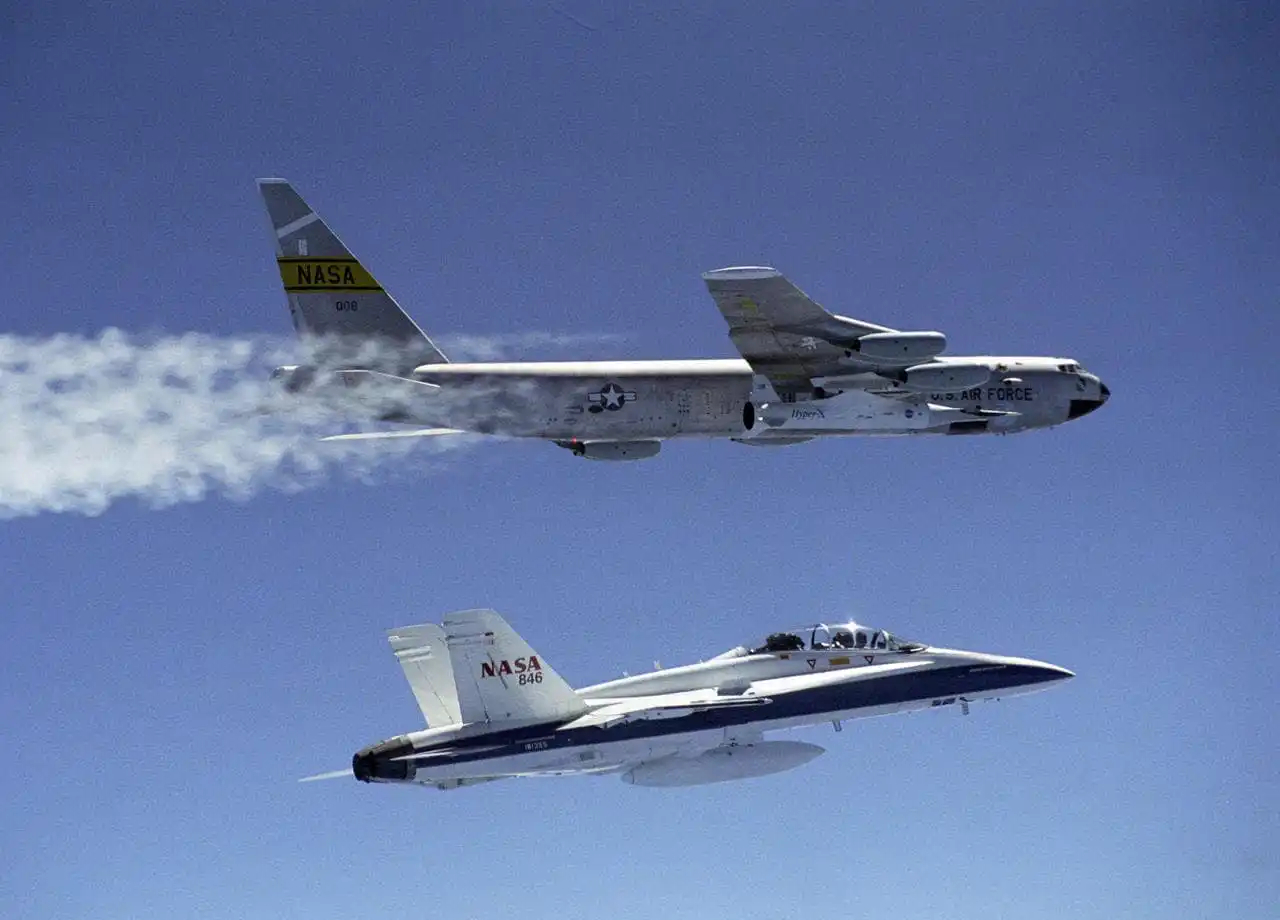
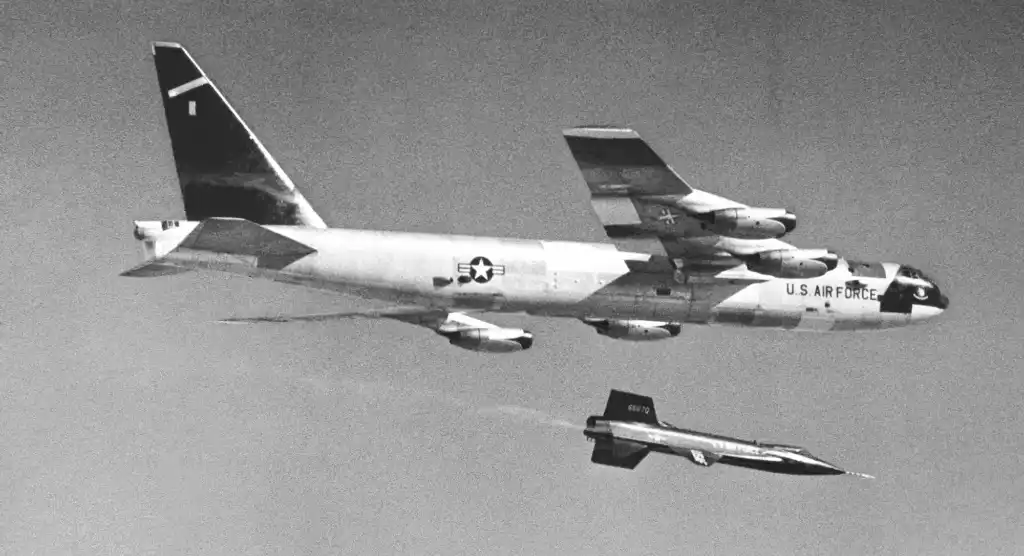
To bring the X-43 into the scramjet’s ideal operating window, NASA used a multi-stage launch sequence. A B-52 released the winged booster aircraft at altitude, the booster accelerated the research vehicle to Mach 5+, and then detached, leaving the scramjet to ignite. Once the scramjet consumed its fuel, the aircraft continued gliding for nearly ten minutes before crashing into the ocean as planned. Even with only two successful flights, the X-43 delivered more hypersonic data than any previous air-breathing experiment.
The Three Flights That Redefined Speed Records
The first X-43 flight in 2001 ended prematurely due to booster malfunction, preventing the scramjet from being tested. NASA corrected the problem and achieved two victorious flights in 2004. The second X-43 achieved Mach 6.8 in March 2004, validating scramjet stability at near-orbital airflow speeds. The third X-43 reached Mach 9.6 on November 16, 2004—an achievement that remains the highest speed ever recorded by a jet-powered atmospheric vehicle.
These speeds dwarfed the previous champion, the SR-71 Blackbird, which topped out at Mach 3.2. At Mach 9.6, the X-43 traveled at nearly 7,000 mph, fast enough to cover London to New York in under eleven minutes. Slight discrepancies exist in reported data, with the Smithsonian noting speeds “over Mach 10,” though NASA officially lists the top speed as Mach 9.6.
The Legacy of X-15: NASA’s Fastest Manned Aircraft
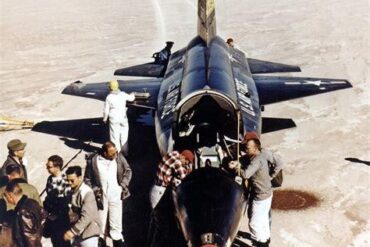
While the X-43 holds NASA’s overall speed record, the North American X-15 remains the fastest manned aircraft ever flown. Built in the 1960s, the X-15 was a rocket-powered research plane that reached Mach 6.7 and climbed to an altitude of 354,200 feet. The aircraft blurred the line between aviation and spaceflight, qualifying several pilots—including Neil Armstrong—as astronauts. Its record-setting Mach 6.7 flight in October 1967 has never been surpassed by any crewed aircraft.
The Future: Hypersonic Projects Beyond the X-43
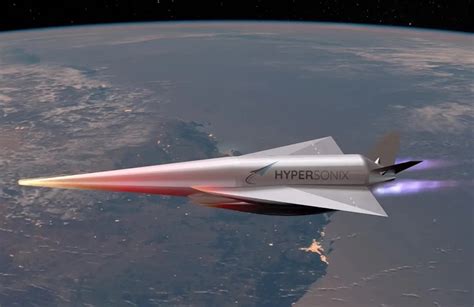
After the success of the X-43, hypersonic research spread across military, government, and commercial sectors. Australia’s Hypersonix has emerged as a key partner, collaborating with NASA and developing 3D-printed hydrogen-fueled scramjets capable of an anticipated Mach 12. This pushes hypersonic propulsion far beyond the limits achieved two decades ago.
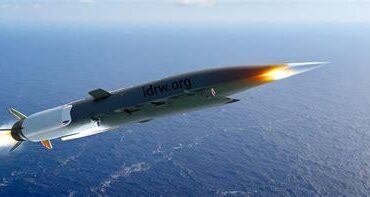
The U.S. Air Force continued the lineage with the X-51A Waverider program, which achieved the longest powered hypersonic scramjet flight in 2013. Current programs include the Lockheed Martin ARRW and Raytheon’s Hypersonic Attack Cruise Missile (HACM), both launched from B-52s like their predecessors. Other nations, including Russia and China, claim progress in hypersonic weapons, though many systems labeled “hypersonic” rely on ballistic trajectories rather than true sustained scramjet propulsion.
The Hypersonic Race and Its Implications
Hypersonic technology is rapidly becoming a pivotal frontier for defense, intelligence, and future orbital launch systems. For a vehicle to be genuinely hypersonic, it must maneuver and sustain Mach 5+ speeds during the terminal phase of flight, not merely reach hypersonic velocity in a ballistic arc. This distinction is critical as global competition accelerates. Scramjet-powered systems promise reusable, efficient, and incredibly fast transportation—potentially enabling intercontinental travel in under an hour.
NASA’s X-43 program remains a foundational stepping-stone toward this future. Its groundbreaking flights demonstrated that air-breathing propulsion at near-orbital speeds is achievable, ushering in a new era of aerospace engineering that blends atmospheric flight with the physics of space access. The X-43’s legacy still shapes hypersonic research, commercial development, and global aerospace competition, proving that the limits of speed are far from reached.