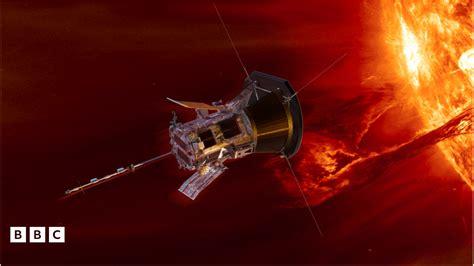
For centuries, humans have searched for ways to move faster, from early machines and aircraft to rockets capable of leaving Earth. Modern jets, spacecraft, and experimental vehicles have pushed the boundaries of speed, but the fastest man-made object ever recorded is not an aircraft or a land vehicle. It is NASA’s Parker Solar Probe, a spacecraft designed to travel through one of the most extreme environments in the solar system while reaching an unbelievable velocity.
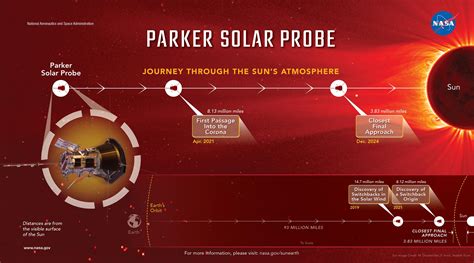
The Parker Solar Probe achieved its historic speed during its close approach to the Sun on December 24, 2024. At that moment, the spacecraft reached approximately 430,000 miles per hour, or around Mach 560, making it the fastest human-built object ever measured. To understand how extreme this speed is, the probe could travel from Philadelphia to Washington, D.C., in about one second. Even the fastest military aircraft and spacecraft launched from Earth cannot approach this incredible velocity.
How Parker Solar Probe Reached Record-Breaking Speed
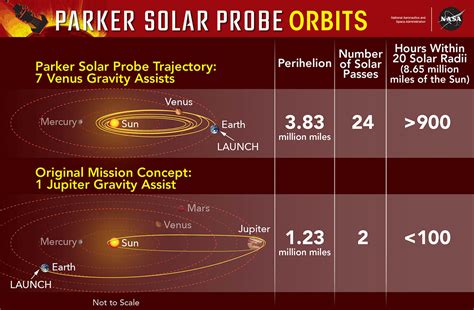
Unlike a traditional rocket that continuously burns fuel to accelerate, Parker Solar Probe uses the laws of orbital mechanics and the Sun’s enormous gravitational force. The spacecraft launched on August 12, 2018, aboard a Delta IV Heavy rocket, but the rocket only provided the initial energy needed to begin the mission. The record-breaking speed came later through a carefully designed series of movements around the solar system.
The probe performs repeated gravity assists from Venus, using each flyby to reduce its orbital energy and bring it closer to the Sun. As Parker falls deeper into the Sun’s gravitational field, it naturally accelerates, similar to how a roller coaster gains speed while descending a steep track. The spacecraft’s engineers carefully calculated every maneuver to create the perfect path for reaching maximum velocity during its closest solar encounters.
The spacecraft’s mission is not simply about breaking speed records. Parker Solar Probe was created to study the Sun’s outer atmosphere, known as the corona, and investigate the mysteries behind solar wind. Scientists hope the data collected by the probe will improve our understanding of solar activity and how it affects Earth’s space environment, including satellite operations, communication systems, and astronaut safety.
Surviving the Extreme Conditions Near the Sun
Reaching record speed is only part of Parker Solar Probe’s achievement. The spacecraft must also survive conditions that would destroy ordinary machines. During its closest approaches, Parker travels through the Sun’s outer atmosphere while facing intense radiation and temperatures reaching thousands of degrees.
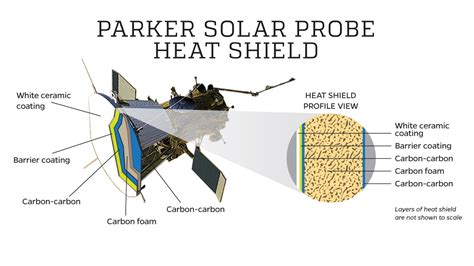
To protect its instruments, the spacecraft uses a specially engineered carbon-composite heat shield known as the Thermal Protection System. The shield is approximately 4.5 inches thick and designed to withstand temperatures exceeding 2,500 degrees Fahrenheit. While the outside of the shield experiences extreme heat, the spacecraft’s scientific instruments remain at much safer operating temperatures.
Why Spacecraft Are Faster Than Aircraft and Vehicles
On Earth, vehicles are limited by atmospheric resistance. Even advanced aircraft such as the Grumman F-14 Tomcat face significant restrictions because air friction increases dramatically at high speeds. A fighter jet capable of exceeding Mach 2 still cannot compete with spacecraft moving through the near-vacuum of space.
The current land speed record is just over 763 miles per hour, while some bullets can travel several thousand miles per hour. These speeds appear impressive on Earth, but they remain tiny compared with objects moving through space. Without atmospheric drag and with the help of gravitational forces, spacecraft can achieve velocities that seem impossible from a human perspective.
The Future of Extreme Speed in Space Exploration
Parker Solar Probe’s record is expected to remain a landmark achievement for years. The spacecraft continues making close approaches to the Sun, and mission planners expect it to repeatedly reach similar speeds during future encounters. Each pass provides scientists with new information about our star and demonstrates the possibilities of advanced spacecraft engineering.
The record of 430,000 miles per hour represents more than just a number. It shows what is possible when physics, engineering, and decades of scientific research come together. Parker Solar Probe is not only the fastest man-made object ever recorded; it is also a symbol of humanity’s ability to explore environments far beyond Earth and push the limits of technology.