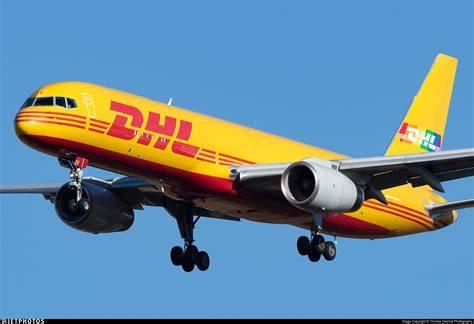
A DHL cargo aircraft was forced to abandon its landing attempt at Leipzig/Halle Airport (LEJ), Germany, after authorities discovered a drone carrying a suspected explosive device near the runway area. During the subsequent go-around maneuver, the aircraft reportedly struck an unidentified flying object before diverting safely to Hannover Airport (HAJ), where inspectors found minor damage to the aircraft’s forward section.
The incident has triggered a major investigation involving German security agencies, aviation authorities, and criminal investigators. Officials are examining whether the DHL aircraft collided with another drone and whether the two incidents are connected. The possibility of a coordinated attack has raised concerns about the vulnerability of major European logistics hubs to increasingly sophisticated drone threats.
Explosive-Laden Drone Discovered Near Critical Leipzig Cargo Operations
The security incident began shortly before midnight on August 4 at Leipzig/Halle Airport, one of Europe’s most important freight hubs. A group participating in an organized nighttime airport bus tour reportedly noticed a small quadcopter hovering near several parked Antonov An-124 heavy-lift aircraft operated by Ukraine’s Antonov Airlines.
The drone was operating near aircraft that have been based at Leipzig since Ukrainian airspace restrictions began following Russia’s invasion of Ukraine in 2022. These giant freighters support international cargo missions, including humanitarian transport and strategic airlift operations conducted through the Leipzig-based SALIS program for NATO members.
According to German media reports, the tour guide approached the drone and pushed it onto the ground, apparently unaware of the potential danger. Authorities later discovered an attached device approximately the size of a small tin can. Investigators described the object as being designed either to explode or ignite.
Police immediately secured the area and called explosives specialists to examine the device. Later reports from German investigative outlets indicated that testing detected traces of PETN and Semtex, both highly powerful explosives. Investigators believe the detonator may have become detached or damaged, which could explain why the device failed to activate.
Leipzig Airport Shutdown Disrupts DHL’s Global Cargo Network
Following the discovery, Leipzig/Halle Airport activated emergency response procedures and temporarily suspended operations. The southern runway was closed while bomb-disposal specialists used specialized equipment, including a disposal robot, to inspect the suspicious device and surrounding area.
The disruption affected numerous flights. Authorities reported that 19 cargo aircraft and one passenger flight were impacted as arriving aircraft were instructed to delay approaches, divert, or abandon planned landings. The northern runway reopened after approximately two hours, but the southern runway remained unavailable while investigators collected evidence.
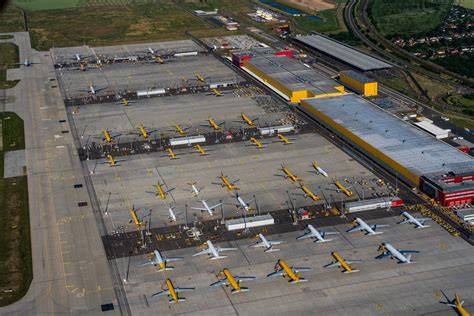
The impact was particularly significant because Leipzig/Halle is the central European hub for DHL Express, serving as one of the company’s most important overnight sorting and distribution centers.
The facility handles more than 2,500 metric tons of freight every day and can process approximately 150,000 shipments per hour through its highly automated sorting system. With thousands of shipments moving through the hub overnight, even short operational interruptions can affect delivery networks across multiple countries.
The airport supports DHL’s global operations with more than 7,000 employees, nearly 50 direct destinations, up to 64 aircraft parking positions, and an apron area covering roughly 640,000 square meters. Its role makes Leipzig not only a commercial aviation facility but also a piece of critical European logistics infrastructure.
DHL Boeing 757 Encounters Unknown Object During Go-Around
Among the aircraft affected by the runway closure was a DHL Boeing 757-200 freighter, registered as D-ALEU, arriving from Marseille Provence Airport in France. The aircraft was already on final approach when the crew was informed of the runway emergency.
The pilots initiated a go-around at approximately 1,000 feet above the airport, applying additional thrust and climbing away from the runway environment. During the climb, at an altitude of around 1,300 feet, the aircraft reportedly struck an unidentified object.
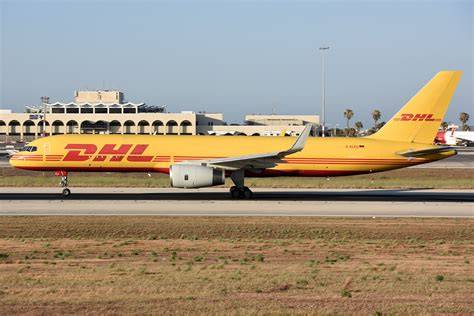
Authorities have not confirmed that the object was another drone. Saxony investigators have referred to it as a “presumed second unidentified flying object.” The exact size, type, and origin of the object remain unknown.
After the collision, the flight crew decided to divert to Hannover Airport, located approximately 130 miles northwest of Leipzig. The aircraft landed safely about one hour after the aborted approach.
A post-flight inspection revealed minor damage around the forward section of the aircraft. No injuries were reported among the crew, and the aircraft remained under examination while investigators searched for possible debris and evidence linking the object to the earlier drone incident.
German Authorities Investigate Possible Hybrid Threat
The investigation has now expanded beyond a routine aviation safety inquiry. The Dresden General Prosecutor’s Office, Saxony’s Central Office for Extremism, and the state criminal police are handling the case.
Officials have emphasized that Leipzig/Halle Airport represents critical infrastructure and that any attempt to disrupt operations will be treated as a serious criminal matter.
Saxony Justice Minister Constanze Geiert stated that attacks against essential infrastructure must be prosecuted with the strongest possible legal response. Federal Interior Minister Alexander Dobrindt also warned that an explosive-carrying drone entering airport property represented a significant escalation.
Dobrindt suggested the incident could represent a professional hybrid operation, noting that preparing an explosive device and deploying it near a major airport would likely require specialized knowledge. However, German officials have avoided assigning responsibility to any specific country or organization while investigations continue.
The caution reflects previous concerns surrounding DHL facilities. In 2024, an incendiary package caught fire at a DHL logistics center before it could be loaded onto an aircraft. German officials later linked that incident and similar cargo-related sabotage attempts across Europe to suspected Russian intelligence networks.
Drone Threats Continue To Challenge German Airports
The Leipzig incident occurred amid a growing number of unauthorized drone sightings across Germany’s aviation network. Data from German air navigation provider DFS showed that Leipzig/Halle recorded 18 drone-related incidents during the first half of 2026.
Other major airports experienced even higher numbers, including Berlin Brandenburg with 28 incidents, Frankfurt with 27, and Bremen with 23. These figures highlight the increasing challenge airports face as commercially available drones become cheaper, more capable, and easier to operate.

Despite expanded government coordination on counter-drone measures, reports indicate Leipzig was still awaiting dedicated drone detection equipment at the time of the incident. The most concerning aspect is that the explosive-equipped drone was stopped not by advanced technology, but by a civilian airport visitor who noticed suspicious activity.
The DHL aircraft collision and explosive drone discovery demonstrate how modern aviation security threats are evolving beyond traditional risks. Major cargo airports are now facing challenges involving unmanned systems, sabotage attempts, and potential hybrid operations.
As investigators work to identify the object struck by the DHL Boeing 757 and determine who was responsible for deploying the explosive drone, the incident is likely to accelerate calls for stronger drone detection and defense systems at airports throughout Europe.