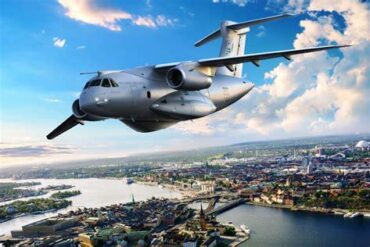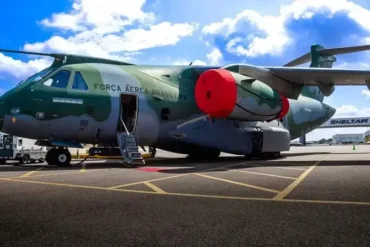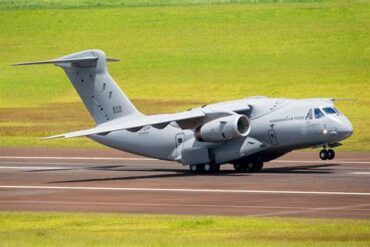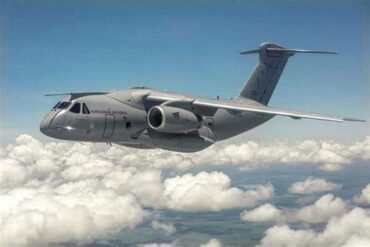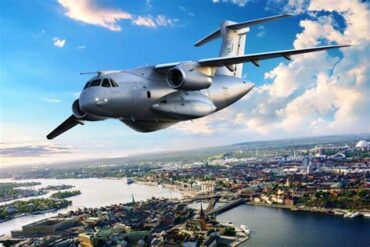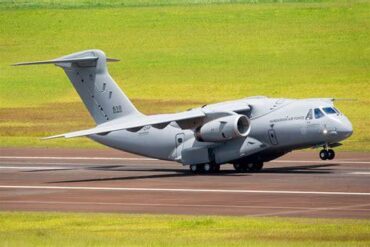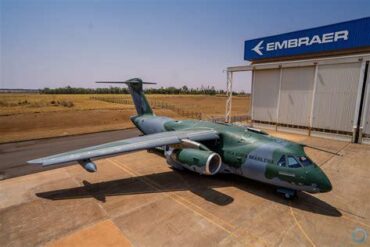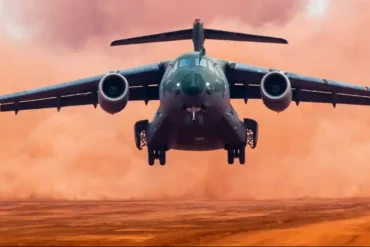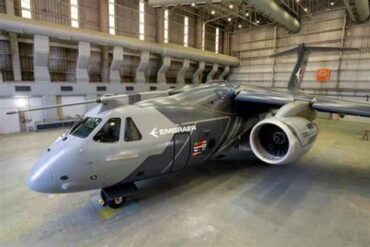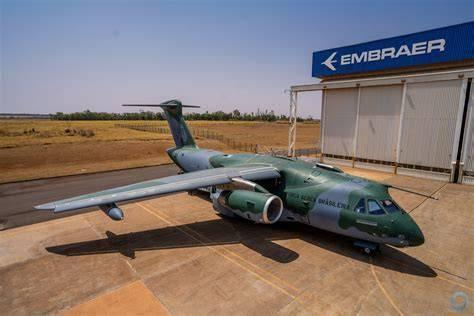
The global military transport market has long been dominated by a handful of established aircraft families, but a new contender has changed the conversation. The Embraer C-390 Millennium has emerged as a practical solution for countries that need more capability than a light tactical transporter but cannot justify the enormous cost and complexity of larger strategic airlifters.
For many smaller nations, military airlift is not about owning the biggest aircraft available. It is about finding the right balance between payload capacity, operating costs, speed, political reliability, and long-term sustainability. The C-390 occupies precisely that middle ground, offering capabilities close to larger transports while remaining within reach of countries with limited defense budgets.
Although Brazil is the aircraft’s primary developer, the C-390 is increasingly viewed as a Western-aligned military transport aircraft because of its extensive international supply chain and compatibility with NATO partners. It provides an alternative to the American Lockheed Martin C-130J Super Hercules, while avoiding the political and logistical challenges that can come with purchasing Russian or Chinese military aircraft.
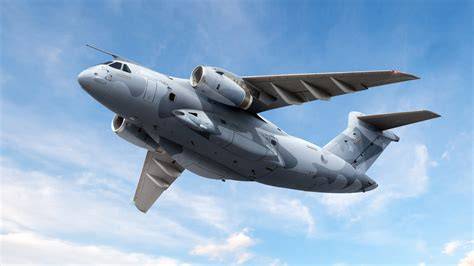
The Embraer C-390 Millennium Fills the Gap Between Light and Heavy Airlifters
Military transport aircraft are not simply categorized by whether they use turbofan engines or turboprops. Their roles are determined by a combination of payload, range, runway requirements, and operational flexibility. The C-390 was designed to fill a gap that had become increasingly obvious in the international market.
At the lower end of the market is the Airbus C-295, a smaller tactical transport designed for countries that require affordable mobility rather than heavy cargo capability. The aircraft can transport around 70 soldiers, carry five standard pallets, and lift approximately 9,000 kilograms of cargo. It is efficient and economical but lacks the capacity required for many modern military missions.
At the opposite end is the Airbus A400M Atlas, a much larger tactical and strategic transport capable of carrying approximately 37,000 kilograms of payload. The A400M provides impressive performance, but its size, four-engine configuration, and acquisition costs place it beyond the reach of many smaller air forces.
The C-390 sits between these two aircraft. It can carry up to 26,000 kilograms of cargo, transport approximately 80 troops or 66 paratroopers, and fly at speeds approaching Mach 0.8. This gives smaller nations a level of capability that previously required purchasing much larger and more expensive aircraft.
Unlike traditional turboprop transports, the C-390’s jet-powered design provides higher cruising speeds, allowing military planners to move personnel, humanitarian supplies, and equipment faster over long distances.
Why Smaller Nations Are Turning Toward the Embraer C-390
The biggest advantage of the C-390 is not that it is the most powerful airlifter available. Instead, it offers one of the strongest combinations of capability and affordability currently available on the Western market.
Many countries operate aging fleets of older transport aircraft, particularly legacy C-130 Hercules variants or Soviet-era Antonov transports. Replacing these aircraft requires a solution that can provide decades of future service without overwhelming defense budgets.
The C-390 addresses this challenge by delivering performance that exceeds many older medium transports while maintaining manageable operating requirements. For smaller nations, every aircraft purchase represents a major strategic decision. Buying a transport aircraft is not only about the initial price but also about training, spare parts, maintenance infrastructure, and future upgrades.
The C-390 benefits from being part of a broader Western industrial ecosystem. Countries purchasing the aircraft gain access to supply chains involving Brazil, the United States, and multiple European nations. This reduces concerns about long-term support and creates opportunities for cooperation with allied air forces.
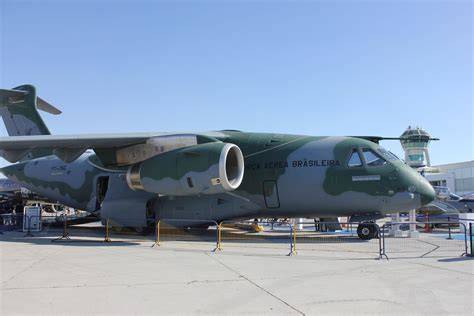
A Truly International Aircraft Built Through Western Cooperation
Although the C-390 is often described as a Brazilian aircraft, its production represents a much broader industrial partnership. Embraer leads the aircraft’s design, engineering, systems integration, software development, certification, testing, and final assembly.
Brazil provides the majority of the aircraft’s value through its aerospace expertise, including major structures such as the fuselage and wings. Embraer’s experience developing commercial aircraft has helped the C-390 achieve a level of technological sophistication uncommon among military transports in this category.
The United States contributes important systems, most notably the IAE V2500-E5 turbofan engines. These engines are produced by International Aero Engines, a multinational partnership involving Pratt & Whitney, MTU Aero Engines, and Japanese Aero Engines Corporation.
European nations also play significant roles. Czech companies contribute rear fuselage structures, cargo ramps, doors, and wing components. Portugal’s OGMA produces important structures, including sections of the center fuselage and horizontal stabilizers. Germany supplies landing gear systems, while other European partners contribute additional components and technologies.
This international manufacturing network is strategically important. Many nations are increasingly cautious about relying on suppliers from countries that may become geopolitical competitors. The C-390 offers an alternative that fits comfortably within the defense ecosystems of NATO members and other Western-aligned states.
The C-390 Versus the Lockheed Martin C-130J Super Hercules
The aircraft most often compared with the C-390 is the Lockheed Martin C-130J Super Hercules. For decades, the Hercules family has been the global standard for medium military transport aircraft, with hundreds of operators worldwide.
The C-130J remains a highly capable aircraft with several advantages. It has decades of operational experience, a massive user community, proven reliability, and excellent performance from short and rough airfields. For countries already operating older C-130 variants, transitioning to the C-130J is also relatively straightforward.
However, the C-390 introduces several advantages. It carries a larger maximum payload of approximately 26 tons compared with around 20 tons for the C-130J-30. It is also significantly faster due to its twin-engine turbofan configuration.
The higher speed of the C-390 can be valuable for modern military operations. Faster transportation means aircraft can deliver troops, supplies, and humanitarian aid more quickly while spending less time exposed to potential threats.
The competition between the two aircraft is therefore not simply about technical specifications. The C-130J offers maturity and proven history, while the C-390 offers newer technology, higher speed, and strong growth potential.
For countries building a future transport fleet rather than replacing aircraft one-for-one, the C-390 represents an increasingly attractive option.
Growing International Demand Strengthens the C-390 Program
One of the biggest challenges facing any new military aircraft is gaining enough customers to ensure long-term support. The C-390 has steadily overcome this challenge by attracting a growing list of international buyers.
Brazil remains the largest operator, with 19 aircraft planned or delivered. Portugal, Hungary, and the Czech Republic have also introduced the aircraft into service. Future operators include Austria, the Netherlands, South Korea, Sweden, Uzbekistan, and the United Arab Emirates.
This expanding customer base is important because military aircraft programs benefit from scale. More operators mean more spare parts demand, more maintenance expertise, more upgrades, and greater interoperability between allied nations.
The C-390’s growing success also demonstrates a shift in the military transport market. Countries that once had limited choices between expensive Western aircraft and politically complicated alternatives now have another option.
The aircraft is particularly attractive for nations replacing older Soviet-designed transports. As Antonov production declined after geopolitical tensions between Ukraine and Russia, many countries lost access to an affordable medium transport option.
The C-390 has effectively stepped into that market position by providing a modern aircraft supported by a stable international industrial network.
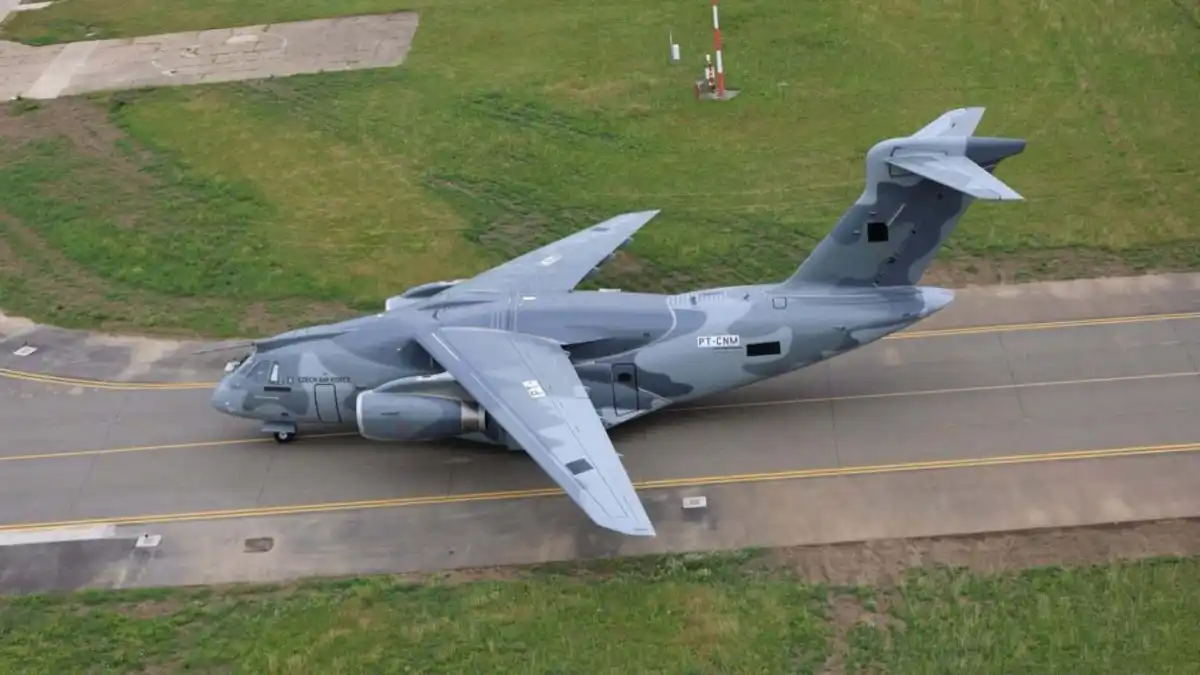
How Much Does the Embraer C-390 Millennium Cost?
Determining the exact price of a military aircraft is difficult because contracts often include training, simulators, spare parts, maintenance packages, and long-term support agreements.
However, available contracts provide a general estimate. Austria announced a purchase of four C-390 aircraft valued at approximately $532 million, suggesting a unit cost in the range of roughly $130 million to $170 million depending on included equipment and support.
The Czech Republic agreed to purchase two aircraft for approximately $480 million to $500 million, including additional services and support packages. These figures place the C-390 in a similar price category to the C-130J Super Hercules.
The aircraft is significantly more expensive than smaller transports such as the C-295, but it also delivers nearly three times the payload capacity. Meanwhile, larger aircraft such as the A400M operate in an entirely different financial category.
For many smaller air forces, the C-390 represents the point where capability becomes affordable. It provides enough capacity for strategic missions without requiring the financial commitment associated with larger transports.
The Future of the Affordable Western Military Airlifter Market
The Embraer C-390 Millennium is not designed to replace every military transport aircraft. The C-130J will remain a major player, the C-295 will continue serving smaller missions, and the A400M will fulfill heavy airlift requirements.
However, the C-390 has created a unique position for itself. It offers a combination of jet speed, modern avionics, significant payload capacity, and Western industrial support that few competitors can match.
For smaller nations seeking a modern military transport aircraft, the choice is increasingly clear. They do not necessarily need the largest airlifter. They need an aircraft that can perform essential missions, integrate with allies, and remain affordable throughout decades of service.
That is the reason the Embraer C-390 Millennium has become one of the most important new military transport aircraft in the world. It represents a practical middle path between limited capability and excessive cost, giving smaller nations access to a level of air mobility that was previously difficult to achieve.