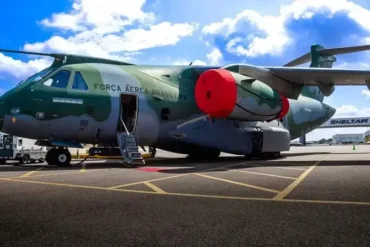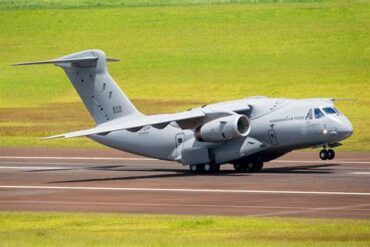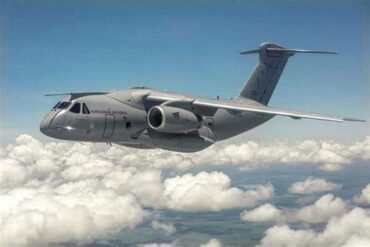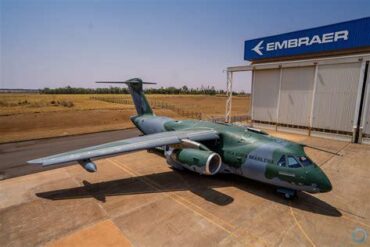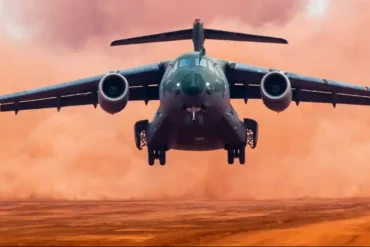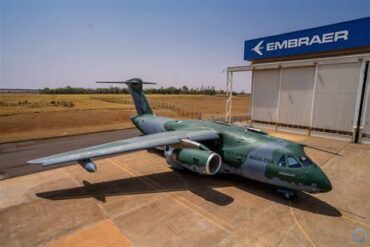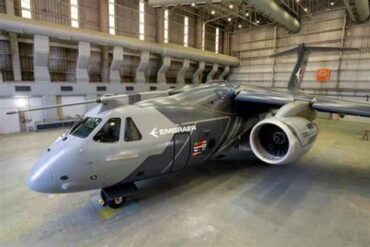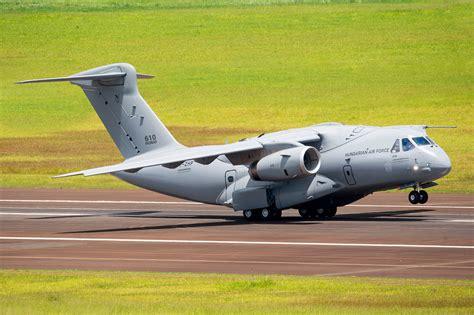
Brazilian aerospace leader Embraer has officially fulfilled its contract with the Hungarian Air Force, delivering the second and final C-390 Millennium aircraft during a formal handover ceremony at Kecskemét Air Base on November 21, 2025. This milestone marks Hungary as the first global customer to receive all aircraft from its C-390 order, firmly establishing the nation as the second NATO operator of the next-generation tactical airlifter.
The latest delivery joins the first aircraft, which entered service in late 2024. Together, these two advanced platforms provide Hungary with a strategically vital airlift and refueling capability, designed to support a broad spectrum of missions ranging from logistics operations and troop transport to disaster response and humanitarian relief.
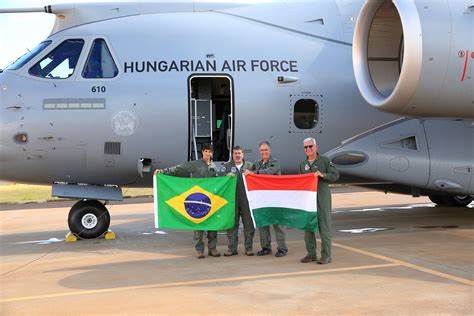
A Transformational Addition to Hungary’s Defense Capabilities
The second C-390’s delivery was accompanied by a high-level ceremony attended by Hungarian Defense Minister Kristóf Szalay-Bobrovniczky and senior Embraer executives, underscoring the aircraft’s strategic importance. Each of the two aircraft is equipped with a world-first roll-on/roll-off Intensive Care Unit (ICU) module, allowing for rapid transformation into aerial intensive care wards—a groundbreaking capability for medical evacuation missions.
Since entering service, the first Hungarian C-390 has flown a diverse array of missions with a mission success rate exceeding 99%. Now with a second aircraft operational, Hungary can significantly enhance its surge capacity, dividing responsibilities between the two platforms and thereby increasing readiness for both NATO alliance commitments and domestic emergency responses. Minister Szalay-Bobrovniczky emphasized the national impact of this acquisition, stating:
“This is a truly uplifting and joyful moment, an incredibly important event in the development of the Hungarian Air Force… The Hungarian people have become richer and stronger as a result.”
Filling the Gap Left by the An-26 Era
The arrival of the C-390s comes at a pivotal time. Following the retirement of Hungary’s aging Soviet-era An-26 aircraft, the country had become reliant on external chartered transport and multinational C-17 Globemaster III operations. With these modern Brazilian-built aircraft, Hungary regains a sovereign, rapid-deployment medium airlift capability, tailored for jet-speed transport of troops, equipment, and supplies, even in austere or semi-prepared airfields.
Moreover, the modular ICU configuration provides unmatched versatility. Within hours, the aircraft can shift from logistics to high-end medical evacuation, a critical function in regional crises or overseas military deployments. Its NATO-compliant avionics and communications systems further streamline integration into Alliance operations, from airlift rotations to multinational training exercises.
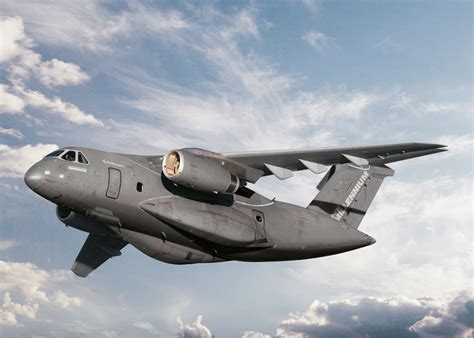
Strategic Implications for Embraer in Europe
Beyond the immediate defense implications, Hungary’s completed C-390 fleet represents a strategic coup for Embraer in the highly competitive European tactical airlift market. As the first operator to receive its full order, Hungary now serves as a real-world showcase for the aircraft’s performance. This success adds momentum to Embraer’s ongoing C-390 campaigns in Europe, building upon early commitments from Portugal, and recent agreements from the Netherlands, Austria, Sweden, and the Czech Republic.
This deployment offers potential buyers access to verified metrics such as:
- High dispatch reliability rates
- Successful medical missions using ICU modules
- Operational readiness within NATO frameworks
Hungary’s experience will likely influence forthcoming replacement competitions for legacy platforms like the C-130 Hercules, bolstering Embraer’s position against long-established rivals.
Looking Ahead: Strengthening Regional Defense Synergy
The delivery also reflects growing industrial and training collaboration between Embraer and its European partners. These closer ties ensure streamlined lifecycle support, enhance logistics efficiency, and improve interoperability across NATO’s tactical fleets. Embraer’s push to integrate the C-390 deeper into Europe’s defense ecosystem could soon make it a cornerstone of mid-21st-century tactical aviation.
In achieving this contract milestone with Hungary, Embraer has done more than deliver two aircraft—it has opened doors to broader strategic influence and reshaped the landscape of European airlift capabilities. With NATO’s evolving mission needs and increasing focus on rapid response, the C-390 Millennium has emerged as a formidable and future-ready platform.