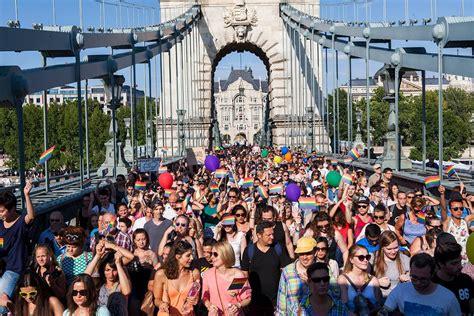
As Budapest Pride 2025 approaches, Belgium has issued a stark travel warning urging caution for citizens planning to attend the annual LGBTQ+ event. The warning comes in response to a new Hungarian law that officially bans the Pride march, citing concerns about what the government refers to as “harmful propaganda.” With tensions mounting in Hungary’s capital, international concerns are swelling, and rights groups are sounding the alarm over a broader erosion of civil liberties.
Belgium Warns Citizens: Hefty Fines and Legal Risks for Pride Participation
On Friday, June 27, the Belgian Ministry of Foreign Affairs updated its travel guidance concerning Hungary, focusing directly on the risks associated with attending Budapest Pride. According to the advisory, participation in an unapproved demonstration could result in fines of up to HUF 200,000 (roughly EUR 500) or lead to criminal prosecution.
The ministry stated clearly that the newly enacted Hungarian law places all responsibility on the individual, which means even tourists could face legal consequences if they engage in activities related to the banned Pride event. Belgian nationals were strongly encouraged to monitor official embassy channels and social media updates for real-time information. The advisory also discouraged any involvement in counter-demonstrations, warning that tensions on the ground could escalate quickly, posing safety risks for foreign visitors.
The Law at the Heart of the Controversy
The contentious legislation, passed by the Hungarian parliament earlier this year, is officially framed as a child protection measure. The law grants Hungarian authorities sweeping powers to ban public gatherings deemed to contain “inappropriate content” for minors—an ill-defined term critics say directly targets the LGBTQ+ community.
In practice, this law allows the government to prohibit events like Pride, without due process or oversight, on the grounds of moral and social protection. It also expands the state’s authority to enforce compliance, including the use of facial recognition surveillance to identify participants at unauthorized events. This escalation in monitoring capabilities has drawn sharp condemnation from civil rights organizations.
International Community Reacts with Concern
Belgium is not standing alone. Several other countries—including the United Kingdom, Canada, Germany, and Sweden—have either issued or are expected to issue similar travel warnings to their citizens. The British Foreign Office cautioned that travelers could also be subject to fines or arrest if they attend Pride in Budapest, reiterating that the march is no longer legally sanctioned.
This year’s response from European democracies marks a notable escalation in diplomatic pushback. A coalition of 16 EU member states released a statement earlier this year, calling on the European Commission to pressure Hungary to reverse course. The statement emphasized the importance of upholding freedom of assembly, expression, and protection for LGBTQ+ citizens—all of which are seen as being under direct threat from the Hungarian government’s actions.
The EU’s role has become more complicated as Hungary, a full EU member, continues to defy core democratic norms while benefitting from the economic and political privileges of membership. The increasing tension between Brussels and Budapest is no longer theoretical; it’s now playing out on the streets of Hungary’s capital.
Civil Liberties at Stake: Surveillance and Suppression
What sets this year’s crackdown apart is the use of advanced surveillance by Hungarian authorities. Facial recognition technology, previously limited to counterterrorism efforts, is now being deployed to monitor civic engagement and protest participation.
Critics argue this represents a dangerous overreach that chills not just political dissent, but also identity-based expression, particularly for marginalized groups. LGBTQ+ Hungarians and allies now face the double threat of state suppression and societal discrimination, all under the guise of legal regulation.

Legal scholars and privacy experts warn that such surveillance mechanisms, without transparent oversight or legal recourse, can be misused to compile databases of political dissidents or LGBTQ+ individuals. The implications are vast: from visa denials to employment consequences, even foreign nationals could find themselves marked and monitored simply for supporting a cause.
Pride Organizers: Defiant but Cautious
Despite the ban, Budapest Pride organizers have refused to cancel their efforts entirely. While the official march is prohibited, alternative forms of expression, such as indoor events, panel discussions, and solidarity actions, are still being considered.
Organizers have reiterated their message: “We cannot be silenced.” In a joint statement, several LGBTQ+ organizations within Hungary emphasized their determination to continue their mission, stressing that the right to be visible and heard cannot be legislated out of existence.
However, they have also expressed deep concern for the safety of attendees, particularly foreigners. International visitors are being advised to avoid wearing symbols or clothing that might identify them as participants in Pride-related activities and to avoid large public gatherings unless they are explicitly approved and considered safe.
Belgian Government’s Broader Concerns
Beyond issuing a travel advisory, Belgium has taken steps to raise the issue at the EU level, signaling that the current Hungarian policy may breach multiple articles of the EU Charter of Fundamental Rights.
Belgian lawmakers have called on the European Commission to open an infringement procedure, arguing that Hungary is violating guarantees of freedom of expression, non-discrimination, and peaceful assembly. Meanwhile, the Belgian Embassy in Budapest remains on high alert and is reportedly preparing contingency plans to assist nationals who may encounter legal trouble.

Broader Impact on EU’s Unity and Values
The crackdown on Pride is only the latest flashpoint in a series of disputes between Hungary and the rest of the EU. Over the past five years, Orbán’s administration has clashed with Brussels over judicial independence, media freedom, and academic liberties. But the Pride ban—because of its clear targeting of identity and visibility—has struck a particularly sensitive chord.
The issue now extends beyond LGBTQ+ rights into a broader crisis of European values. As other EU countries grow increasingly vocal in their condemnation, Hungary finds itself at a legal and moral crossroads. The use of laws to silence dissent and repress minority communities undermines the very foundations of pluralistic democracy, and threatens to deepen Hungary’s political isolation.
What Travelers Should Know
For those still planning to visit Budapest during Pride weekend, Belgian authorities are urging maximum caution:
- Monitor embassy updates regularly via official platforms.
- Avoid all protests and unauthorized gatherings, even peaceful ones.
- Do not engage with counter-demonstrators or publicize intentions on social media.
- Keep local emergency contacts and the embassy number readily accessible.
Travelers are also reminded that Hungarian police may conduct spot checks near gathering areas, and non-cooperation could result in immediate fines or detention.
Conclusion: A Turning Point for LGBTQ+ Rights in Europe
The developments in Hungary surrounding Budapest Pride 2025 have become a litmus test for Europe’s commitment to democratic values and human rights. For Belgian nationals and all international travelers, the message is clear: understanding local laws is no longer just a formality—it’s a critical matter of personal safety.
Belgium’s warning is not just a bureaucratic update; it’s a signal that the ground is shifting in Europe, and the rights once taken for granted may no longer be universally respected within the EU. As global attention turns to Budapest this weekend, what unfolds may determine not just the future of one march, but the trajectory of civil liberties in the European Union.