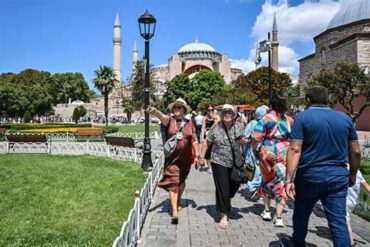
Hungary has become the latest epicenter of international travel advisories, as Canada joins the United Kingdom, Netherlands, Belgium, France, Germany, and Finland in urging citizens to exercise heightened caution when visiting the country. This coordinated diplomatic action places Hungary within the European Travel Caution Zone, a newly emerging term that signals serious concern among Western governments over civil rights, surveillance, and public safety conditions on the ground in Budapest.
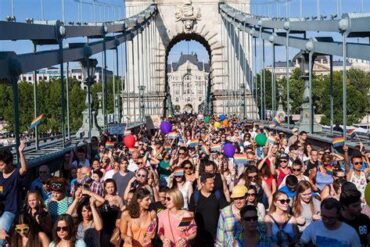
The focus of the warnings centers around the recent banning of the Budapest Pride march, an event historically linked to peaceful demonstration and LGBTQ+ visibility. Prime Minister Viktor Orbán’s administration has blocked the march, citing the controversial reasoning of “child protection,” a move widely criticized as a smokescreen for silencing dissent and LGBTQ+ advocacy.

Hungary’s Domestic Crackdown Sparks Global Attention
What began as a domestic clampdown has now triggered a ripple effect across Europe and North America, drawing condemnation from government officials and prompting nations to revise their travel guidance. Canada’s participation in this cautionary alignment marks a growing consensus that the current political climate in Hungary poses not only human rights issues but tangible safety risks for travelers.
Western governments now warn that travelers participating in or even witnessing banned gatherings—especially the Pride march—could face fines of up to €500, facial recognition surveillance, and potential criminal charges. In some cases, individuals may unknowingly be swept into police operations targeting areas designated for counter-protests by far-right groups.
The Heart of the Warning: Surveillance, Legal Risks, and Unrest
The tone and language of the advisories are remarkably consistent. The UK, among the first to update its guidance, clearly labels the Pride march as illegal under Hungarian law. British citizens are warned of advanced facial recognition technologies in use throughout Budapest, which may be employed to retroactively penalize participants and bystanders alike.
Similarly, the Netherlands emphasizes that travelers bear personal responsibility for their actions and that fines are possible even without direct involvement in demonstrations. The Belgian government raises additional alarms about a sanctioned far-right counter-demonstration, which is expected to intersect the same geographic space as the banned Pride event.
France explicitly references Hungary’s use of “smart surveillance cameras”, capable of identifying individuals post-event. French travelers are urged to avoid central Budapest, particularly areas near key landmarks such as Chain Bridge, Deák Ferenc Square, and Andrássy Avenue, locations historically central to Pride celebrations.
Germany and Finland echo this sentiment, describing the environment as politically volatile and unstable. Both stress the likelihood of confrontations and caution citizens to keep their distance from any mass gatherings, regardless of their original intent or affiliation.
Canada’s Advisory Highlights Shared Democratic Values
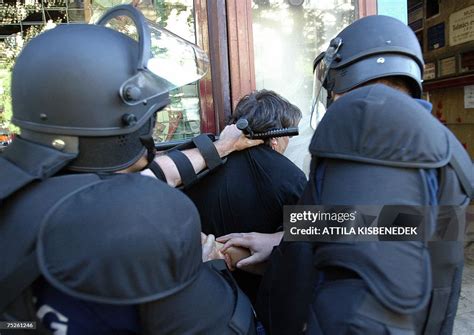
In unison with its European allies, Canada’s Global Affairs office has issued a detailed advisory noting the risks associated with being present in protest zones. While stopping short of declaring Hungary unsafe for all travelers, the advisory urges non-essential travelers to reconsider their plans if they expect to be in or near the city’s protest-prone districts.
Canadian citizens are warned that even observers or tourists photographing protests may be flagged by surveillance systems, placing them in a position of liability. The advisory encourages Canadians to register with consular services and stay connected to embassy alerts via email or SMS throughout their stay.
Far-Right Mobilization Intensifies Tensions
The threat matrix in Budapest has intensified due to the far-right Our Homeland party, which has organized a large counter-demonstration with full police approval. This creates a dangerous convergence of opposing crowds, all set to clash in high-traffic urban zones.
Organizers from Our Homeland have encouraged members to block bridges and intersections to actively prevent the Pride march from taking place. While the Pride march was denied a permit, right-wing activists were granted police clearance, raising serious questions about selective enforcement and political bias in the application of public assembly laws.
According to Belgium’s advisory, there is a “credible threat of violence”. The possibility of physical confrontations, police crackdowns, or even politically motivated harassment is no longer theoretical but statistically likely, especially given Hungary’s political climate under Orbán’s rule.
European Union Defiance: Officials Will March Anyway
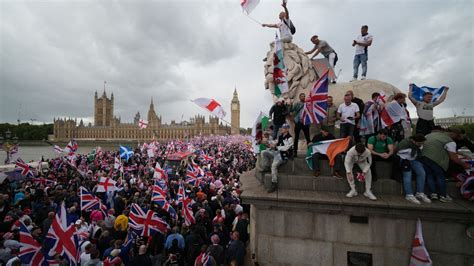
Despite legal threats, more than 70 Members of the European Parliament (MEPs) and the European Commissioner for Equality have announced plans to attend the Pride march in defiance of the ban. Their participation signifies not just solidarity, but a public stand against Hungary’s increasing deviation from EU democratic norms.
In an unprecedented statement, European Commission President Ursula von der Leyen declared the ban to be a “violation of fundamental EU values,” emphasizing that the freedom of expression and peaceful assembly are non-negotiable principles of membership in the European Union.
This EU-level defiance effectively internationalizes the protest, turning what Orbán intended as a localized restriction into a continental standoff over democratic rights and the rule of law. That presence of elected EU officials on the streets of Budapest serves both as a symbol of resistance and a potential diplomatic flashpoint.
What Travelers Must Know Before Visiting Hungary
For those still planning to visit Hungary in the coming days or weeks, the message is stark but clear: know what you’re walking into. The situation on the ground is fluid, and even seemingly peaceful observers can find themselves in legal jeopardy.
Travelers are advised to:
- Continuously monitor their government’s official travel advisory platforms.
- Avoid any and all protest zones, particularly in the city center.
- Not engage in photography or social media posting from active protest areas.
- Stay away from high-risk times and locations, such as weekends and key city squares.
- Register with your country’s consulate or embassy, especially for real-time alerts.
Hungary’s New Status in the European Travel Caution Zone
What’s unfolding in Hungary goes beyond a temporary travel risk. The country’s admission into what’s now being labeled the European Travel Caution Zone marks a symbolic downgrading of Hungary’s reputation as a safe and open European destination.
The label, while unofficial, is a growing trend among liberal democracies that seek to warn citizens of escalating political repression, institutional surveillance, and government-sanctioned discrimination within specific member states of the EU.
Hungary now stands as a test case for the European Union—how far can a member state go in restricting rights before facing unified diplomatic, economic, or political pushback? For travelers, this means that Budapest is no longer just a charming European capital; it’s now a site of intense scrutiny, surveillance, and symbolic struggle.
Final Thoughts: Travel Meets Geopolitics
In today’s global environment, the act of traveling has once again become political. Visiting Hungary in 2025 is no longer just about sightseeing, cuisine, or culture. It is about navigating a country under active political transformation, where rights that were once taken for granted can no longer be assumed.
For LGBTQ+ travelers, human rights observers, and even casual tourists, Hungary presents a stark paradox—a democratic nation behaving in increasingly authoritarian ways, even as it retains its EU membership.
As Canada and its European allies align to alert their citizens, the message is unmistakable: Hungary may be open for tourism, but it is closed to dissent. And for the time being, Budapest is a destination that requires more than a passport—it demands vigilance, awareness, and discretion.