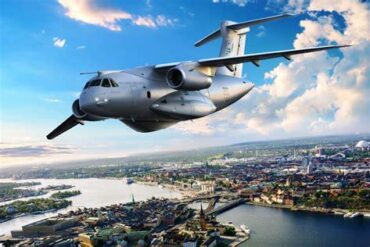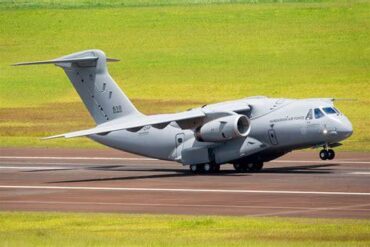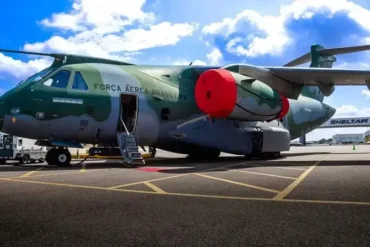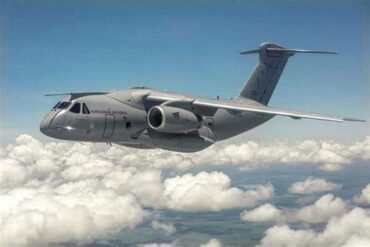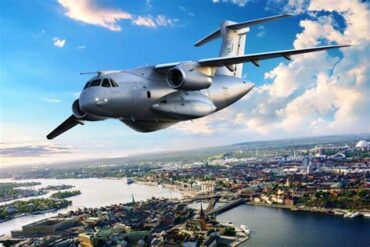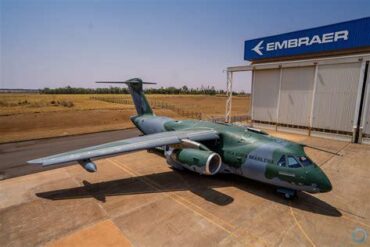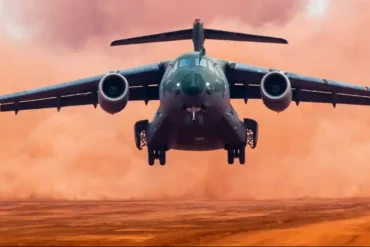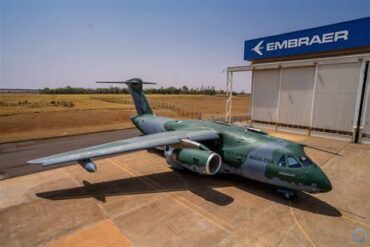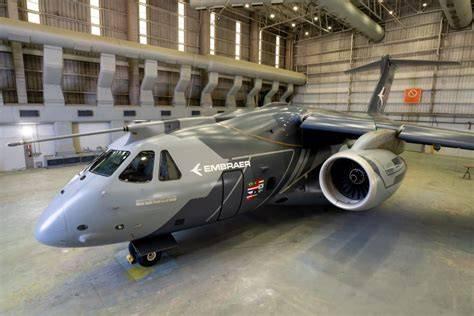
Portugal’s first Embraer KC-390 Millennium was only one aircraft, but its arrival in Europe became an important milestone in the transformation of the aircraft from a Brazilian-led military transport program into a growing European defense platform. When aircraft 26901 arrived in Portugal in October 2023, it was the first KC-390 to enter service outside Brazil and the first example delivered to a European operator. Within only a few years, the aircraft type had attracted a widening group of European customers, including several NATO members that were searching for modern replacements for aging Lockheed Martin C-130 Hercules fleets.
The sequence is important, although it should not be overstated. Portugal’s aircraft did not single-handedly trigger every subsequent purchase. Many European procurement programs had been developing for years, and some countries had already selected the KC-390 before 26901 reached Beja. Yet the Portuguese aircraft arrived at exactly the moment when European air forces were increasingly demanding greater interoperability, higher payload capacity, faster transport performance and broader mission flexibility. Its early operational activity helped turn those requirements into something tangible.
The story therefore begins not with a sudden wave of orders, but with a strategic decision by Portugal to become the KC-390’s first international customer. That decision gave Embraer something that a manufacturer cannot easily create through marketing alone: an operational European reference customer. As additional NATO nations evaluated the aircraft, Portugal was already demonstrating how the Millennium could function within the continent’s military aviation environment.
Portugal Became the KC-390’s European Launch Point
Portugal’s decision to purchase the KC-390 Millennium dates back to 2019, when the government signed an agreement worth approximately €827 million with Embraer. The package covered five aircraft, a flight simulator and associated support. The principal objective was straightforward: replace the Portuguese Air Force’s aging C-130 Hercules fleet while gaining a more capable transport platform able to handle a wider range of missions.
The purchase nevertheless represented something larger than a fleet replacement. Portugal became the first international customer for the KC-390, while Brazil remained the launch customer and principal national operator. By selecting an aircraft still establishing its international credentials, Portugal accepted a degree of program risk in exchange for access to a modern platform designed around contemporary military requirements.
The Portuguese requirement also aligned naturally with the KC-390’s design philosophy. Rather than creating an aircraft that was restricted to conventional cargo transportation, Embraer developed the Millennium around multiple missions. The aircraft can transport troops and vehicles, conduct aerial delivery operations, support medical evacuation, perform humanitarian missions, fight fires and provide aerial refueling capabilities. For a relatively small European air force, that flexibility has considerable value because every aircraft needs to contribute to several operational requirements.
There was another factor that made the Portuguese order particularly significant: NATO interoperability. Portugal did not simply require a capable aircraft; it needed a platform that could operate effectively alongside allied forces. NATO-standard equipment and systems were integrated into the Portuguese aircraft following extensive testing involving Embraer, OGMA and the Portuguese Air Force. That process helped ensure the KC-390 could enter European military service without being treated as an isolated Brazilian system.
Aircraft 26901 Entered Service at a Critical Moment
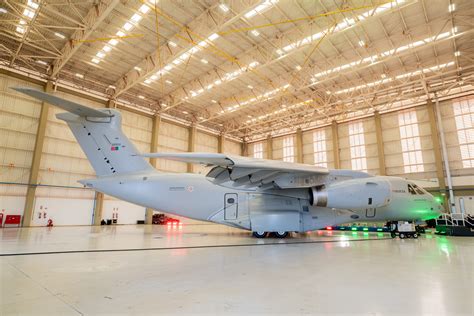
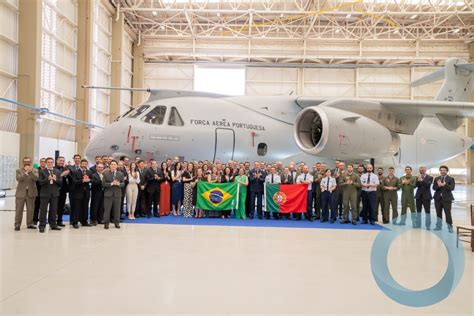
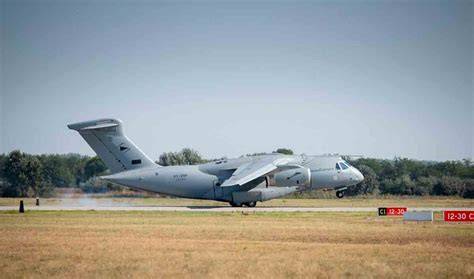
Aircraft 26901, carrying Portuguese military registration 26901 and manufacturer serial number 39000011, was delivered in October 2023. It entered service at Beja Air Base, located on the grounds of Beja Airport in southern Portugal.
The significance of the delivery was difficult to miss. For Embraer, it represented the transition from an aircraft associated primarily with Brazil to a transport platform operating inside a European NATO environment. For Portugal, it represented the beginning of the replacement of its Hercules fleet with a considerably newer design. For potential customers, meanwhile, it created an opportunity to observe the KC-390 in the environment in which many of them expected to use it.
That last point is particularly important in military aviation. A brochure can describe payload, range and performance, but prospective operators ultimately want evidence that an aircraft can perform its missions repeatedly under real operational conditions. The Portuguese fleet could provide that evidence. Instead of remaining a manufacturer-led demonstration aircraft, the KC-390 became part of an actual military transport force.
The aircraft quickly demonstrated that its career would extend beyond ceremonial appearances. Aircraft 26901 was photographed in Gran Canaria only days after delivery and subsequently participated in NATO-related activity surrounding Ocean Sky 2023. Its early movements showed that Portugal was willing to integrate the aircraft into multinational activity rather than keep its newest transport isolated during an extended familiarization period.
That operational exposure mattered because the KC-390’s value is closely connected to its versatility. A transport aircraft that can carry cargo is useful. A platform capable of carrying cargo while also supporting troop movement, medical evacuation, aerial resupply, firefighting and aerial refueling is potentially much more valuable to a modern European defense force.
The KC-390 Demonstrated More Than Cargo Capacity
One of the clearest demonstrations of the KC-390’s utility came through Portugal’s acquisition of a Sikorsky UH-60 Black Hawk helicopter from the United States. The Portuguese KC-390 was used to transport the helicopter home, illustrating the kind of strategic mobility that had helped distinguish the Millennium from smaller tactical transports.
The aircraft’s approximately 26-ton payload capacity is central to this proposition. European air forces replacing C-130 Hercules aircraft are not simply looking for another aircraft that can move pallets and personnel. They increasingly need transports capable of moving substantial military equipment over long distances while fitting into NATO logistics and operational structures.
The Black Hawk mission was therefore useful as a practical demonstration of the aircraft’s role. Instead of being presented only as a theoretical capability, the KC-390 showed how it could become a bridge between overseas procurement and domestic military operations. That is precisely the type of flexibility that can influence procurement thinking when governments are assessing aircraft expected to remain in service for decades.
Portugal’s early experience also gave Embraer a European operational story to tell. This was especially valuable because the company was competing against established Western transport aircraft and manufacturers with decades of experience in the military airlift market. The KC-390 needed to demonstrate not only that it was technologically competitive, but also that it could become a dependable component of allied logistics.
Hungary Had Already Placed Its Bet
The European expansion of the KC-390 actually began before aircraft 26901 entered Portuguese service. In 2020, Hungary ordered two KC-390s, becoming the second international customer after Portugal.
That fact provides an important qualification to the idea that Portugal’s first aircraft directly caused later NATO orders. Hungary had already selected the type before the Portuguese KC-390 arrived in Europe. Nevertheless, the Portuguese aircraft became part of an increasingly convincing European operating picture once it entered service.
Hungary received its first aircraft in 2024 and its second in 2025. Its KC-390s also highlighted the platform’s ability to support specialized missions. An intensive-care capability was incorporated for humanitarian and medical operations, showing that the aircraft could be adapted to national requirements rather than serving solely as a conventional military freighter.
For countries with relatively compact air forces, that adaptability can be especially important. A fleet of two or four transports cannot afford to have aircraft dedicated permanently to narrow mission categories. The more functions a single platform can perform, the greater the potential value of each airframe.
Portugal and Hungary therefore established the first European layer of the KC-390’s international customer base. One was the launch export customer, while the other became the second international operator. Together, they helped establish that the aircraft was not simply a Brazilian national program seeking occasional foreign sales.
The Netherlands and Austria Took the Program to Another Level
The most consequential change came when European procurement moved toward cooperative acquisition. In 2024, the Netherlands and Austria signed a contract covering nine KC-390s, with five aircraft allocated to the Royal Netherlands Air Force and four to the Austrian Air Force.
The importance of that agreement extended beyond the number of aircraft. The two nations sought common benefits in areas including training, logistics and future development. That approach matched a broader European defense trend in which countries increasingly look for ways to share the cost and complexity of operating sophisticated military equipment.
For Embraer, this was a major validation. The KC-390 was no longer being evaluated simply as an alternative aircraft for one national fleet. It was becoming part of a potential European transport ecosystem.
Commonality can be particularly valuable in military transport because fleets are often relatively small. Training pilots and maintainers, stocking spare parts, developing technical expertise and sustaining aircraft availability can be expensive when each country operates a unique platform. A shared aircraft type can reduce some of those burdens while also creating opportunities for allied forces to operate more closely together.
The Dutch-Austrian purchase therefore helped change the narrative surrounding the Millennium. The question was no longer simply whether the KC-390 could replace an individual country’s Hercules aircraft. It was whether the aircraft could support a broader network of European military transport operators.
The Czech Republic Added Another European Requirement
The Czech Republic further strengthened that pattern. The country selected the KC-390 in 2023 and formally ordered two aircraft in 2024. Its requirements included troop and vehicle transportation, medical evacuation, firefighting, disaster response, humanitarian assistance and air-to-air refueling.
Those requirements closely mirrored the multi-role concept behind Portugal’s original purchase. The aircraft was being evaluated not as a single-purpose cargo carrier, but as a flexible national capability that could contribute to both military and humanitarian missions.
That distinction helps explain why the KC-390 gained traction in Europe. Many countries were simultaneously confronting aging transport fleets and growing expectations for rapid international response. An aircraft capable of moving troops and vehicles, supporting humanitarian operations and participating in NATO missions can address several requirements without requiring separate specialized fleets.
By this stage, the European customer base was developing a recognizable pattern: C-130 replacement, NATO interoperability and multi-mission flexibility. Each country’s procurement had its own politics, budgets and operational requirements, but the common themes were becoming increasingly visible.
Sweden Brought Another NATO Customer Into the Program
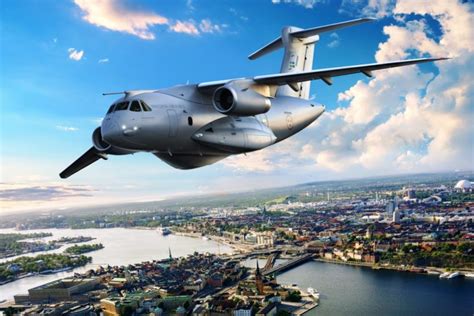
Sweden’s decision in 2024 added another significant European endorsement. The country committed to four C-390 Millennium aircraft, with additional purchase options associated with the arrangement.
Sweden’s interest was particularly notable because its defense requirements reflect the demanding operating environment of Northern Europe. A modern military transport must be capable of supporting dispersed operations, moving personnel and equipment efficiently and cooperating with allied forces.
The Swedish acquisition also fitted into the emerging European framework involving Austria and the Netherlands. Commonality between operators can provide advantages that extend beyond the aircraft itself. Training structures, maintenance expertise, operational knowledge and logistical arrangements can potentially become more interconnected as the fleet expands.
That broader network effect may be one of the KC-390’s most important advantages in Europe. Every additional operator creates another source of experience, another potential partner for exercises and another opportunity to establish common procedures. In military aviation, those relationships can become strategically valuable even when the original procurement decisions were made independently.
Lithuania and Other Customers Broadened the Momentum
By the end of 2025, Embraer’s figures showed that eleven countries had selected the KC-390: Brazil, Portugal, Hungary, the Republic of Korea, the Netherlands, Austria, the Czech Republic, Sweden, Lithuania, Slovakia and Uzbekistan.
Not every customer is a NATO member, and the list should therefore not be interpreted as a purely NATO procurement campaign. Yet the concentration of European customers is striking. Several European nations were simultaneously looking for modern airlift, greater interoperability and a replacement for aging transport fleets.
Lithuania and Slovakia further reinforced the idea that the KC-390’s European market was no longer limited to the first two export customers. The aircraft had begun to develop the kind of network effect that is difficult for a new military platform to achieve during its early years.
The significance of this expansion becomes clearer when viewed against the history of the Hercules. The C-130 has served as one of the world’s most successful military transport aircraft for generations, creating a huge installed base and extensive international support network. Challenging such an aircraft requires more than strong specifications. A competitor needs customers willing to establish a new ecosystem around it.
Portugal Became More Than the First Customer
Portugal’s own relationship with the KC-390 continued to develop after the arrival of aircraft 26901. The Portuguese Air Force received its second aircraft in June 2024 and its third in July 2025, with the fleet continuing to expand.
In 2025, Portugal also placed a further purchase, making it the first existing KC-390 customer to return with a repeat order. That development carries a different kind of significance from an initial procurement. A first purchase can reflect industrial policy, political relationships or an ambitious capability requirement. A repeat order generally provides stronger evidence that the operator considers the aircraft useful enough to expand its fleet.
Aircraft 26901 itself remained operational as newer Portuguese KC-390s joined the fleet. Tracked appearances included Gran Canaria in October 2025, illustrating that the first European Millennium had not become obsolete in symbolic terms once additional aircraft arrived.
Instead, it remained a living part of the story.
Why Aircraft 26901 Matters to the NATO Order Story
It would be inaccurate to say that the arrival of one Portuguese aircraft caused a string of NATO orders. Procurement decisions are shaped by budgets, military requirements, industrial policy, political priorities, replacement schedules and strategic considerations that usually develop over many years.
What aircraft 26901 did provide was something much more practical: European operational proof.
The aircraft demonstrated that the KC-390 could be delivered into a NATO member’s fleet, configured for NATO interoperability, integrated into operational routines and used in multinational environments. It showed that the Millennium was not merely a promising aircraft on paper. It was becoming a working European military transport.
That distinction matters enormously in defense procurement. Governments are often purchasing capabilities that will remain in service for decades. They need confidence in the aircraft, but they also need confidence in training, maintenance, logistics, upgrades and allied compatibility. Portugal’s early experience helped reduce some of the uncertainty surrounding those questions.
The timing was also favorable. European governments were increasingly reassessing military readiness, strategic airlift and logistics capacity. The KC-390 arrived in Europe at a moment when the demand for modern, flexible military transportation was becoming more urgent.
From One Portuguese Aircraft to a European Fleet
The journey from Portugal’s first KC-390 to a growing European customer base illustrates how military aircraft programs can gather momentum. Portugal took the first international step, Hungary followed, and subsequent European customers expanded the program into a much broader multinational proposition.
The Netherlands and Austria demonstrated the potential of cooperative procurement. The Czech Republic emphasized the aircraft’s multi-role flexibility. Sweden brought another Northern European NATO requirement into the program, while Lithuania and Slovakia expanded the European footprint further.
Meanwhile, Portugal continued expanding its own fleet and became the first repeat customer, reinforcing the credibility established by its initial purchase.
Aircraft 26901 therefore occupies an unusual position in the KC-390’s history. It was only one transport aircraft, yet its arrival represented the moment when Embraer’s Millennium crossed a major geographical and institutional boundary. It moved from being primarily a Brazilian program to becoming an aircraft operating inside Europe’s NATO airlift environment.
The subsequent orders were driven by individual national decisions, not by a single aircraft. But the first Portuguese Millennium provided an important operational reference at precisely the right time. As more European countries selected the type, the KC-390’s identity changed from a newcomer seeking international acceptance into a growing multinational military transport platform.
That may ultimately be the most important legacy of aircraft 26901. Its arrival did not create the European market by itself. It helped make that market visible, operational and increasingly credible—and the string of NATO selections that followed gave the aircraft’s European story a scale that would have been difficult to imagine when the first Millennium touched down at Beja in October 2023.