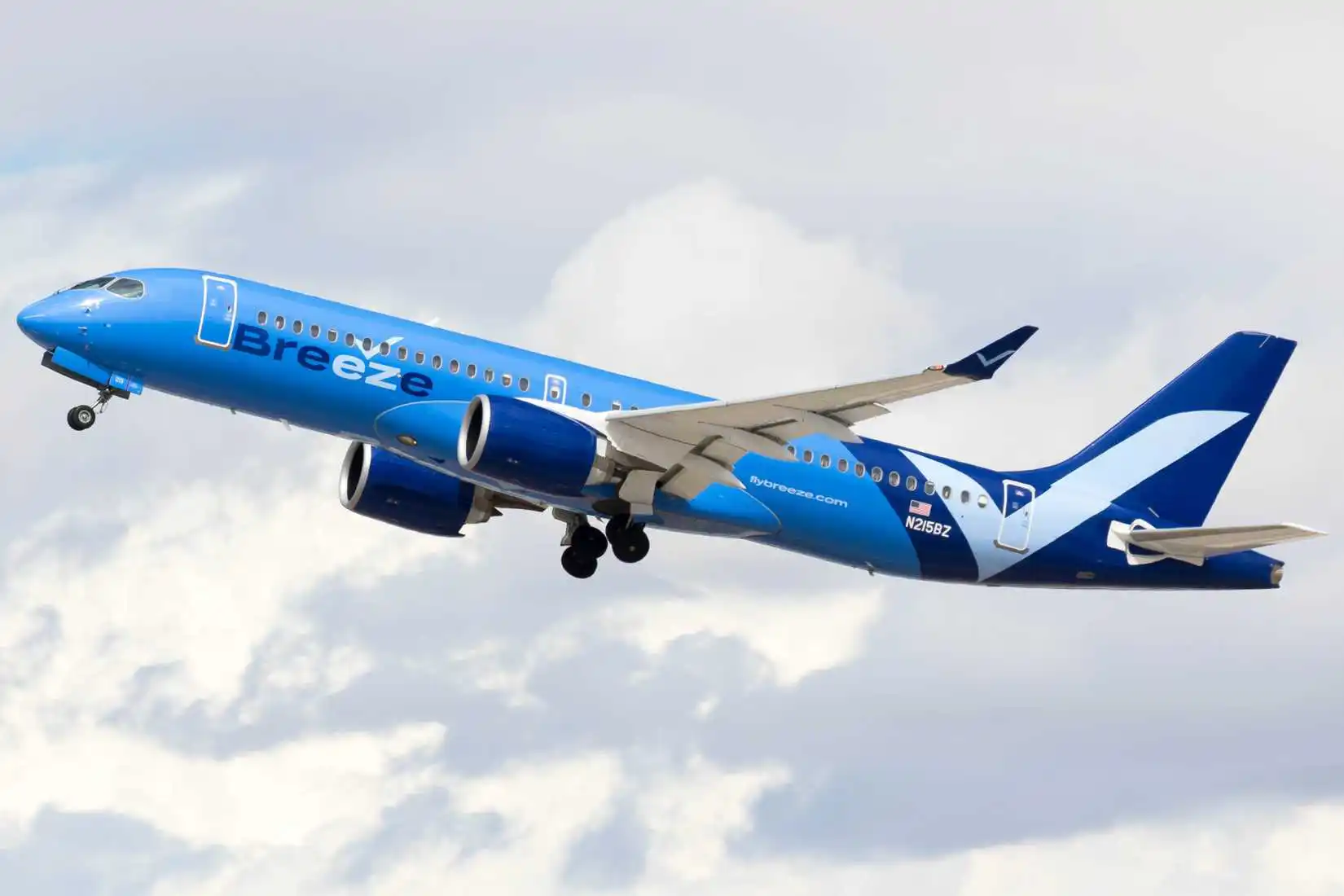
Breeze Airways has built a reputation as one of the most ambitious new airlines in the United States, focusing on underserved city pairs and low-cost nonstop connections. Since launching its first commercial flight in 2021, the airline has expanded rapidly, carrying more than 17 million passengers by April 2026. However, like every growing carrier, Breeze has continuously adjusted its network by removing routes that did not deliver the expected results or by reallocating aircraft to stronger opportunities.
The airline’s route changes reveal an important part of its business strategy. Breeze does not operate like traditional network carriers that maintain large hub systems. Instead, it uses a flexible model built around smaller markets, seasonal demand, and quick adjustments. Over the years, Breeze Airways has canceled 18 routes from its five busiest airports, showing how the airline evaluates performance and reshapes its network.
In the past year, Breeze achieved an average load factor of 78.1%, demonstrating stronger aircraft utilization compared with several other low-cost airlines. While load factor alone does not determine profitability, it shows that Breeze has continued attracting passengers despite frequent schedule changes.
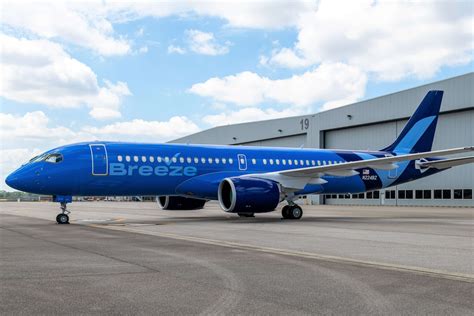
Breeze Airways’ Five Largest Airports Drive Most Operations
By the second half of 2026, Breeze Airways’ largest airports by scheduled flights are Raleigh–Durham International Airport (RDU), Orlando International Airport (MCO), Tampa International Airport (TPA), Charleston International Airport (CHS), and Rhode Island T. F. Green International Airport (PVD). Together, these airports represent approximately 57% of Breeze’s total services.
These five airports provide a clear picture of Breeze’s evolving network. The airline has tested numerous routes from these locations, including flights to secondary cities and leisure destinations. Some routes succeeded and became permanent parts of the schedule, while others disappeared after seasonal trials or disappointing performance.
Route cancellations are not unusual in the airline industry. Every carrier regularly removes flights that fail to meet financial expectations. For Breeze, ending weaker routes allows the airline to move aircraft toward markets with better demand, stronger fares, or greater strategic value.
The company’s approach reflects its identity as a startup airline. Rather than maintaining routes simply because they were launched in the past, Breeze frequently experiments and adjusts based on passenger demand.
Routes Removed From RDU, MCO, TPA, CHS, and PVD
Breeze Airways has ended service from several of its largest airports to destinations across the United States and internationally. Some cancellations involved airports that are no longer part of the airline’s broader network, including Mobile International, Oklahoma City, Tulsa, and Plattsburgh.
Several of these markets were connected to Breeze’s earliest expansion period. Oklahoma City and Tulsa were among the airline’s original destinations when operations began in 2021, while Plattsburgh represented an attempt to attract passengers from nearby Canadian markets.
The airline also reduced several western US routes from Charleston. CHS was historically important because it operated one end of Breeze’s very first commercial route. The carrier later expanded from Charleston to destinations including San Francisco, Las Vegas, Los Angeles, and Phoenix.
Charleston Lost Most Western US Connections
Charleston’s relationship with Breeze’s western network highlights how quickly airline strategies can change. In May 2022, Breeze launched transcontinental service from Charleston to San Francisco. Later that year, the airline added Las Vegas, followed by Los Angeles and Phoenix.
However, by 2026, only the Charleston–Los Angeles route remained active. The cancellation of several western routes significantly reduced Breeze’s presence on the US West Coast from Charleston.
Passenger data suggests the remaining Los Angeles route performed better than some discontinued services. Between November 2022 and April 2026, Breeze carried more than 45,000 round-trip passengers between Charleston and Los Angeles, filling approximately 80% of available seats.
Other routes produced mixed results. Las Vegas recorded a load factor of around 70.7%, while San Francisco and Phoenix achieved approximately 76%. These figures were not necessarily poor, but airlines must consider more than passenger numbers. Factors such as ticket prices, operating costs, aircraft availability, and seasonal demand all influence whether a route survives.
Why Breeze Airways Continues Changing Its Network
The cancellation of routes does not mean Breeze Airways is shrinking. In many cases, route removals are part of a broader expansion strategy. The airline has consistently added new destinations while eliminating weaker performers.
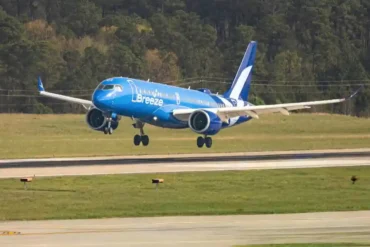
Breeze’s aircraft fleet, including the Airbus A220, gives the airline flexibility to serve smaller markets with lower operating costs. This allows the carrier to test routes that larger airlines may ignore.
The airline’s strategy depends on finding profitable opportunities rather than maintaining a traditional hub structure. Some routes may operate for only a few seasons before aircraft are moved elsewhere. Others can become long-term successes if passenger demand remains strong.
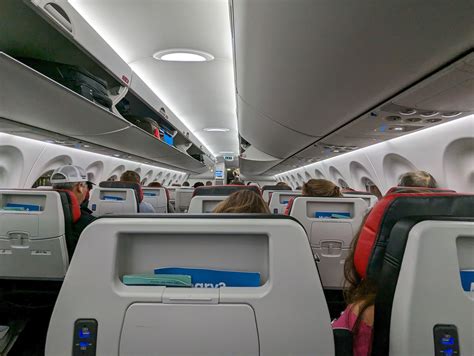
The Future of Breeze Airways’ Route Network
Breeze Airways’ canceled routes provide insight into how modern airlines compete. The carrier is willing to experiment, accept failures, and quickly redirect resources. This approach has helped Breeze grow from a startup airline into one of the most recognized new carriers in the United States.
The airline’s future network will likely continue changing as it studies passenger behavior and market conditions. Some destinations will disappear, while new routes will emerge from cities looking for affordable nonstop flights.
For passengers, Breeze’s constant adjustments create both challenges and opportunities. A route that disappears today may be replaced by a new connection tomorrow. The airline’s willingness to reshape its network remains one of its defining characteristics as it continues building its position in the competitive US aviation market.