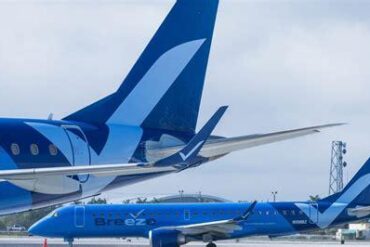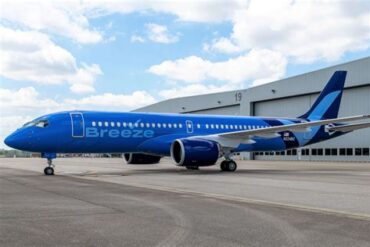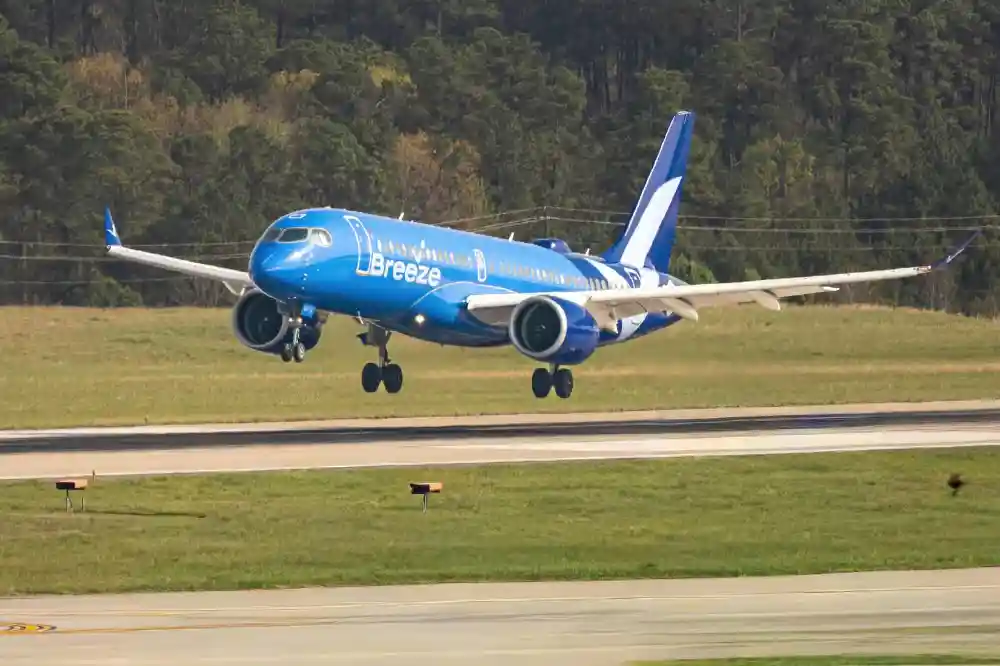
Breeze Airways is continuing its rapid growth strategy with a major network expansion that introduces 17 new destinations compared with the airline’s third-quarter schedule from 2025. The expansion highlights the carrier’s focus on underserved city pairs, leisure travel markets, and secondary airports that larger airlines often overlook.
According to scheduling data from Cirium, Breeze Airways has significantly increased its footprint for Q3 2026, adding 14 new US airports along with three international destinations in Mexico and the Caribbean. The additions demonstrate the airline’s continued effort to build a nationwide low-cost network while maintaining its unique approach of connecting smaller cities with nonstop flights.
The airline’s latest expansion strengthens Breeze’s presence across the East Coast, South, Midwest, and Western United States, while also increasing its international leisure offerings with new routes to popular vacation destinations.
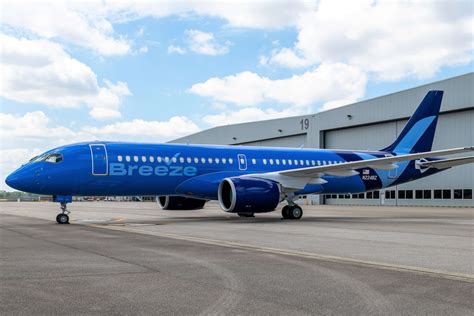
Breeze Airways Expands International Network With Caribbean and Mexico Routes
Breeze Airways’ international growth is centered around short-haul leisure markets that match the capabilities of its modern Airbus A220-300 fleet. Among the new international destinations, Nassau, Bahamas, stands out as the airline’s highest-frequency addition.
The carrier will operate flights between Tampa International Airport and Nassau throughout the third quarter, with 52 scheduled rotations. The route will operate approximately four times per week, providing travelers in Florida with a convenient connection to the Bahamas.
The addition carries special significance for Tampa Airport leadership. John Tiliacos, Tampa Airport’s COO, highlighted the importance of the new service, particularly because of his personal connection to Nassau.
Breeze is also expanding into Cancun, Mexico, with new flights from Charleston, New Orleans, and Norfolk. These routes are designed to capture demand from travelers seeking direct access to one of Mexico’s most popular resort destinations.
The airline’s third international addition is Punta Cana in the Dominican Republic, which will receive service from Raleigh-Durham and Tampa. With multiple leisure-focused routes, Breeze is positioning itself as a strong competitor in vacation travel markets traditionally dominated by larger carriers.
East Coast Growth Brings Breeze Airways to New Airports
The eastern United States represents one of the biggest areas of growth in Breeze Airways’ latest expansion. The airline has added several airports across the region, including Atlantic City and Trenton in New Jersey, strengthening its ability to serve smaller communities with limited nonstop options.
From Atlantic City, Breeze now operates flights to Charleston, Orlando, Raleigh-Durham, and Tampa. Meanwhile, Trenton gains new connections to Charleston and Vero Beach.
Maryland’s Salisbury Regional Airport is another new addition, with flights to Fort Lauderdale and Orlando. These routes reflect Breeze’s strategy of connecting smaller regional airports with popular destinations rather than competing directly in crowded major hubs.
Florida also receives a major boost from the expansion. Fort Lauderdale-Hollywood International Airport becomes a new Breeze station, with the airline scheduling 780 flights during the third quarter across 14 cities. The carrier has also introduced service from Tallahassee to Fort Lauderdale and Raleigh-Durham.
Breeze Adds New Routes Across the Southern and Central United States
Beyond the East Coast, Breeze Airways continues to expand into new regional markets. In Alabama, the airline has added Birmingham-Shuttlesworth International Airport to its network, offering flights to Fort Lauderdale and Raleigh-Durham twice weekly.
Texas is also part of Breeze’s growth plan. The carrier has introduced service from Brownsville to Orlando, while San Antonio now connects with Memphis, Pensacola, and Raleigh-Durham. These routes provide new travel options for communities that previously had fewer nonstop choices.
Additional central US additions include Lincoln, Nebraska, where Breeze operates flights to Las Vegas and Orlando twice weekly. The airline has also entered the Tennessee market through Tri-Cities Airport, connecting travelers with Orlando and Washington.
The complete list of new Breeze Airways airports added compared with Q3 2025 includes:
- Birmingham, Alabama
- Nassau, Bahamas
- Burbank and Eureka, California
- Punta Cana, Dominican Republic
- Fort Lauderdale and Tallahassee, Florida
- Magic Valley, Idaho
- Salisbury, Maryland
- Cancun, Mexico
- Lincoln, Nebraska
- Atlantic City and Trenton, New Jersey
- Redmond, Oregon
- Tri-Cities, Tennessee
- Brownsville and San Antonio, Texas
Western Expansion Targets Smaller Airports and Leisure Markets
Breeze Airways is also strengthening its presence in the western United States with new destinations in California, Oregon, and Idaho. The airline’s western strategy continues its focus on smaller airports with strong regional demand.
In California, Breeze has added Hollywood Burbank Airport and Eureka to its network. The airline plans 36 flights each way between these California cities during the quarter, while Burbank will also receive additional service from Provo, Utah.
Eureka gains another connection through flights from Harry Reid International Airport in Las Vegas, creating a new link between Northern California and a major tourism destination.
Further north, Breeze has added Redmond, Oregon, with flights to Las Vegas operating approximately twice weekly. Idaho’s Magic Valley Regional Airport also joins the network with a similar Las Vegas route frequency.
Breeze Airways’ Strategy Focuses on Underserved Markets
The latest expansion reflects Breeze Airways’ broader business model of targeting routes that often receive limited attention from traditional airlines. Instead of competing primarily on heavily traveled routes between major hubs, Breeze focuses on connecting smaller communities with nonstop flights to desirable destinations.
By adding 17 airports in a single year-over-year comparison, Breeze is expanding its national presence while maintaining its identity as a low-cost carrier built around convenience and simplicity.
With continued fleet growth, new leisure routes, and increasing coverage across the United States and nearby international markets, Breeze Airways is becoming one of the most aggressive expanding airlines in the North American aviation industry.