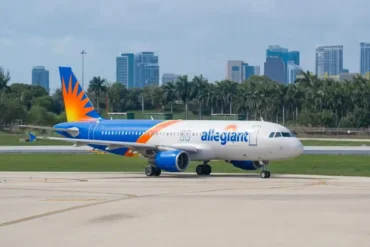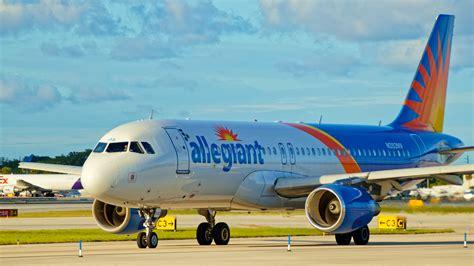
Allegiant Air’s latest financial performance reveals a strategy that challenges the traditional airline growth model. While many carriers chase expansion through more routes, more flights, and higher aircraft utilization, Allegiant reduced its flying by 7% and still increased revenue by 16%. The ultra-low-cost carrier achieved this by making its remaining capacity more profitable rather than simply adding more seats to the market.
During the second quarter of 2026, Allegiant operated approximately 2,600 fewer departures compared with the same period one year earlier. Its available seat miles declined from 5.80 billion to 5.41 billion, representing a 7% reduction in system capacity. Despite the smaller operation, the airline generated a record $776.2 million in operating revenue, up $107.4 million from Q2 2025.
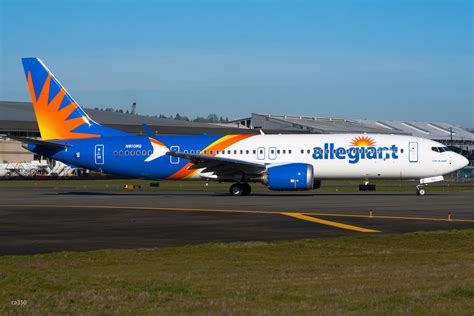
The reason behind this unusual result lies in how Allegiant managed its network. Instead of cutting flights randomly, the airline removed weaker-performing departures while protecting high-demand travel periods. The result was a smaller but stronger operation where aircraft flew with fuller cabins and passengers generated more revenue.
Allegiant Reduced Flights Without Losing Significant Passenger Demand
At first glance, reducing capacity usually suggests declining revenue potential. However, Allegiant’s Q2 2026 numbers showed that passenger demand remained surprisingly resilient. The airline carried 5.07 million passengers, only slightly below the 5.13 million passengers transported during the same quarter in 2025.
This meant Allegiant removed nearly 7% of its flying but lost only about 1% of its passengers. The difference created a major improvement in aircraft efficiency. Flights that remained in operation carried a higher percentage of available seats, pushing the scheduled load factor from 82% to 86%.
| Metric | Q2 2025 | Q2 2026 | Change |
|---|---|---|---|
| Operating revenue | $668.8 million | $776.2 million | +16% |
| Available seat miles | 5.80 billion | 5.41 billion | -7% |
| Departures | 37,314 | 34,733 | -7% |
| Passengers | 5.13 million | 5.07 million | -1% |
| Scheduled load factor | 82% | 86% | +4 points |
| Unit revenue | 11.57 cents | 14.42 cents | +25% |
The airline’s revenue per available seat mile (TRASM) reached a record 14.42 cents, representing a 25% increase compared with the previous year. This figure demonstrates that each seat in Allegiant’s network became significantly more valuable.
Rather than flying additional empty seats during weaker periods, Allegiant concentrated demand into fewer departures. The airline effectively transformed capacity reduction into a revenue optimization strategy.
The Low-Utilization Model That Protects Profits
Allegiant’s business model has always been different from traditional network airlines. The company operates a low-utilization model, meaning aircraft are not necessarily flown as many hours per day as those operated by major legacy carriers. Instead, Allegiant focuses on matching flights with periods of stronger leisure demand.
CEO Greg Anderson explained that the airline prioritizes flying during periods when customers are most willing to travel and pay higher fares.
“We run a low utilization model, which means that we are maximizing flying during high-demand periods, while reducing capacity on days that do not meet our financial hurdles.”
This approach allowed Allegiant to increase capacity during profitable periods while reducing flights during weaker demand windows. Although overall scheduled capacity declined by approximately 6%, peak-day capacity actually increased by nearly 2%.
The difference highlights an important point: Allegiant was not shrinking its network; it was refining it. The airline protected weekends, holidays, and popular vacation periods while removing less profitable flying.
This strategy fits naturally with Allegiant’s core business model. Unlike major airlines that rely on frequent daily service between large business markets, Allegiant specializes in nonstop leisure routes connecting smaller cities with vacation destinations.
Higher Revenue Per Passenger Boosted Financial Performance
Improved aircraft occupancy was only one part of Allegiant’s success. The airline also earned substantially more from each traveler.
Operating revenue per passenger increased from approximately $130 in Q2 2025 to $153 in Q2 2026, representing a 17% increase. Passenger revenue alone rose by roughly $100 million despite the slight decline in passenger numbers.
The strongest improvement came from higher yields. Allegiant reported that scheduled-service revenue per revenue passenger mile increased by more than 40%, showing that customers were paying significantly stronger fares for the available seats.
Several factors contributed to this improvement:
- Stronger base fares across retained routes
- Increased adoption of premium products such as Allegiant Extra
- Higher-value travel bundles
- Growth in third-party products and credit-card revenue
Importantly, the increase was not driven simply by higher baggage fees. Allegiant stated that air-related ancillary revenue per passenger remained relatively flat.
Instead, the airline generated more value through better pricing and expanded customer offerings.
Allegiant’s Ancillary Revenue Strategy Continues Expanding
While traditional airline investors often focus on ticket revenue, Allegiant has also been building additional revenue streams. Third-party-product revenue increased 32% to $44.5 million during the quarter.
The company highlighted its expanding credit-card business as a significant opportunity. Management believes credit-card remuneration could eventually double from approximately 5% of company revenue to 10%.
This reflects a broader industry trend where airlines increasingly rely on partnerships, loyalty programs, and financial products to strengthen profitability.
For Allegiant, these additional revenue sources provide another way to increase earnings without increasing aircraft utilization. The airline can generate more value from existing customers instead of depending solely on additional passengers.
New Routes Continue Despite Capacity Discipline
Although Allegiant reduced overall flying, the airline continued expanding its network. The carrier launched 39 new markets during the first half of 2026, and those routes represented about 9% of second- and third-quarter capacity.
Chief Commercial Officer Drew Wells said the new additions were outperforming during the summer travel season.
This demonstrates that Allegiant’s strategy is not simply about becoming smaller. Instead, the airline is carefully choosing where growth makes financial sense.
The company has stated that it must “earn the right to grow,” meaning future expansion will depend on profitability rather than simply adding aircraft and routes.
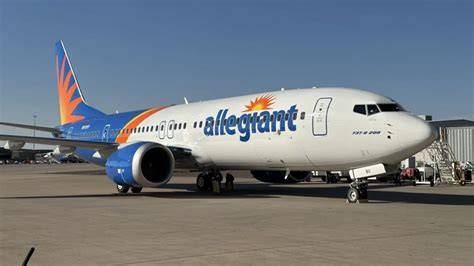
Incoming Boeing 737 MAX deliveries give Allegiant additional flexibility. The aircraft will provide growth opportunities, but management does not view new airplanes as a requirement to immediately increase capacity.
Sun Country Integration Creates Short-Term Challenges
Allegiant’s acquisition of Sun Country Airlines introduces another factor into its future strategy. Sun Country has also reduced some off-peak flying, although for different reasons.
The airline has experienced increased pilot attrition at Minneapolis-Saint Paul International Airport because of stronger hiring demand from major carriers. Allegiant executives indicated that a competing airline had significantly increased pilot recruitment efforts, creating temporary staffing pressure.
Additional challenges include higher fuel prices and the planned expansion of Sun Country’s cargo operation, which requires crew resources that could otherwise support passenger flights.
However, Allegiant expects the disruption to be temporary. Training classes are currently full, and new pilots are expected to enter service later in 2026. The company is targeting renewed Minneapolis growth beginning in March 2027.
The long-term plan is even more significant: Sun Country is expected to eventually disappear as a separate airline once both companies operate under a single FAA operating certificate.
Allegiant’s Smaller Operation Became a Stronger Business
Allegiant Air’s 2026 results show that airline profitability does not always come from flying more. By reducing weaker routes, improving aircraft occupancy, increasing revenue per passenger, and focusing on high-demand periods, the carrier created a more efficient operation.
The airline flew 7% less capacity but generated 16% more revenue, proving that smarter capacity management can outperform simple expansion.
Allegiant’s strategy represents a different approach to airline growth. Instead of chasing volume, the carrier is focusing on value — making every aircraft, every seat, and every passenger contribute more to the company’s bottom line.