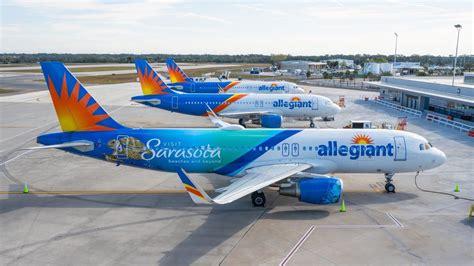
Allegiant Air is significantly expanding its presence at Orlando Sanford International Airport (SFB) this September, adding nine routes compared with the same month last year. The expansion strengthens Sanford’s position as the airline’s most active airport by departing flights and highlights Allegiant’s strategy of adding capacity where leisure demand is strongest.
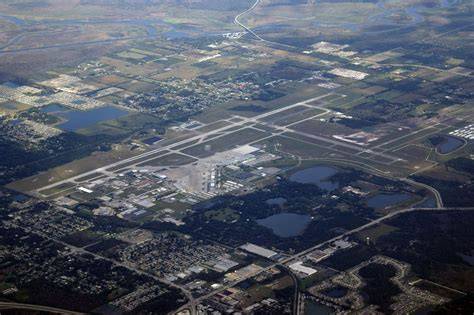
Although Sanford is much smaller than Orlando International Airport (MCO), it has developed an unusually important role in Central Florida’s aviation network. Allegiant is the key reason. According to Cirium data, the airline is scheduled to operate 578 departures from Sanford in September, more than from any other airport in its network. That total places Sanford ahead of Allegiant’s bases in Las Vegas and St. Petersburg.
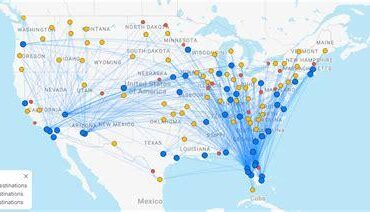
The new schedule is particularly notable because it expands Sanford’s reach well beyond traditional Florida leisure markets. Allegiant will connect SFB with destinations stretching from the Northeast and Midwest to the South, giving travelers more nonstop options without requiring a connection through a larger hub.
Allegiant Air’s 9 New Sanford Routes
Eight of the nine new routes will operate twice weekly, creating eight scheduled flights per route during September. The exception is the service to La Crosse, Wisconsin, which is scheduled only twice, on September 3 and September 6.
The eight regularly operated new destinations are Albany, New York; Atlantic City, New Jersey; Columbia, Missouri; Huntsville, Alabama; Key West, Florida; Little Rock, Arkansas; Omaha, Nebraska; and Toledo, Ohio. Together with La Crosse, they represent a broad expansion of Allegiant’s leisure-focused network from Sanford.
The pattern fits Allegiant’s business model closely. Rather than relying primarily on large connecting hubs, the airline often links smaller and midsize cities directly with popular vacation destinations. Sanford is particularly well suited to that strategy because of its proximity to Orlando’s enormous tourism market while offering an alternative airport experience to MCO.
Drew Wells, Allegiant’s chief commercial officer, said the new routes demonstrate the flexibility of the airline’s business model and its ability to respond to demand during peak leisure periods. The September schedule illustrates that approach in practical terms, with capacity being concentrated on markets where Allegiant sees opportunities for profitable travel.
Sanford Capacity Is Growing Faster Than Flights
The nine new routes are contributing to a broader increase in Allegiant’s Sanford operation. The airline’s 578 scheduled departures in September represent a 7.6% increase year over year, up from 537 departures during the same month last year.
Seat capacity is growing even faster, rising 8.1% year over year. That difference is significant because it indicates that Allegiant is not simply adding more flights. The airline is also putting more seats into the market.
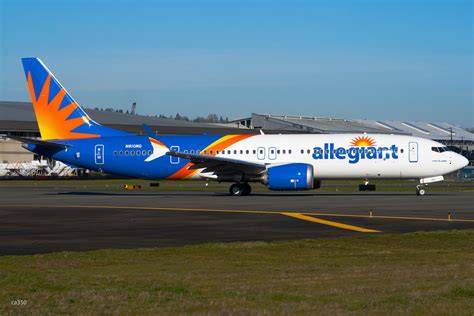
One likely factor is the continuing introduction of Boeing 737 MAX 8-200 aircraft into Allegiant’s fleet. The aircraft provides greater seating capacity than many of the Airbus aircraft that historically formed the backbone of Allegiant’s fleet, allowing the carrier to expand available seats without increasing flight frequencies at the same rate.
Available seat miles are increasing by an even more substantial 11.3%. That suggests the growth is also being driven by longer average flying distances, rather than simply larger aircraft operating the same short routes.
Two Sanford Routes Disappear as Nine Arrive
Allegiant’s expansion does not mean every existing Sanford route remains in the schedule. Two destinations served from SFB last September—Columbia, South Carolina, and Niagara Falls, New York—are not returning this time.
Even so, the scale of the new service substantially outweighs those reductions. The changes suggest Allegiant is actively reshaping its Sanford network instead of simply pursuing growth for its own sake. Routes can be added, removed, or adjusted according to seasonal demand and expected performance.
That flexibility is central to the carrier’s low-cost leisure strategy. Sanford’s strong tourism appeal gives Allegiant a valuable platform from which to test and scale routes while maintaining a schedule focused heavily on leisure travelers.
Sanford Leads Allegiant’s September Airport Rankings
Sanford’s 578 departures put it comfortably at the top of Allegiant’s September airport rankings. Las Vegas and St. Petersburg are each scheduled for 486 departures, followed by Phoenix-Mesa Gateway Airport with 339 and Punta Gorda with 310.
The growth is not limited to Florida. Allegiant is also expanding at Mesa Gateway Airport (AZA) near Phoenix, which has become the airline’s fourth-busiest airport by departing flights. New September routes from Mesa include Cincinnati, Fort Wayne, La Crosse, Moline, Orange County, and St. Cloud.
For Sanford, however, the message is especially clear: Allegiant is continuing to build its largest departure base, adding new city pairs while increasing overall seat and capacity levels. For travelers, that means more nonstop choices into Orlando’s tourism market—and another sign that Sanford is becoming an increasingly important part of Allegiant Air’s nationwide network.