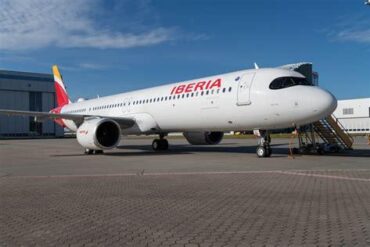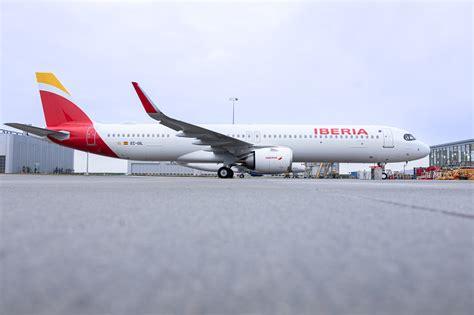
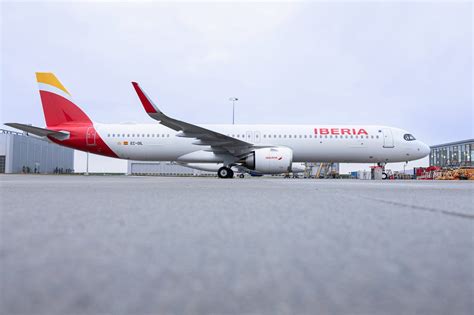
Iberia’s new wave of Airbus A321XLR expansion is reshaping transatlantic travel, pulling North America deeper into Madrid’s orbit and redefining what a single-aisle jet can accomplish. The Spanish flag carrier is preparing to launch a new daily Madrid–Newark service on March 29, 2026, a move that elevates New York–area capacity to three daily flights when combined with its dual-daily Madrid–JFK schedule. This rapidly growing cluster of frequencies marks a transformational moment in Iberia’s long-haul strategy and signals an assertive push into one of the world’s most competitive aviation markets.
The new capacity uplift is substantial. Iberia plans more than 350,000 summer seats, a surge exceeding 42% compared to 2025. The addition of Newark is only one piece of a broader strategy built around the long-range efficiency of the A321XLR, which allows Iberia to profitably target “long-and-thin” routes—markets once considered marginal for larger widebody aircraft. The economics of the type are enabling a wave of new links across North America, including fresh service to Toronto scheduled to begin June 13, 2026.
As Madrid strengthens its status as a transatlantic hub, Iberia is effectively casting the A321XLR as a fleet of precision tools, each route calibrated to capture specific passenger flows, corporate demand pockets, and increasingly competitive connection opportunities.
New York Capacity Split: Iberia Elevates Newark as a Strategic Gateway
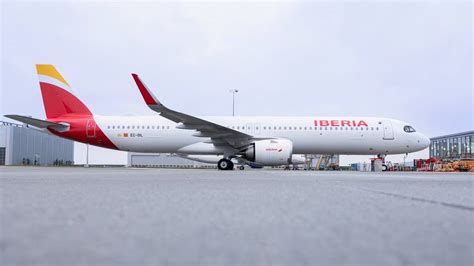
Iberia is taking a calculated leap by dividing its New York presence between JFK and Newark. The shift is far from symbolic. The airline is positioning Newark as a corporate-friendly entry point with quicker access to core Manhattan business districts, a crucial advantage for business travelers choosing between competing transatlantic schedules. With the new A321XLR service timed to arrive around 10:30 PM, passengers will land late enough to avoid congestion yet early enough to settle into the city before the next day’s meetings.
The return journey is equally strategic: departures are scheduled to land in Madrid around 1:30 PM, delivering smooth connectivity across Iberia’s European and Latin American network banks. These business-aligned timings reinforce Iberia’s intention to sell the New York metropolitan region not as two airports, but as one unified, multi-frequency, high-convenience market.
A New York Network Reinforced With Frequency and Flexibility
New York is less a destination and more a battleground. Iberia’s third daily frequency transforms how the airline competes there. With multiple daily departures, the carrier gains flexibility in schedules, fare options, and same-day connection possibilities—an irresistible trio for corporate accounts. The approach mirrors the strategies used by major transatlantic competitors: win not with a single marquee flight but with choice, offered consistently and reliably.
This frequency-driven model also enhances network resilience. When weather or congestion disrupts operations, airlines with more daily flights recover faster. Iberia’s enhanced New York schedule acts as both a competitive shield and a customer-service buffer, which strengthens brand loyalty in a fiercely contested transatlantic corridor.
Inside Iberia’s Expanding Airbus A321XLR Ecosystem
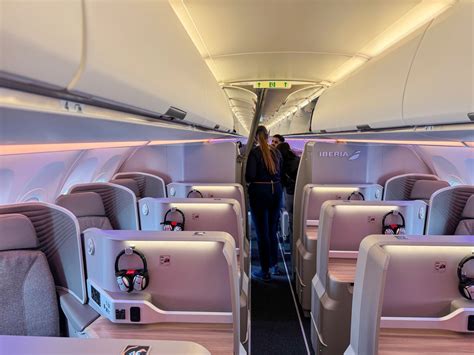
The Newark announcement is the newest brick in Iberia’s rapidly expanding A321XLR foundation. Since the aircraft’s introduction into its fleet, the airline has deployed it experimentally, then strategically, on an expanding set of long-haul missions. The jet entered service on the Madrid–Boston route, proving that single-aisle aircraft could reliably handle transatlantic sectors with premium-grade passenger experience. From there, Iberia extended A321XLR ranges to Washington Dulles and then deep into the Caribbean.
The aircraft’s operational flexibility has allowed Iberia to double its Madrid–San Juan frequencies and pursue new markets in Brazil, including Recife and Fortaleza—destinations that historically sat beyond the practical reach of narrowbodies. Now, with Toronto Pearson joining the network in June 2026, the fleet’s footprint stretches wider than at any time in Iberia’s history.
A321XLR Economics: The Engine Behind Iberia’s North American Growth
The A321XLR’s impact is not subtle. It has rebalanced Iberia’s cost structure for transatlantic flying, enabling profitable operations on routes where widebodies were previously too expensive or oversized. The type delivers widebody-like range with narrowbody-like operating costs, a combination that opens new city pairs and allows higher frequencies on existing ones.
The result is a model where Iberia can:
- Scale its North American network without requiring widebody fleet growth.
- Adjust frequencies dynamically in response to corporate demand.
- Enter secondary long-haul markets quickly and with lower financial risk.
- Reinforce Madrid as a cost-effective and high-connectivity hub.
This fleet structure aligns directly with Iberia’s Flight Plan 2030 roadmap, which prioritizes network breadth, frequency flexibility, and diversified long-haul connectivity.
Looking Ahead: Iberia’s Transatlantic Momentum Has Only Begun
The Madrid–Newark announcement is another confident step in Iberia’s transformation from a traditional long-haul operator into a fleet-agile carrier that blends widebody and narrowbody strengths to dominate transatlantic niches. With New York, Toronto, Boston, Washington, San Juan, and upcoming Brazilian routes all stitched together by A321XLR operations, the airline is constructing a transatlantic ecosystem designed for growth, stability, and long-term profitability.
As 2026 approaches, Iberia’s strategy is clear: keep adding frequencies, keep expanding markets, and keep leveraging the A321XLR’s capability to reshape the competitive map of North American travel. The airline’s rapid evolution suggests that even more route announcements—and perhaps new North American cities—are not just possible, but increasingly likely as its narrowbody long-haul fleet grows.