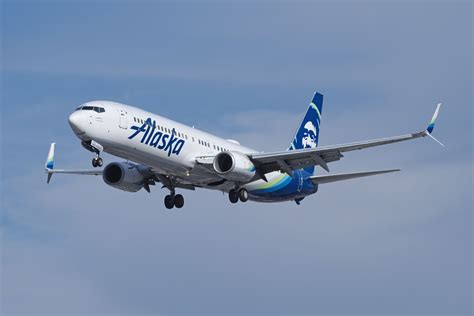
Alaska Airlines is entering a completely new chapter in its international expansion strategy. On May 28, the Seattle-based carrier will launch its first-ever transatlantic Boeing 737 MAX flight, connecting Seattle-Tacoma International Airport (SEA) with Keflavik International Airport (KEF) in Iceland. The route is more than just another seasonal addition. It represents a major shift in how North American airlines are approaching long-haul travel using modern narrowbody aircraft.
For decades, transatlantic flying was dominated by widebody jets such as the Boeing 777, Airbus A330, and Boeing 767. Those aircraft remain important, especially on high-demand routes, but the economics of aviation are changing quickly. Airlines increasingly favor smaller, fuel-efficient aircraft capable of opening “long thin” routes that would once have been financially impossible. Alaska Airlines is now fully embracing that strategy with the Boeing 737 MAX 8.
The new Seattle-to-Keflavik service also marks Alaska’s third European development within a remarkably short period. The carrier launched flights to Rome from Seattle in April, began London operations on May 21, and now completes its 2026 European rollout with Iceland. Together, these additions signal that Alaska Airlines is no longer positioning itself merely as a strong West Coast domestic airline. It is gradually becoming a more serious international competitor.
The Iceland route will operate daily between May 28 and September 7, focusing entirely on the busy summer travel market when Iceland experiences peak tourism demand and strong connecting traffic into Europe.
Alaska Airlines Bets on Narrowbody Efficiency Across the Atlantic
The Seattle-to-Keflavik route covers approximately 3,147 nautical miles, or 5,828 kilometers, each way. That makes it Alaska Airlines’ longest narrowbody route to date and one of the carrier’s most ambitious operational experiments in recent years.
The aircraft selected for the service is the 161-seat Boeing 737 MAX 8, configured with three cabin sections. Alaska’s premium cabin includes 16 domestic first-class reclining seats arranged in a 2-2 layout with 41 inches of pitch. Behind that are 30 extra-legroom seats offering up to 38 inches of pitch, while the remaining 115 seats occupy the standard economy cabin in a 3-3 arrangement.
Although the aircraft lacks seatback entertainment systems, Alaska provides streaming entertainment accessible through passengers’ personal devices. Complimentary food and beverages are included, a detail that becomes increasingly important on flights approaching eight hours in duration.
Using a narrowbody aircraft on a transatlantic route remains controversial among some travelers. Critics argue that smaller cabins, tighter aisles, and reduced onboard amenities make such journeys less comfortable than traditional widebody operations. However, airlines continue moving in this direction because the economics are exceptionally attractive.
Modern narrowbody aircraft such as the Boeing 737 MAX 8 and Airbus A321LR consume significantly less fuel than older widebody jets while still offering enough range to connect secondary international markets. That allows airlines to launch nonstop routes without needing to fill 250 or 300 seats daily.
For Alaska Airlines, Iceland represents a calculated opportunity rather than a high-risk gamble.
Seattle to Iceland Market Sees Record Competition
While Alaska Airlines is new to the Seattle-Iceland market, Icelandair has operated the route continuously since 2009. Over that period, the Icelandic carrier transported nearly two million round-trip passengers between Seattle and Keflavik, making the Pacific Northwest one of its more established North American gateways.
This summer, the market becomes more competitive than ever before.
Icelandair will continue operating up to three daily flights during peak periods, though the airline is reducing seat capacity by replacing larger Airbus A321LR aircraft with smaller Boeing 737 MAX 8 jets. That downgrade lowers Icelandair’s available seat count by roughly 14%, softening the impact of Alaska’s arrival.
Even with Icelandair’s capacity adjustment, total seat availability between Seattle and Iceland will still rise approximately 10% year-over-year during July and August 2026. Combined, the two airlines will offer more than 76,000 two-way seats during the peak summer season.

The timing structure of the flights also creates competitive overlap throughout the day. Icelandair maintains multiple departure windows from Seattle, while Alaska’s evening departure allows passengers to arrive in Iceland early the following morning.
That schedule is critical because Keflavik is not simply an Iceland destination. It is one of Europe’s most strategically positioned connecting hubs.
Iceland Is About More Than Tourism
Although Iceland’s tourism industry continues attracting North American travelers in massive numbers, the real value of the Seattle-Keflavik route extends far beyond local demand.
Booking data shows that approximately 48,000 round-trip passengers traveled strictly between Seattle and Keflavik during the previous 12 months. By itself, that figure is respectable but not particularly enormous for a long-haul international route.
The true opportunity lies in connecting traffic.
More than 110,000 passengers used Keflavik as a transit point to destinations elsewhere in Europe. London, Paris, Copenhagen, Amsterdam, and Stockholm ranked among the most popular onward destinations. Icelandair has built its business model around exactly this type of transfer traffic, using Iceland’s geographic location between North America and Europe as a natural midway point.
For travelers departing Seattle, flying via Keflavik to London covers almost the same great-circle distance as a nonstop Seattle-London flight. That geographic advantage helps Iceland remain highly competitive despite requiring a stop.
Alaska Airlines clearly understands this dynamic. Its massive Seattle hub provides feed traffic from more than 30 North American cities, giving the airline significant opportunities to funnel passengers into the new Iceland service.
The carrier also benefits from strong brand loyalty throughout the Pacific Northwest. Frequent flyers tied to Alaska’s Mileage Plan program or oneworld alliance partners may now choose Alaska over Icelandair simply to maintain loyalty benefits and elite status perks.
Alaska Airlines Expands Beyond Its Traditional Identity
The Iceland launch reflects a broader transformation occurring inside Alaska Airlines following its acquisition of Hawaiian Airlines and its growing international ambitions.
Historically, Alaska Airlines focused heavily on domestic West Coast operations, offering strong connectivity throughout the Pacific Northwest, California, Alaska, and Hawaii. International flying existed primarily through partnerships rather than direct long-haul operations.
That identity is now changing rapidly.
The introduction of Rome, London, and Iceland services within a single month demonstrates increasing confidence in Alaska’s ability to compete internationally from Seattle. Instead of targeting only mega-routes dominated by giant carriers, Alaska appears focused on carefully selected markets where efficiency, loyalty strength, and hub connectivity provide competitive advantages.
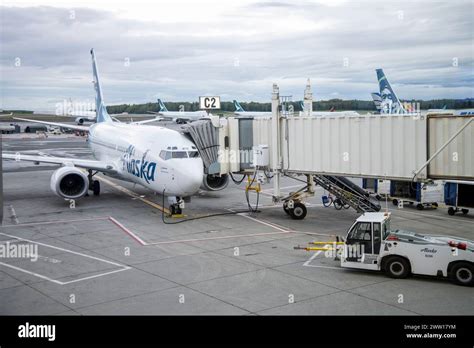
The Boeing 737 MAX 8 plays a central role in that strategy. Its economics allow Alaska to test emerging transatlantic markets with lower operational risk while maintaining daily frequencies that business and leisure travelers increasingly expect.
If the Seattle-to-Keflavik route performs strongly during its first season, Alaska may extend the operating window in 2027 or potentially explore additional narrowbody transatlantic routes from Seattle. If demand underperforms, the airline can scale back exposure more easily than it could with a large widebody fleet.
Either way, the launch represents an important milestone not only for Alaska Airlines, but also for the evolving future of transatlantic aviation itself.