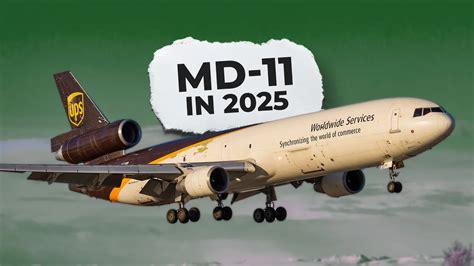
The McDonnell Douglas MD-11 was supposed to represent the future of long-haul aviation. Developed as a modern successor to the successful DC-10, the aircraft was designed to compete against a new generation of widebody jets that promised greater efficiency, longer range, and lower operating costs. However, despite its advanced technology and ambitious goals, the MD-11 struggled to become the passenger aircraft McDonnell Douglas envisioned.
The aircraft entered service at one of the most challenging moments in aviation history. Airlines were beginning to move away from three-engine aircraft and toward more efficient twin-engine designs. The rise of ETOPS regulations, improvements in engine reliability, and the arrival of aircraft such as the Boeing 777 and Airbus A340 dramatically changed the long-haul market. In passenger service, the MD-11 quickly found itself fighting a battle it was unlikely to win.
Yet the MD-11 survived far longer than many expected. Its unlikely savior was not passenger demand but the rapidly expanding air cargo industry. Freight operators discovered that the aircraft’s large capacity, long-range capability, and relatively low acquisition costs made it valuable even after airlines had moved on. Without cargo demand, the MD-11 program would probably have disappeared much earlier.
The McDonnell Douglas MD-11 Was Designed as a DC-10 Successor
During the 1970s and 1980s, the global aviation industry was undergoing a major transformation. Airlines wanted aircraft capable of connecting more distant international routes while improving fuel efficiency and passenger comfort. McDonnell Douglas had already established itself as a major widebody manufacturer with the DC-10, which became one of the most widely used long-range aircraft of its generation.
However, by the middle of the 1980s, the DC-10 design was beginning to show its age. Competitors were developing newer aircraft with better economics. Boeing was upgrading its 747 family while also preparing the revolutionary 777 program, and Airbus was developing the A330 and A340 families.
McDonnell Douglas recognized that it needed an updated widebody aircraft to remain competitive. Instead of designing a completely new aircraft from the ground up, the company chose an evolutionary approach. The result was the MD-11, a stretched and modernized version of the DC-10 that incorporated improved aerodynamics, updated systems, and more efficient engines.
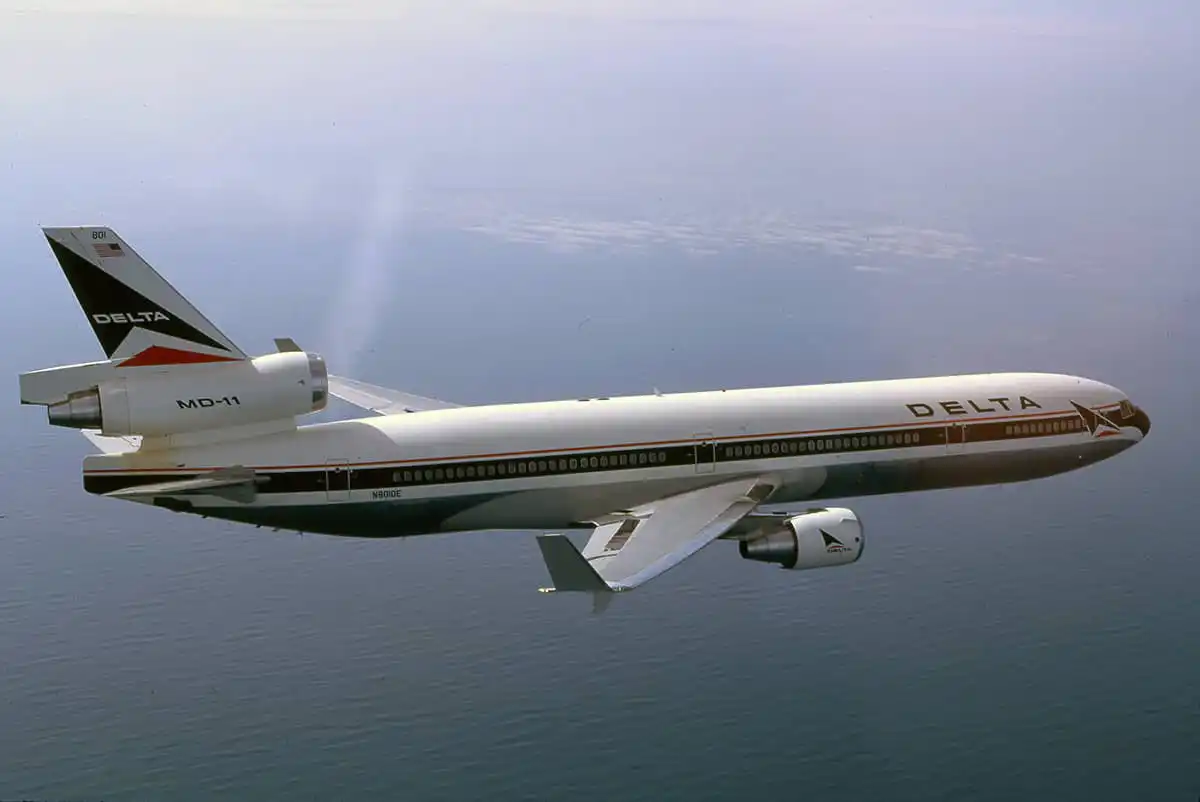
The company officially launched the MD-11 program on December 30, 1986. At launch, the aircraft appeared promising, attracting firm orders from several airlines. McDonnell Douglas believed the aircraft would become a major player in the international long-haul market.
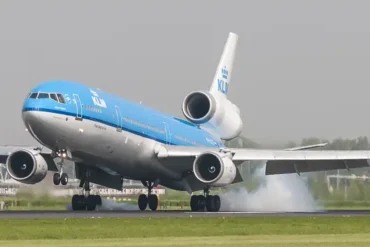
The design included several important improvements over the DC-10. The fuselage was stretched by approximately 5.6 meters, creating additional passenger capacity while maintaining the basic aircraft architecture. The aircraft measured more than 61 meters in length, making it one of the largest tri-jets ever produced.
One of the most significant upgrades was the introduction of a modern glass cockpit. The MD-11 replaced the traditional flight engineer position with advanced electronic systems, allowing the aircraft to operate with a two-person cockpit crew instead of the three-person crew required on earlier DC-10 aircraft.
The aircraft also received aerodynamic improvements, including winglets, which reduced drag and improved efficiency. Power came from advanced engines supplied by manufacturers including Pratt & Whitney and General Electric, while structural improvements allowed the aircraft to achieve a maximum takeoff weight of approximately 286 tonnes.
On paper, the MD-11 represented a logical evolution of a proven aircraft design. It combined the reliability of the DC-10 with modern technology designed to compete with the next generation of widebody aircraft.
Why the MD-11 Failed to Become a Passenger Aviation Success
Despite its promising design, the MD-11 quickly encountered problems. The biggest issue was that the aircraft failed to deliver the performance McDonnell Douglas had originally promised.
The company marketed the MD-11 as a long-range aircraft capable of flying approximately 7,000 nautical miles. However, achieving that range required compromises, including reduced payload. When operating with a full commercial payload, the aircraft’s practical range was significantly lower.
This performance gap became a serious problem for airlines operating long international routes. Long-haul carriers wanted aircraft that could carry large numbers of passengers and baggage over extended distances without excessive fuel consumption. The MD-11 struggled to meet those expectations.
The aircraft also consumed more fuel than expected, reducing its economic advantage. While the MD-11 was more advanced than the DC-10, it was not efficient enough to compete with newer twin-engine aircraft entering the market.
| Specification | McDonnell Douglas MD-11 |
|---|---|
| Length | 61.21 meters |
| Wingspan | 51.66 meters |
| Height | 17.60 meters |
| Maximum Takeoff Weight | 286,000 kg |
| Cruise Speed | Mach 0.83 |
| Marketed Range | Approximately 7,000 nautical miles |
Several airlines reconsidered their MD-11 commitments after discovering the aircraft did not fully match expectations. Singapore Airlines, for example, canceled an order for 20 aircraft and selected the Airbus A340 instead. American Airlines also expressed concerns about the aircraft’s performance and engine reliability.
Although the MD-11 was technically advanced, it entered service at precisely the wrong time. The aviation industry was moving toward aircraft with two engines rather than three.
The Changing Aviation Market Left the MD-11 Behind
The biggest challenge facing the MD-11 was not simply the aircraft itself but the changing philosophy of commercial aviation.
For decades, three-engine aircraft offered advantages because regulations limited twin-engine aircraft on long ocean crossings. However, improvements in engine reliability and the expansion of ETOPS certification changed the market.
Twin-engine aircraft could now fly long international routes with fewer engines, lower maintenance requirements, and better fuel efficiency. Airlines increasingly preferred aircraft such as the Airbus A330 and Boeing 777 because they offered stronger economics.
The Airbus A340, despite having four engines, also provided advantages over the MD-11 in certain long-haul operations. Meanwhile, the Boeing 777 quickly became the dominant aircraft for next-generation international routes.
The MD-11 was caught between generations. It was more modern than older widebody aircraft but lacked the efficiency advantages of newer designs. It was essentially a highly improved version of an older concept entering an industry that was rapidly moving in another direction.
McDonnell Douglas attempted to address these issues through Performance Improvement Packages (PIPs) and later introduced the extended-range MD-11ER variant. These upgrades improved the aircraft, but they arrived too late to change its commercial future.
The program eventually produced slightly more than 200 aircraft, far fewer than competing aircraft families. The Airbus A340 exceeded 380 deliveries, while the Boeing 777 became one of the most successful widebody aircraft ever built with thousands of aircraft ordered.
Air Cargo Demand Gave the MD-11 a Second Life
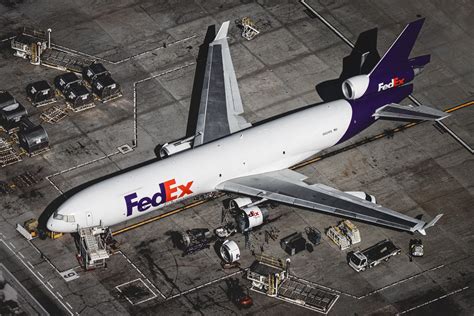
If passenger airlines had been the only customers for the MD-11, the aircraft would likely have disappeared much earlier. Instead, the global air freight industry gave the tri-jet an unexpected second career.
Cargo operators evaluate aircraft differently from passenger airlines. They prioritize payload capacity, cargo volume, structural strength, range, and acquisition costs. On these criteria, the MD-11 remained highly competitive.
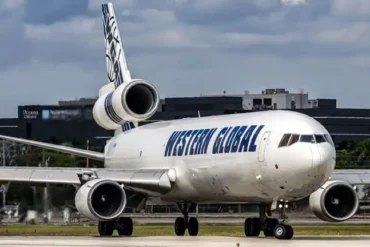
The factory-built MD-11F freighter offered impressive cargo capability. It could carry approximately 91 tonnes of payload and provided around 440 cubic meters of main-deck cargo volume. A large forward cargo door allowed operators to transport oversized freight that could not easily fit on smaller aircraft.
During the 2000s, the aircraft became particularly attractive because many passenger airlines began retiring their MD-11 fleets. Cargo companies could purchase used aircraft or convert passenger versions into freighters at a lower cost than buying new dedicated freighters.
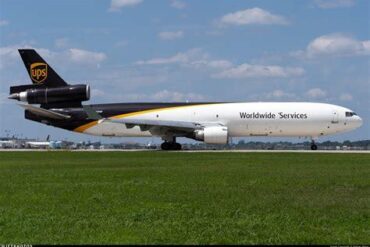
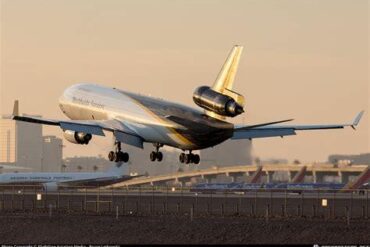
Major cargo operators including FedEx, UPS Airlines, and Lufthansa Cargo added MD-11 aircraft to their fleets. For these companies, the aircraft offered a practical balance between capacity and operating economics.
A total of 53 factory-built MD-11 freighters were delivered, while many additional aircraft were converted through programs such as the Boeing Converted Freighter (BCF). These conversions extended the life of aircraft that might otherwise have been retired.
The cargo market effectively transformed the MD-11 from a failed passenger aircraft into a valuable freight platform.
The Final Chapter of the MD-11 Freighter Era
The air cargo industry kept the MD-11 flying for decades after passenger airlines abandoned the aircraft. However, even this final chapter is approaching its conclusion.
Older aircraft are increasingly being replaced by newer freighters based on modern passenger platforms. Aircraft such as the Boeing 777 Freighter offer improved fuel efficiency, greater reliability, and lower operating costs.
The retirement of MD-11 fleets has accelerated as maintenance costs increase and replacement aircraft become available. Operators must balance the cost of keeping older aircraft flying against the benefits of transitioning to newer technology.
For many years, the MD-11 occupied a unique position in global cargo networks. It provided capacity during a period when demand for international freight was expanding rapidly, especially with the growth of global manufacturing and e-commerce.
However, the aircraft was never able to escape the limitations that affected it from the beginning. It remained a capable machine, but it belonged to an era that was quickly disappearing.
The McDonnell Douglas MD-11 Was a Commercial Failure That Found Success
The story of the McDonnell Douglas MD-11 is one of aviation’s most interesting examples of an aircraft finding success in an unexpected role.
As a passenger aircraft, the MD-11 failed to achieve McDonnell Douglas’ ambitions. It arrived too late, delivered less efficiency than promised, and faced overwhelming competition from newer twin-engine aircraft.
However, its cargo career changed its legacy. Air freight operators recognized qualities that passenger airlines overlooked. The aircraft’s size, range, and cargo capacity allowed it to remain useful for decades.
Without the growth of global air cargo demand, the MD-11 would likely have been retired much earlier. Instead, freight operators extended its life and turned a struggling passenger aircraft into one of the most recognizable cargo aircraft of the modern era.
The MD-11 never became the long-haul flagship McDonnell Douglas imagined, but it achieved something different. It became a symbol of how the aviation industry can reinvent aircraft long after their original purpose has faded.