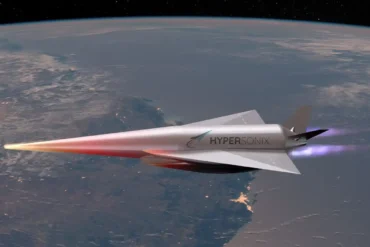
The race to build the next generation of hypersonic aircraft is no longer confined to military laboratories or science-fiction movies. A new wave of aerospace companies is attempting to turn extreme-speed atmospheric flight into an operational reality, and among the most ambitious concepts is a hydrogen-powered scramjet aircraft capable of traveling at speeds approaching Mach 12 — twelve times faster than the speed of sound.
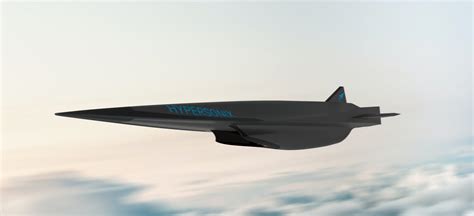
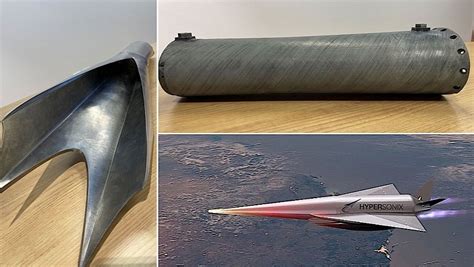
At the center of this technological push is Hypersonix Launch Systems and its experimental DART AE demonstrator, an uncrewed hypersonic vehicle powered by the SPARTAN scramjet engine. While the aircraft itself is currently designed for testing rather than passenger transport, the implications of the technology stretch far beyond experimental aerospace programs. If successful, hydrogen-fueled hypersonic propulsion could fundamentally reshape military reconnaissance, rapid cargo delivery, space access systems, and eventually even global travel.
The engineering challenge is enormous. Sustaining controlled flight above Mach 5 has historically been one of the hardest problems in aerospace history. Heat loads become extreme, airflow turns violently unstable, and conventional jet engines simply stop functioning. Yet hydrogen, with its unique combustion properties, may provide one of the few viable pathways toward sustained atmospheric hypersonic flight.
The DART AE project therefore represents something much larger than a single aircraft. It is effectively a real-world laboratory designed to solve some of the most punishing aerodynamic and propulsion problems ever encountered in aviation engineering.
Why Hypersonic Flight Changes Everything
Hypersonic flight begins at Mach 5, roughly 3,800 miles per hour depending on altitude and atmospheric conditions. At those speeds, aircraft no longer behave like traditional airplanes. The surrounding air becomes compressed into superheated shockwaves, temperatures around the vehicle skyrocket, and even tiny design imperfections can destabilize the aircraft.
Crossing into Mach 10 and beyond introduces an entirely different class of aerospace physics. The aircraft effectively flies inside a sheath of plasma-like heated air while aerodynamic heating pushes materials toward their thermal limits. Traditional turbine engines cannot survive these conditions because their spinning compressor blades would melt or structurally fail.
This is why hypersonic aviation has remained elusive for decades despite continuous research by nations including the United States, China, Russia, and Australia.
The strategic appeal, however, is undeniable. A Mach 12 aircraft could theoretically travel between continents in a fraction of current flight times. Military systems operating at those speeds would also become exceptionally difficult to intercept because reaction windows shrink dramatically.
For aerospace engineers, hypersonic flight represents the final frontier before orbital spaceflight.
What Makes a Scramjet Different From a Conventional Jet Engine
The key enabling technology behind these aircraft is the scramjet engine — short for “supersonic combustion ramjet.” Unlike conventional jet engines, scramjets contain no large rotating compressors or turbine stages.
Instead, the engine relies entirely on the vehicle’s own forward velocity to compress incoming air.
As the aircraft accelerates beyond Mach 5, specially shaped engine inlets force incoming airflow into intense compression. The air pressure and temperature rise dramatically before fuel is injected into the combustor. Combustion then occurs while the airflow itself remains supersonic.
That last detail is what makes scramjets extraordinarily difficult to engineer.
Inside a normal jet engine, airflow slows down before combustion. In a scramjet, the air never becomes subsonic. Engineers therefore have only milliseconds to inject fuel, mix it properly, ignite combustion, and maintain flame stability without disrupting the supersonic airflow itself.
Even small fluctuations in airflow geometry, angle of attack, or fuel mixing can extinguish combustion instantly.
The result is an engine with incredible theoretical efficiency at extreme speeds but an extremely narrow operating envelope.
Why Hydrogen Is Critical for Mach 12 Performance
Hydrogen is uniquely suited for hypersonic propulsion because of several chemical and thermodynamic advantages that conventional hydrocarbon fuels cannot easily match.
First, hydrogen burns extremely fast. Its molecules diffuse rapidly through compressed air, enabling faster mixing and ignition — a critical advantage inside a scramjet combustor where reaction times are measured in milliseconds.
Second, hydrogen carries very high specific energy per kilogram. At hypersonic speeds, drag increases exponentially, requiring enormous energy output simply to maintain acceleration. Hydrogen provides a powerful energy-to-weight advantage that becomes increasingly important as aircraft push toward Mach 10 and beyond.
Third, liquid hydrogen can serve as both fuel and coolant simultaneously.
This dual-purpose capability is one of the most important features in hypersonic engineering. Before hydrogen enters the combustor, it can circulate through channels embedded inside engine walls and thermal structures, absorbing heat from components exposed to extreme aerodynamic temperatures.
Without advanced thermal management, hypersonic aircraft would rapidly overheat.
At Mach 12, surface temperatures can become severe enough to weaken structural alloys and damage sensitive onboard systems. Hydrogen cooling therefore acts as a survival mechanism as much as a propulsion system.
Yet hydrogen also introduces major complications.
Its low density requires massive insulated storage tanks or high-pressure systems. Liquid hydrogen must remain cryogenically cold, creating major engineering challenges involving insulation, plumbing, pressure management, and leak prevention.
At hypersonic speeds, maintaining stable fuel delivery while enduring violent vibration and thermal stress becomes extraordinarily difficult.
Hydrogen does not eliminate engineering complexity. It redistributes it.
The DART AE Demonstrator Is Designed to Gather Real Flight Data
The DART AE aircraft from Hypersonix Launch Systems is not intended to become a commercial passenger aircraft. Its mission is far more practical and arguably more important.
The aircraft exists to gather real hypersonic flight data.
Ground testing alone cannot fully reproduce the conditions experienced during sustained hypersonic atmospheric flight. Shockwave interactions, thermal gradients, turbulent airflow, combustion stability, and high-speed control dynamics behave differently in real atmospheric environments.
That is why actual flight testing remains indispensable.
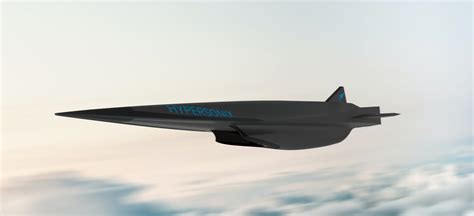
The DART AE is a relatively compact uncrewed vehicle measuring approximately 3 meters in length and weighing around 300 kilograms. Despite its modest size, the demonstrator incorporates advanced additive manufacturing techniques, high-temperature materials, modular payload systems, and the hydrogen-fueled SPARTAN scramjet.
Its projected operational speed is around Mach 7 — already far beyond the performance envelope of conventional aircraft.
The aircraft’s modular design allows researchers to swap sensors, telemetry systems, and experimental payloads between missions. This flexibility dramatically accelerates development cycles because engineers can rapidly test new configurations without redesigning the entire vehicle.
Why Scramjets Cannot Take Off Like Normal Aircraft
One of the biggest misconceptions surrounding hypersonic aircraft is the idea that they operate like ordinary jets.
Scramjets cannot generate thrust from a standstill.
Because the engine depends entirely on incoming high-speed airflow compression, the aircraft must first be accelerated to hypersonic speeds before the scramjet can even ignite. In the case of the SPARTAN engine, this threshold sits around Mach 5.
That requirement creates one of the most difficult integration challenges in hypersonic aviation.
Before the scramjet activates, another propulsion system must accelerate the aircraft to operational velocity. This usually means rockets, booster stages, or specialized carrier systems.
For the DART AE program, Rocket Lab and the HASTE suborbital launch platform play a crucial role. The demonstrator is expected to launch from the Mid-Atlantic Regional Spaceport near NASA Wallops Flight Facility under the Defense Innovation Unit’s HyCAT initiative.
Once boosted to the required speed, the aircraft separates and transitions into autonomous scramjet-powered flight.
That transition phase is one of the most dangerous moments in the entire mission profile.
Combustion instability, airflow disruption, or thermal anomalies can terminate the flight within seconds.
The Biggest Barrier to Mach 12 Is Heat
The greatest enemy of hypersonic aircraft is not propulsion. It is temperature.
As speed increases, aerodynamic heating becomes exponentially more severe. At Mach 12, the friction and compression generated by atmospheric flight can expose vehicle surfaces to temperatures reaching thousands of degrees.
This creates enormous materials science challenges.
Aircraft structures must remain lightweight enough for efficient flight while surviving intense thermal stress. Thermal expansion, structural fatigue, and oxidation all become critical concerns.
Traditional aluminum airframes become useless in this environment. Advanced hypersonic vehicles instead rely on exotic alloys, ceramic composites, carbon-carbon structures, and heat-resistant coatings.
Even then, sustained high-Mach flight remains brutally difficult.
The famous NASA X-43A Mach 9.6 Flight demonstrated this challenge clearly. The hydrogen-powered experimental scramjet briefly achieved Mach 9.6 before the flight concluded, highlighting how difficult it is to maintain controlled hypersonic propulsion for extended durations.
The DART AE program therefore focuses heavily on repeatability and data collection rather than simply chasing headline speeds.
Reliable, repeatable Mach 7 flight may ultimately prove more valuable than a short-lived Mach 12 sprint.
Could a Hydrogen Scramjet Eventually Carry Passengers?
In theory, yes.
In practice, passenger-capable hypersonic travel remains decades away.
A passenger aircraft operating at Mach 10 or Mach 12 would face enormous engineering, economic, and regulatory obstacles. Cabin pressurization, thermal protection, emergency procedures, sonic boom mitigation, structural fatigue, and fuel infrastructure would all require revolutionary advances.
Human physiology also becomes a major factor.
Acceleration forces, rapid thermal transitions, and extreme operational altitudes create additional safety challenges that uncrewed demonstrators do not face.
Nevertheless, the long-term implications are staggering.
A mature hydrogen-powered hypersonic transport system could reduce intercontinental flight times to mere hours or potentially less. Routes currently requiring fifteen hours could theoretically shrink to under two.
The aerospace industry has pursued this dream since the Cold War era, but previous technologies lacked the propulsion efficiency and materials capability needed for sustained atmospheric hypersonic flight.
Hydrogen scramjets may finally provide a pathway forward.
Military Interest Is Driving Hypersonic Investment
Although public fascination often focuses on futuristic passenger travel, defense applications are currently the primary driver behind hypersonic investment.
Hypersonic systems offer several military advantages:
- Extremely short response times
- High survivability against missile defenses
- Rapid intelligence and reconnaissance capability
- Potential precision strike applications
- Fast global deployment profiles
Countries worldwide are aggressively funding hypersonic research programs because the strategic implications are enormous.
A reusable hydrogen-powered hypersonic platform could eventually perform reconnaissance missions previously impossible for conventional aircraft. It could also support rapid satellite deployment, advanced weapons testing, or near-space operations.
That military interest is helping fund technologies that may eventually spill into civilian aerospace sectors.
Why Mach 12 Remains an Aspirational Goal
Despite the excitement surrounding the SPARTAN engine, current evidence does not suggest the existing DART AE demonstrator itself will reach Mach 12.
Hypersonix has publicly positioned Mach 12 as a future capability target tied primarily to the engine architecture rather than the present aircraft configuration.
That distinction matters.
Achieving controlled atmospheric flight at Mach 12 would likely require an entirely different airframe optimized specifically for ultra-high-speed thermal management, stability, and altitude performance.
The current demonstrator is better understood as a stepping stone.
Still, even incremental progress in hypersonic propulsion is historically significant. Hypersonic aviation has advanced slowly because every successful test requires solving interconnected problems involving propulsion, materials science, autonomy, aerodynamics, and thermal management simultaneously.
A repeatable hydrogen scramjet platform capable of reliable powered flight would already represent a major aerospace milestone.
The Future of Hypersonic Aviation Has Officially Begun
The DART AE program represents one of the clearest signs that hypersonic aviation is transitioning from theoretical research into practical experimentation.
Hydrogen-fueled scramjets are not magic technologies capable of instantly delivering Mach 12 passenger jets. The engineering barriers remain immense, and many hypersonic programs throughout history have struggled to move beyond brief demonstration flights.
Yet the underlying momentum is unmistakable.
Advances in additive manufacturing, computational fluid dynamics, autonomous flight control, high-temperature materials, and hydrogen propulsion are converging rapidly. What once required decades of government-funded aerospace development can now be prototyped by agile private-sector companies working alongside defense agencies and research institutions.
The most important achievement may not be hitting Mach 12 tomorrow.
It may simply be creating a reliable system capable of repeatedly surviving the brutal environment of hypersonic atmospheric flight while generating the data needed to push aerospace engineering into its next era.
For now, the dream of a hydrogen-powered aircraft traveling twelve times faster than sound remains aspirational. But for the first time in years, it no longer feels impossible.