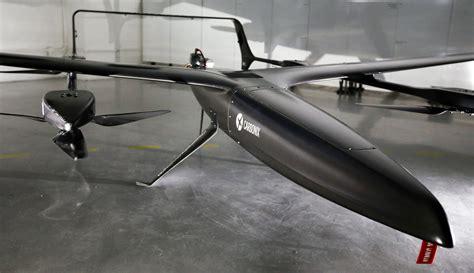
The rise of hydrogen-powered drones marks a transformative moment in both commercial aviation and military defense. As traditional battery-powered drones face limitations in range and endurance, hydrogen fuel cells are offering a promising alternative that could significantly expand the capabilities of unmanned aerial systems (UAS). The collaboration between HevenDrones, an Israel-based company, and Mach Industries, a U.S. manufacturing firm, represents a significant step toward producing hydrogen-powered drones at scale, with ambitious goals to manufacture up to 1,000 drones daily. This partnership aims to revolutionize drone operations by introducing a power source that offers longer flight durations, higher payload capacities, and reduced environmental impact compared to conventional lithium-ion batteries.
The Advantage of Hydrogen Fuel Cells
Hydrogen fuel cells provide several advantages over traditional battery technologies, especially when it comes to long-range, high-performance drone operations. Hydrogen fuel cells generate electricity through a chemical reaction between hydrogen and oxygen, producing water as the only byproduct, making them a clean energy source. Unlike lithium-ion batteries, which can only power drones for a limited duration before requiring recharging, hydrogen fuel cells can allow drones to fly for up to three to five times longer on a single refuel. This extended flight time is critical for military applications where drones are tasked with long-duration surveillance, reconnaissance, or logistical support missions.
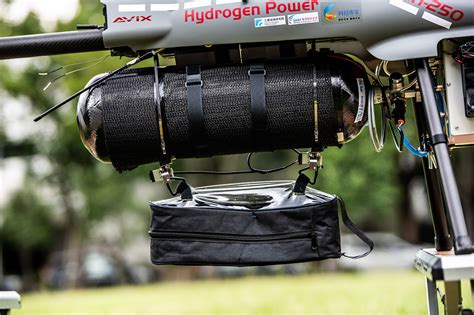
The significant difference in performance between hydrogen and traditional lithium-ion batteries is not just about flight time but also about the overall weight-to-power ratio. Hydrogen-powered drones can carry heavier payloads while maintaining their flight times, making them ideal for missions that require both endurance and capacity. For instance, the H2D250 model developed by HevenDrones can carry up to 10 pounds of equipment, a considerable improvement over the payload capabilities of many current electric drones. Furthermore, hydrogen-powered drones are not as vulnerable to extreme temperatures and can operate in harsh environments, a key feature for military operations in remote or hostile regions.
Hydrogen-Powered Drones in Military Applications
The military applications of hydrogen-powered drones are vast and varied. Drones equipped with hydrogen fuel cells can support a range of missions, from surveillance to attacking enemy positions. One of the most critical aspects of these drones is their ability to operate autonomously for extended periods. As the need for advanced autonomy increases, especially in conflict zones where human oversight is limited, drones powered by hydrogen fuel cells offer an ideal solution. They can perform operations without needing to rely on communication links, which can be susceptible to disruption from electromagnetic warfare. The ability to conduct GPS-independent navigation and fly for hours without refueling could provide the military with a game-changing advantage over adversaries who rely on more traditional drones with limited operational ranges.
The conflict in Ukraine has already highlighted the strategic importance of drones in modern warfare. Both Russian and Ukrainian forces have been experimenting with various drone technologies to gain an edge in the battlefield. As both sides push the limits of range and payload, hydrogen-powered drones could potentially change the dynamics of these confrontations by allowing for longer-range attacks, deeper penetration into enemy territory, and the disruption of logistics and supply chains. This capability could also extend to maritime operations, where drones could be used to patrol vast stretches of ocean without the need for frequent resupply missions.
Challenges and Future Prospects
While the advantages of hydrogen fuel cell drones are clear, several challenges remain. One of the primary obstacles is the geopolitical landscape surrounding the production and distribution of hydrogen fuel cells. Currently, the U.S. relies heavily on China for critical materials such as rare-earth metals and components necessary for the manufacture of these drones. In the event of a conflict or political tensions between the U.S. and China, these supply chains could be disrupted, potentially impacting the production of hydrogen fuel cell drones. The HevenDrones-Mach Industries partnership aims to address this by developing a domestic supply chain for critical components, thus reducing reliance on foreign sources.
Another significant challenge lies in the cost of production. Hydrogen fuel cells and the infrastructure required to produce and store hydrogen are expensive. However, with advancements in technology and the scaling of production, costs are expected to decrease over time. As demand for longer-range drones grows, particularly in defense sectors, the economics of hydrogen fuel cells may become more favorable. The partnership between HevenDrones and Mach Industries is also focused on improving the efficiency and affordability of hydrogen refueling stations, which are essential for sustaining hydrogen-powered drones in remote or forward-operating bases.
The Role of Hydrogen-Powered Drones in Commercial Aviation
Beyond military uses, hydrogen-powered drones also have promising applications in commercial aviation. These drones can be employed for tasks such as surveying large areas, delivering supplies to remote locations, and even performing aerial photography or mapping. The ability to cover vast distances without requiring frequent refueling or recharging positions hydrogen-powered drones as an excellent option for commercial operators looking for more sustainable alternatives to traditional aviation technology.
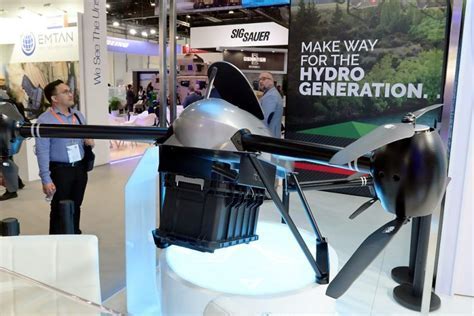
As the world increasingly turns to clean energy solutions, the push for more environmentally friendly aviation technologies is growing. Hydrogen-powered drones represent a step toward sustainable aviation, with the potential to reduce carbon emissions and lessen the environmental impact of traditional fossil fuel-powered aircraft. Moreover, the efficiency of hydrogen fuel cells can significantly reduce the need for energy-intensive charging stations, making them an attractive option for companies focused on reducing their environmental footprint.
Conclusion: The Future of Hydrogen-Powered Drones
Hydrogen-powered drones are on the verge of changing the landscape of both military and commercial drone operations. The ability to fly longer distances, carry heavier payloads, and operate autonomously for extended periods positions them as a superior alternative to current electric drones. The advancements made by HevenDrones and Mach Industries, alongside the ongoing efforts to scale up hydrogen fuel cell technology, could mark the beginning of a new era for drone technology. While challenges such as supply chain issues and cost remain, the future looks promising, with hydrogen-powered drones set to play an integral role in both defense and commercial sectors in the coming years.