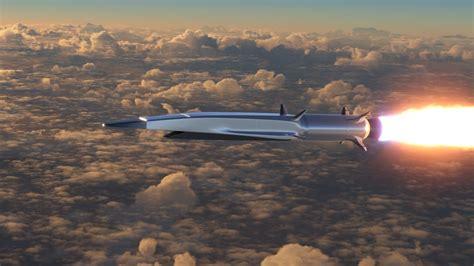
China has reportedly taken a giant leap forward in hypersonic weapons development with the successful test of a morphing hypersonic missile prototype, capable of flying faster than Mach 5 while altering its aerodynamic structure mid-flight. If substantiated, this innovation does more than break engineering boundaries — it reshapes the global military power balance, potentially giving Beijing a technological advantage the United States is struggling to close.
A Revolutionary Leap in Missile Technology
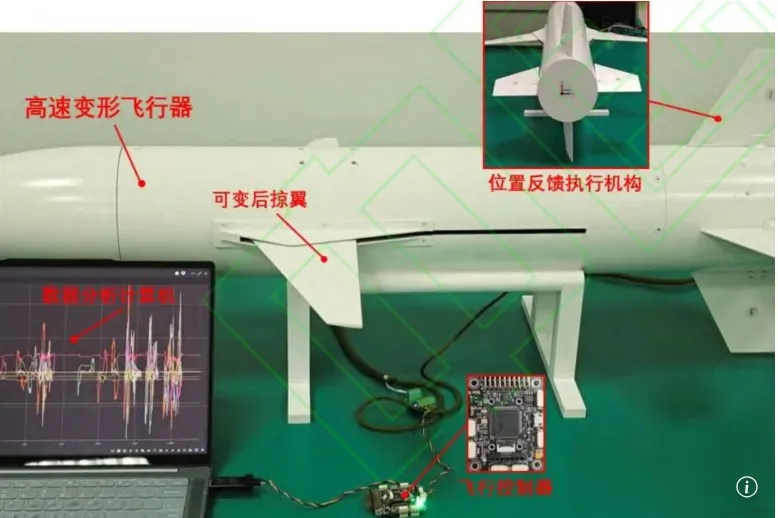
According to a peer-reviewed study published in China’s top aerospace journal, Acta Aeronautica et Astronautica Sinica, the new missile features a pair of retractable wings capable of deploying or folding back into the fuselage during high-speed flight. This dynamic ability allows the missile to optimize drag, lift, and maneuverability, offering tactical advantages against mobile, high-value targets.
At hypersonic speeds — where drag and heat rise exponentially — the ability to fine-tune flight characteristics dynamically is considered the “holy grail” of aerospace engineering. The missile’s aerodynamic versatility gives it the potential to evade missile defense systems, adjust course toward fast-moving assets like aircraft carriers or stealth jets, and operate across multiple mission profiles.
The lead researcher, Professor Wang Peng of the National University of Defence Technology (NUDT), emphasized in the study that the morphing missile completed critical hardware-in-the-loop (HIL) ground tests, indicating that the design is not merely conceptual but viable for near-future deployment.
The Engineering Marvel Behind the Morphing Missile
The missile’s defining feature — its adaptive wing mechanism — enables it to fold or extend its wings depending on flight phase. During high-speed cruise, the wings retract to reduce drag and heat buildup. When agility is required, such as during final approach or evasive maneuvers, the wings deploy to boost lift and directional control.
Key aerodynamic characteristics can be altered in real-time, a feature only theorized until now in hypersonic platforms. This shape-shifting ability allows:
- Lower drag during long-range flight.
- Higher maneuverability during terminal guidance.
- Improved survivability against modern missile defenses.
Such multi-phase optimization has traditionally been impossible due to the brutal conditions at hypersonic speeds — with surface temperatures exceeding 2,000°C (3,632°F) — and the computational demand of controlling such a vehicle under shifting flight parameters.
Pushing the Boundaries of Computational Control
Controlling a morphing airframe in real time is a computational nightmare. Aerodynamic models shift unpredictably with each wing adjustment. At hypersonic speeds, minor calculation delays can lead to catastrophic destabilization.
To overcome this, Professor Wang’s team developed a novel control system integrating:
- High-order fully actuated system modeling
- Prescribed performance control algorithms
- Super-twisting sliding mode control (STSMC)
This hybridized algorithmic approach delivers precision tracking within 1° of deviation, and chatter-free actuator response, all while minimizing computational strain — a critical factor given the power and space constraints onboard hypersonic missiles.
The system’s ability to maintain flight stability while shifting shape in a thermally and structurally hostile environment demonstrates a technological milestone unmatched by existing missile systems, Western or otherwise.
Challenges That Could Redefine Military Engineering
Despite the breakthrough, challenges remain. The retractable wings require internal cavities within the missile’s body, leaving potential structural gaps that could compromise thermal sealing and stealth performance.
Additionally, the mechanical actuators moving the wings are vulnerable to lag and fatigue. At Mach 5+, even a millisecond delay can cause a fatal deviation. The success of the Chinese team in mitigating such risks in test environments hints at substantial progress in miniaturized precision mechanics and aerospace materials engineering.
Moreover, integrating such a system into operational doctrine requires extensive field testing, reliable telemetry, and battlefield-ready command-and-control infrastructure — elements that remain undisclosed or possibly under development.
Implications for U.S. Hypersonic Development
While the U.S. maintains global military superiority in terms of naval assets, fifth-generation aircraft, and global reach, hypersonic missile development is an area where it significantly lags.
The Pentagon has invested heavily in hypersonic R&D:
- FY2025: $6.9 billion
- FY2023: $4.7 billion
- FY2022: $3.8 billion
Yet, none of the U.S. programs — including the Army’s Long-Range Hypersonic Weapon (LRHW), Navy’s Conventional Prompt Strike (CPS), and Air Force’s Hypersonic Attack Cruise Missile (HACM) — has transitioned to operational deployment.
Although the deployment of the Dark Eagle system during the Talisman Sabre military drills in Australia marked a significant milestone, the U.S. still lacks a fully operational hypersonic weapon. The first battery rounds of LRHW are expected by the end of 2025, but the delays reflect the complexity and caution involved in catching up to adversaries.
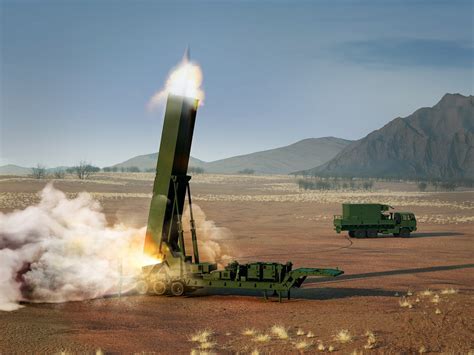
Meanwhile, the Defense Advanced Research Projects Agency (DARPA) continues to explore innovative approaches like the Hypersonic Air-breathing Weapon Concept (HAWC), but field-ready outcomes remain on the horizon.
Russia and China: Leading the Pack
While the U.S. is still testing and refining, Russia and China already field multiple hypersonic systems:
- Russia: Kinzhal, Tsirkon, Avangard — all reportedly operational, with the new Oreshnik entering mass production.
- China: DF-17 and YJ-21, both considered capable of striking U.S. naval assets and Pacific bases.
China’s new morphing missile could further widen the gap, offering capabilities that go beyond sheer speed, integrating maneuverability, flexibility, and survivability in a single warhead-class platform.

Even nations like Iran and North Korea have claimed hypersonic capabilities, with Iran alleging use of such weapons in its recent conflict with Israel — though experts argue they were ballistic missiles with limited maneuverability.
Nonetheless, the perception of hypersonic advancement among U.S. rivals puts pressure on Washington to accelerate development, testing, and deployment before the strategic gap becomes irreversible.
Strategic Ramifications: A Hypersonic Deterrent Redefined
The morphing hypersonic missile changes more than military hardware — it reshapes the strategic equation. Such a missile could, in theory, evade all existing ballistic missile defense systems deployed in the Indo-Pacific theater.
If China succeeds in fielding operational morphing hypersonic missiles, the implications could be profound:
- Deter or delay U.S. carrier group deployments near Chinese waters.
- Undermine regional U.S. missile defense architectures like THAAD and Aegis.
- Raise the cost of any preemptive or retaliatory strike planning in a Taiwan conflict scenario.
- Reframe PLA Rocket Force doctrine around flexible, multi-target, rapid-reaction strike options.
Such capabilities could tilt power projection and deterrence dynamics in East Asia, emboldening Chinese geopolitical maneuvers and challenging the credibility of U.S. extended deterrence to regional allies.
Conclusion: A Missile That Could Rewrite the Rules of Engagement
China’s success in testing a shape-shifting hypersonic missile represents more than a technological first — it signifies a doctrinal transformation in precision warfare. With real-time reconfigurability, enhanced agility, and breakthrough control systems, the morphing missile positions China at the forefront of next-generation strike capability.
For the United States and its allies, this test serves as both a wake-up call and a benchmark. The race is no longer just about speed — it’s about adaptability, survivability, and multi-role mission integration. And by that measure, China appears to be surging ahead.