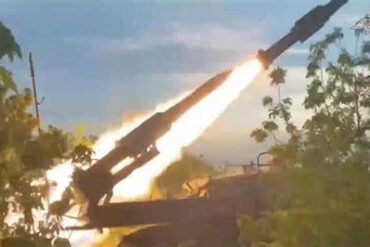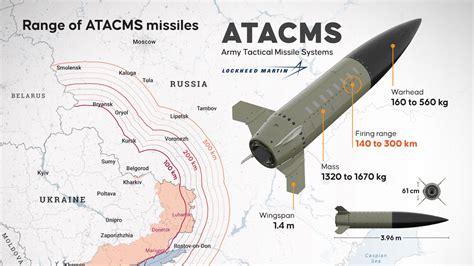
Ukraine has officially confirmed the deployment of U.S.-supplied ATACMS tactical ballistic missiles in direct strikes against targets on Russian territory, ending months of strategic restraint and ushering in a pivotal new stage in the ongoing conflict. On November 19, 2025, Kyiv announced that its armed forces launched four ATACMS missiles from the Kharkiv region toward Russia’s Voronezh oblast—a significant escalation in long-range warfare and a bold demonstration of renewed operational freedom.
Strategic Significance of ATACMS Use
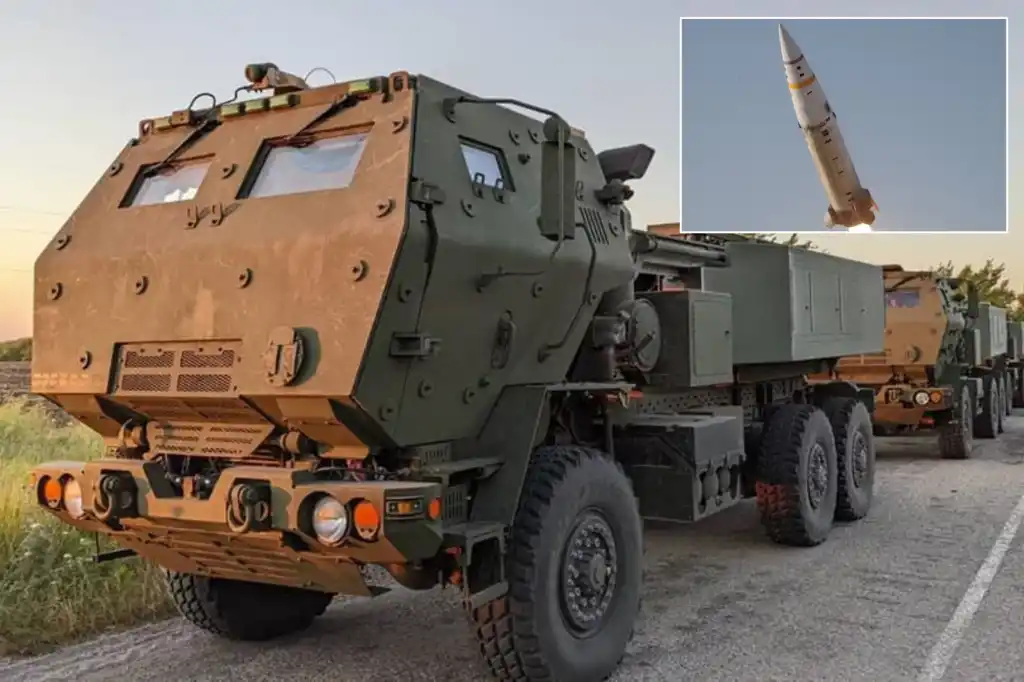
The Army Tactical Missile System (ATACMS) represents one of the most potent long-range precision-strike assets in Ukraine’s growing Western arsenal. Capable of reaching up to 300 kilometers, the most advanced variants such as the M57 and M57E1 enable deep penetration into enemy rear positions, offering the ability to strike high-value targets like ammunition depots, radar systems, and command posts.
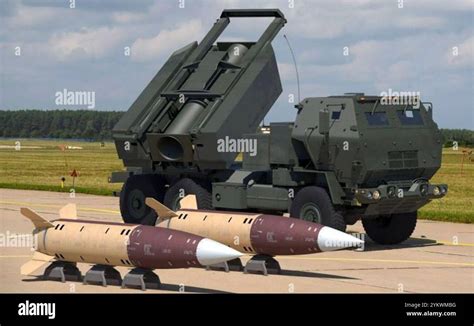
Unlike the earlier 2023 delivery of shorter-range M39 cluster-warhead variants, the current missiles are equipped with unitary warheads and modern guidance systems combining GPS with inertial navigation. This dramatically enhances their precision against hardened infrastructure and point targets, while reducing dud rates and potential civilian risk.
Layers of Defense: Russia’s Air Shield Tested
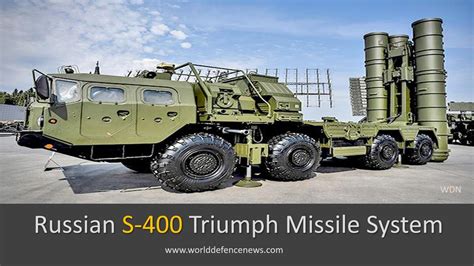
According to Russia’s Ministry of Defence, all four incoming missiles were intercepted by a combination of S-400 Triumph long-range interceptors and Pantsir-S1 close-range air defence systems. These weapons represent the backbone of Russian layered air defense and are designed to neutralize a spectrum of aerial threats from high-flying bombers to stealthy cruise missiles.
Russia’s S-400 system, incorporating 48N6 and 40N6 missiles guided by 91N6E and 92N6E radars, claims engagement envelopes up to 380 kilometers, although performance against ballistic trajectories is more limited. The Pantsir-S1 platform complements this with 30 mm autocannons and missiles tailored for intercepting low-flying threats and drones that evade higher-tier defenses.
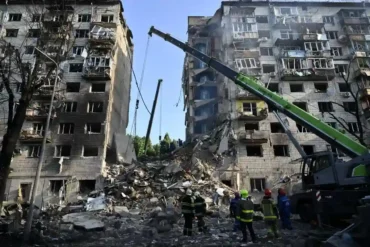
Despite Moscow’s assertion of successful interception, independent verification remains elusive. Russian authorities acknowledged debris damage to residential and public buildings, including a retirement home and orphanage, but reported no casualties. The mere fact of ATACMS entering Russian airspace has profound symbolic and operational implications, regardless of the intercept outcome.
Ukraine’s Strategic Justification: Defense by Offense
Kyiv’s General Staff described the strike as a direct response to escalating Russian missile and drone attacks on Ukrainian cities. In recent weeks, Russia intensified its campaign against Ukraine’s power grid and gas infrastructure, prompting fears of a repeat of last winter’s energy blackouts. Strikes on Kharkiv wounded dozens and placed renewed strain on the national energy system.
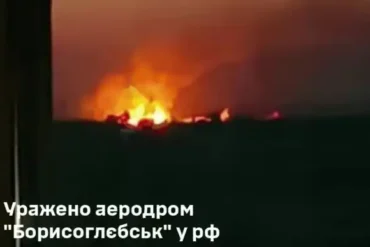
In this context, Ukraine framed the ATACMS salvo as a preemptive disruption of Russian staging areas and military infrastructure near the border. The Voronezh strike reopens a corridor for deep strikes against logistical hubs, air bases, and command centers that support Russian offensives in Kharkiv, Belgorod, and Kursk regions.
Pentagon Policy Shift: Biden’s Decision and its Aftermath
The ability to strike within Russia was previously limited by Pentagon-imposed constraints, intended to avoid direct escalation with Moscow. However, in late 2024, the Biden administration relaxed these conditions, citing the need for greater strategic latitude as Russian attacks deepened. This policy shift was controversial in Washington, with then-candidate Donald Trump publicly stating Ukraine had “no chance of winning” without being allowed to strike into Russia.
In early 2025, the Pentagon reportedly implemented a review-and-approve mechanism for every ATACMS launch intended to cross into Russian airspace. The General Staff’s public acknowledgment of the November 2025 strike suggests either a loosening of oversight or a broader definition of legitimate targets within the approved framework.
Russia’s Response: Escalation and Nuclear Signaling
Moscow reacted swiftly to the Voronezh incident by launching short-range Iskander-M ballistic missiles at Ukrainian rocket launchers, signaling a tit-for-tat policy aimed at deterring further incursions. The Kremlin reaffirmed its “red lines,” warning that continued use of Western long-range systems against Russian territory could have “grave consequences.”
While most defense analysts deem nuclear escalation unlikely, Moscow’s rhetoric has escalated, linking deep-strike capabilities to its revised nuclear doctrine. The implication is that sustained ATACMS or Storm Shadow strikes could, in extreme scenarios, justify retaliatory measures under the guise of existential threat.
Implications for NATO and European Security
The confirmed cross-border strike puts renewed pressure on NATO capitals, many of which now face a more complex calculus around the export of long-range munitions and the interoperability of their own strike systems. Questions of escalation risk, technology control, and political conditions surrounding usage will become central to future transfers of similar capabilities—such as Franco-British cruise missiles or upcoming European-developed precision systems.
For Ukraine, the strike reaffirms the strategic value of long-range fires not only for deterrence but also for operational disruption. ATACMS, combined with Ukrainian-developed long-range drones and cruise weapons, enable targeting depth that previously required air superiority or covert sabotage. These assets contribute to a more detailed recognized maritime and air picture (RMP) and improve targeting efficiency, especially when integrated with Western ISR inputs and frontline tactical collection.
Supply Constraints: Ukraine’s ATACMS Dilemma
Despite the operational value, Kyiv faces a critical issue: ATACMS inventory is finite. Each missile costs millions of dollars, and deliveries to date have been limited. This reality forces Ukraine to prioritize its most important targets—command nodes, supply routes, airfields, and radar installations—while preserving stockpiles for key phases of future offensives or defensive actions.
The challenge lies in balancing this precision capability with conventional artillery and GMLRS systems, ensuring that deep-strike missions do not leave frontline units under-supported. Ukraine’s integrated targeting process must constantly reconcile urgency, feasibility, and cost-effectiveness.
Political Reverberations and the Road Ahead
The resumption of ATACMS strikes into Russia underscores a profound evolution in the war’s political and strategic dimensions. The attack reflects both a recalibrated U.S. posture and a renewed willingness by Ukraine to seize the initiative even under the shadow of nuclear signaling.
It also illustrates the growing interdependence of Kyiv’s battlefield success on U.S. political cycles. As Washington moves closer to its 2026 elections, the potential for changes in defense policy looms large. A future administration less supportive of offensive tools could limit Kyiv’s ability to project power across the border.
Finally, the operational precedent set by this strike will likely influence other regional players weighing the utility of tactical ballistic missiles and long-range precision fires in modern conflict. The effectiveness of Russian air defenses, the political fallout, and the sustainability of such actions will all shape the doctrine of future engagements far beyond Ukraine’s borders.
Conclusion: A Strategic Pivot with Lasting Consequences
The confirmed ATACMS strike into Russia marks a turning point in the Russo-Ukrainian conflict. No longer confined to defensive positioning, Ukraine has signaled its readiness to escalate with precision and purpose, challenging both Russian deterrence and Western policy limits. As long-range strike capabilities continue to evolve, the balance of power in Eastern Europe may increasingly hinge not on numbers, but on reach, accuracy, and political resolve.