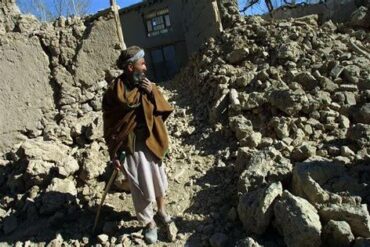
In the early months of the U.S.-led war in Afghanistan in 2001, the skies over the country presented a unique and difficult challenge for American pilots. The rugged terrain, scattered insurgent positions, and elusive Taliban fighters blended into the rocky topography, making them nearly invisible to high-speed jet aircraft. The F-16 Fighting Falcon, engineered for dogfights with Soviet MiGs, suddenly found itself hunting enemies it wasn’t built to see. But American aircrews did what they’ve often done best: they improvised.
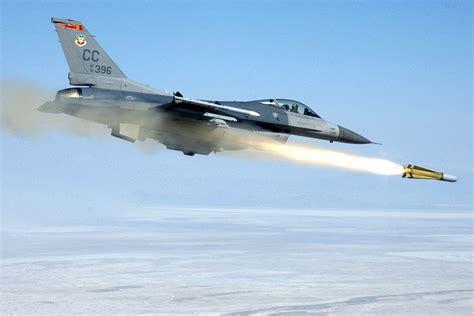
By late November 2001, pilots from the 389th Fighter Squadron, deployed from Mountain Home Air Force Base in Idaho and operating out of Al Udeid Air Base in Qatar, began strapping unusual payloads under their wings. Alongside the usual assortment of bombs and fuel tanks, some F-16s carried AGM-65G Maverick missiles—not to launch them, but to see through them.
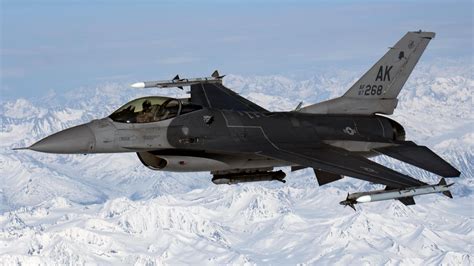
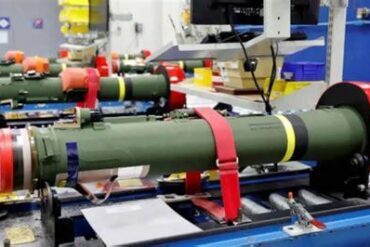
The Maverick is a 675-pound guided missile designed in the Cold War to hunt and destroy Soviet tanks. Its secret weapon is its infrared seeker head, capable of locking onto the heat signature of armored vehicles. That same technology allowed pilots to tap into the missile’s seeker feed in real-time on their cockpit displays. The logic was simple: if the Maverick could track hot tanks, perhaps it could do the same with enemy trucks or gatherings of Taliban fighters.
The Improvised Eyes of a Falcon
The concept of using Maverick missiles as forward-looking infrared (FLIR) cameras wasn’t entirely new. A-10 Thunderbolt II crews, who specialized in close air support, had dabbled with the technique in previous deployments. But this was a first for the F-16 community, particularly one flying supersonic over mountainous regions where every second counted and every target was fleeting.
According to the Air Combat Command’s 2012 official history, F-16 crews were experimenting with these missiles in a reconnaissance role during combat missions over Afghanistan. These were not training exercises or simulations. The pilots were flying live combat sorties, carrying live missiles, and attempting to track live insurgents—all with hardware that was never meant for such tasks.
Yet the results were underwhelming. While the Maverick’s infrared seeker could detect heat sources along Afghanistan’s winding mountain roads, it wasn’t nearly sharp enough to make out distinguishable targets. “We tried to use Mavericks as a sensor [for road reconnaissance], but they did not work very well, as we found out,” an F-16 weapons officer later admitted. “There was no way to identify a target with it.”
Why the Maverick Came Up Short
The underlying issue was a matter of resolution and purpose. The Maverick’s seeker head was optimized to lock onto something as large and hot as a tank’s engine compartment, not the smaller, cooler profiles of human beings or lightly armored pickup trucks. Designed to home in and detonate without hesitation, it lacked the fidelity and granularity required for detailed surveillance.
Nonetheless, the experiment wasn’t a complete failure. The infrared sensors could detect hot spots—clusters of warmth indicating possible enemy activity, cooking fires, or moving vehicles. This gave pilots a general idea of where insurgents might be hiding or operating. The missile became a crude compass pointing toward possible danger zones, even if it couldn’t paint a clear enough picture to allow precision engagement.
The Broader Challenge of Airborne Reconnaissance
The difficulties the F-16 crews faced underscore a larger issue: the mismatch between traditional airpower and asymmetric warfare. In conflicts like the Gulf War, where large armored formations moved in open desert, high-flying jets could identify and eliminate targets with devastating effectiveness. But in Afghanistan, the battlefield was decentralized, fragmented, and obscured by terrain.
The F-16’s main sensor suite—a powerful multi-mode radar—was designed to detect other aircraft or large surface objects. It wasn’t built for the kind of low-fidelity, high-context reconnaissance demanded by counter-insurgency operations. Without specialized targeting equipment, even the most advanced fighter was functionally blind.
From Improvisation to Innovation: The Rise of Targeting Pods
Recognizing this limitation, the U.S. Department of Defense moved quickly to equip fighters with tools built specifically for the job. The solution came in the form of external targeting pods, particularly the Litening and Sniper Advanced Targeting Pods. These pods included high-resolution daylight and infrared cameras, laser rangefinders, and GPS-guided munitions integration—everything a pilot needed to locate, identify, and eliminate ground targets.
Mounted externally beneath the fuselage or wings, these targeting pods transformed the capabilities of legacy aircraft almost overnight. With a targeting pod, an F-16 pilot could distinguish individual humans from 20,000 feet, track vehicles in motion, and even relay live video feeds to commanders and ground troops.
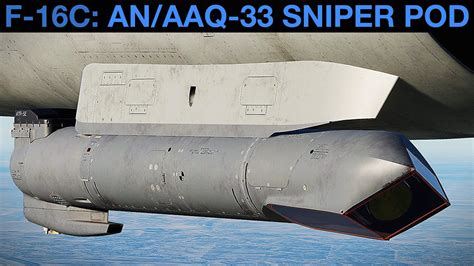
The pods became ubiquitous across all service branches. The U.S. Navy and Marine Corps adopted them for use on aircraft like the F/A-18 Hornet, while Air Force A-10s, F-15Es, and even B-52 bombers received similar upgrades. These tools are now considered essential for modern combat air operations.
Lessons Learned in Real-Time
While the Maverick-as-camera gambit didn’t pan out as hoped, it served a vital purpose: it highlighted critical gaps in situational awareness and forced an institution-wide reevaluation of how aircraft were equipped. More importantly, it reflected the ingenuity of U.S. aircrews in responding to unanticipated battlefield conditions.
Desperation breeds creativity, and in the early days of Operation Enduring Freedom, the need for real-time visual intelligence outweighed doctrinal rigidity. The improvised use of Mavericks, though ultimately ineffective for fine reconnaissance, was a stopgap measure that kept pilots in the fight until better technology arrived.
Modern Recon: From Pods to Stealth
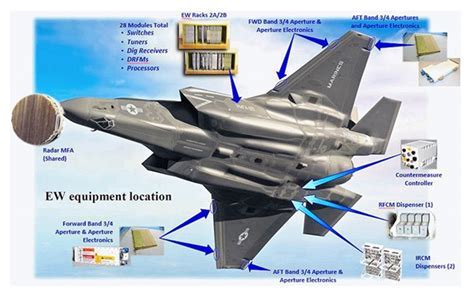
Today, the concept of integrating sophisticated sensors into fighter aircraft has evolved even further. The F-35 Lightning II, America’s premier stealth fighter, no longer needs an external targeting pod at all. Instead, its sensors are built directly into the airframe, with electro-optical distributed aperture systems (DAS) and advanced infrared tracking arrays housed within its fuselage.
These onboard sensors offer seamless 360-degree awareness, automatically tracking threats, guiding weapons, and relaying information to other friendly units across a digital battlefield. The evolution from bolted-on pods to fully integrated multispectral systems marks a technological leap that would have been unimaginable to F-16 crews in 2001.
Conclusion: A Snapshot of Adaptation in Combat
The story of F-16 pilots using anti-tank missiles as improvised cameras is more than a wartime anecdote. It’s a case study in adaptation under pressure, and a clear reminder that the realities of war often outpace doctrine, training, and procurement cycles.
In a theatre where insurgents moved on foot or in civilian vehicles, disappearing into terrain they knew intimately, America’s high-speed jets had to reconfigure their approach. The Maverick missile experiment was a creative, if flawed, attempt to close the intelligence gap between the cockpit and the combat zone.
Ultimately, it accelerated a shift toward purpose-built tools that now define how modern air forces wage war. The lessons learned from these improvised missions have helped shape the sensor-rich battlespace of today—and ensured that future pilots won’t have to use missiles as makeshift binoculars again.