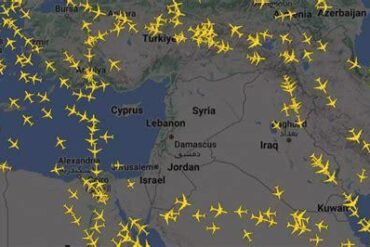
The ongoing Israel-Iran conflict has led to significant disruptions in global aviation, forcing airlines to reroute flights to avoid increasingly volatile airspace in the Middle East. As a result, Afghanistan’s skies have seen a dramatic surge in air traffic, with airlines opting for safer flight paths through the region amid escalating tensions. This unexpected shift in aviation dynamics has not only altered travel routes but has also raised pressing questions about the future of international air travel as geopolitical conflicts evolve.
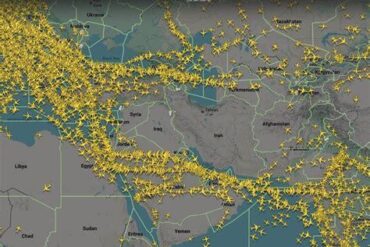
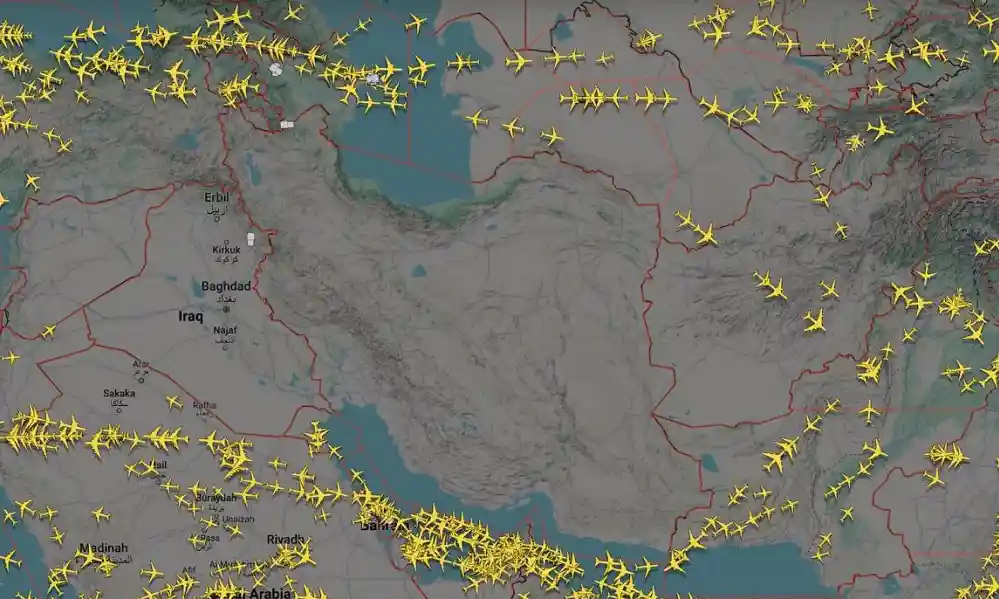
As tensions escalate in the Middle East, particularly following Israel’s attack on Iran on June 13, the skies above Afghanistan have become increasingly crowded with commercial aircraft seeking alternative flight paths. The ongoing conflict, coupled with the risk of further escalation, has significantly altered aviation routes that traditionally connected Asia with Europe and the US. Data from Flightradar24 indicates that air traffic over Taliban-controlled Afghanistan has surged by an astonishing 500% over the past week, reaching an average of 280 flights a day. This increase represents a dramatic shift in global aviation, as airlines are forced to reroute their flights to avoid the growing airspace risks over the Middle East. Consequently, Afghanistan has quickly emerged as a crucial transit corridor for international airlines looking to bypass conflict zones like Syria, Iraq, and Iran.
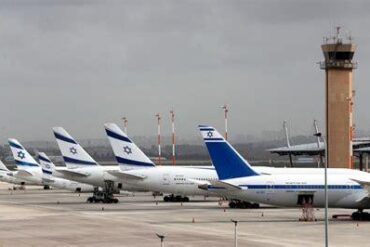
The Middle East has long been a central hub for global aviation, connecting travelers from Asia, Europe, and the US. However, the recent flare-up of hostilities in the region, alongside the possibility of US involvement in military actions against Iran, has made it increasingly difficult to navigate the skies over Lebanon, Syria, Iraq, and Iran. As these airspaces have become dangerous, particularly with military confrontations threatening to disrupt commercial flights, airlines have been forced to seek new routes that avoid these conflict zones. The once-busy flight paths over Iran and Iraq, vital for connecting the East and West, have been significantly disrupted. This has had a profound impact on airlines, including major carriers like American Airlines Inc. and Air France-KLM, which have scaled back their operations in the region. These airlines, as well as others, have been compelled to make difficult decisions in response to the volatile security situation.
In light of the conflict, Afghanistan’s airspace has witnessed a marked increase in commercial flights. Since Israel’s attack on Iran, the number of aircraft flying over Taliban-controlled Afghanistan has risen sharply, with many airlines now rerouting their flights through the region. This shift in flight paths is largely due to the increasingly inaccessible airspaces over Lebanon, Syria, and Iran, which have become perilous due to ongoing military actions. While restrictions on flying over Afghanistan were eased in 2023 following the US withdrawal and the Taliban’s control over the country, many airlines remained cautious, avoiding the airspace entirely. However, the current geopolitical climate has forced carriers to reconsider their stance.
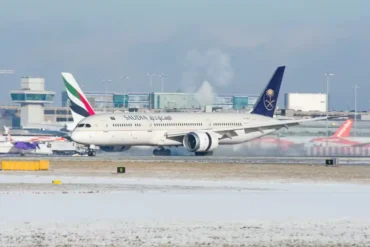
The uptick in flights over Afghanistan, as well as Saudi Arabia, has become a vital workaround for airlines seeking safer alternatives. Since late 2023, more airlines have started using Afghanistan’s skies, with daily flights over the Gulf nation increasing significantly. The volume of air traffic over Afghanistan and Saudi Arabia has doubled this week, with approximately 1,400 daily flights now passing over the region. This surge in overflights marks a significant shift in the global aviation landscape, with Afghanistan now serving as a crucial artery for international air travel.
The surge in air traffic over Afghanistan is not only reshaping flight patterns but is also having a financial impact on the Taliban. The Taliban, who control the country’s airspace, charge airlines a fee of $700 for each flight passing through their territory. These fees are collected via third-party intermediaries, and the increased number of overflights is expected to bring a substantial financial windfall to the Taliban regime. Over the past week, the Taliban could see an influx of more than $1 million in revenue from these increased flight traverses. While the country remains financially strained due to international sanctions and limited access to global markets, this unexpected source of income highlights the financial implications of the shifting air traffic patterns. The Taliban’s control over Afghanistan’s airspace has, ironically, positioned them to benefit from the current crisis, which has disrupted air travel routes across the region.
As airlines continue to adjust to the changing dynamics of Middle Eastern airspace, several key questions arise regarding the long-term impact of these changes on global aviation. The surge in flights over Afghanistan may become a temporary solution for carriers looking to bypass conflict zones, but the risks associated with flying over Taliban-controlled territory could remain a point of concern for airlines and passengers alike. The increase in air traffic over Afghanistan could also lead to further complications in the region, particularly as military operations intensify. Airlines may face challenges in maintaining consistent, reliable routes as the geopolitical situation evolves. The growing reliance on Afghanistan’s airspace, while financially beneficial for the Taliban, could also place added pressure on airlines to navigate the changing security landscape.
In conclusion, the dramatic surge in flights over Afghanistan is a direct result of the ongoing conflict in the Middle East, with airlines seeking alternative routes to avoid increasingly perilous airspaces over Lebanon, Syria, Iraq, and Iran. This shift is reshaping global aviation, with Afghanistan emerging as a key corridor for international flights. While the surge in air traffic presents a financial boon for the Taliban, it also raises questions about the future of air travel in the region. As the situation in the Middle East continues to evolve, airlines will need to adapt to the changing dynamics of the skies, all while navigating the complex challenges of flying over a region caught in the midst of political turmoil.