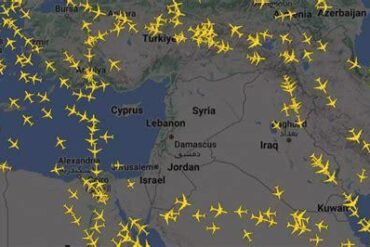
The sudden closure of key Middle Eastern airspace corridors has left 33 widebody jets from Gulf and regional carriers stranded across 13 major airports in the United States and Canada, triggering a ripple effect that now stretches from New York to Los Angeles and from Toronto to Houston. What began as a rapid escalation of missile and drone strikes has swiftly transformed into a full-scale aviation disruption affecting thousands of passengers, crews, and global flight schedules.
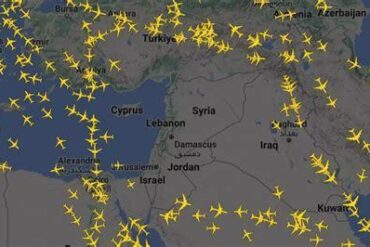
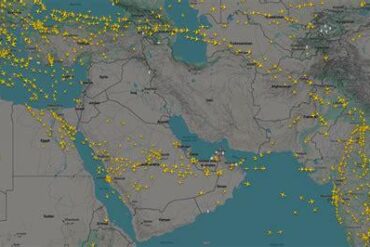
Airspace over Iran, Iraq, Israel, Kuwait, Qatar, Bahrain, and Syria is currently closed or heavily restricted. The shutdown followed coordinated military operations involving the United States and Israel targeting Iranian assets. Within hours, regional aviation authorities suspended civilian operations, forcing inbound long-haul aircraft already en route to divert or remain parked at their departure airports in North America.
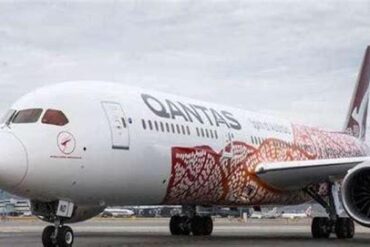
The result is an unprecedented gridlock of some of the world’s most advanced long-haul aircraft—Airbus A350s, A380 superjumbos, Boeing 777s, and 787 Dreamliners—now sitting idle on taxiways and remote stands far from their intended destinations in Doha, Dubai, Abu Dhabi, Tel Aviv, and Riyadh.
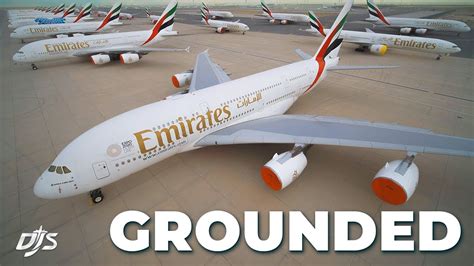
The Gulf “Big Three” Dominate the Grounded Fleet
The majority of stranded aircraft belong to the Gulf carriers often referred to as the “Big Three” — Emirates, Etihad Airways, and Qatar Airways. These airlines have built their global networks around strategic geographic positioning, funneling passengers through mega-hubs such as Dubai International Airport (DXB), Hamad International Airport (DOH) in Doha, and Abu Dhabi International Airport (AUH). When those hubs close, their entire operational model stalls.
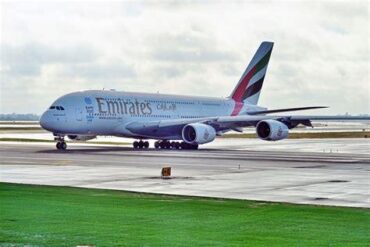
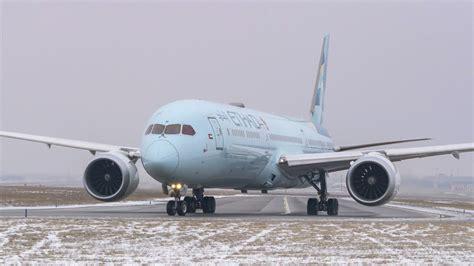
At New York JFK alone, multiple widebody aircraft are grounded, including Emirates’ Airbus A380-861 operating flight EK201 and EK203, Qatar Airways’ Boeing 777-3DZ(ER) on QR701 and QR703, and Etihad’s Airbus A350-1041 operating EY1. The scale of disruption at a single airport illustrates the systemic vulnerability of hub-and-spoke aviation networks during geopolitical crises.
Elsewhere, Los Angeles International Airport (LAX) holds an Emirates A380 (EK215), a Qatar Airways A350-1041 (QR739), and an El Al Boeing 787-9 (LY5). Toronto Pearson (YYZ) has three grounded widebodies, including an Etihad A380 and an Emirates A380, while Washington Dulles (IAD) hosts another Emirates superjumbo and multiple Dreamliners.
In total, these aircraft represent billions of dollars in capital investment temporarily immobilized by events unfolding thousands of miles away.
Drone Strikes and the Sudden Halt of Gulf Transit Hubs
Reports confirm drone and missile strikes near Abu Dhabi International Airport, resulting in at least one fatality, while Dubai International Airport reported multiple injuries following nearby attacks. Civil aviation authorities responded by suspending operations at critical transit airports including Dubai (DXB), Doha (DOH), Abu Dhabi (AUH), and Tel Aviv (TLV).
More than 3,200 flights were canceled in a single weekend, according to flight tracking data. For airlines dependent on seamless connectivity through the Gulf, the shutdown was immediate and absolute. Aircraft already en route from North America faced limited diversion options, while those on the ground could not legally depart into closed airspace.
Passengers transiting through the region have found themselves stranded not only in North America but also in global hubs such as London Heathrow and Singapore Changi, both of which rely heavily on Gulf carrier connectivity to South Asia, Africa, and Australasia.
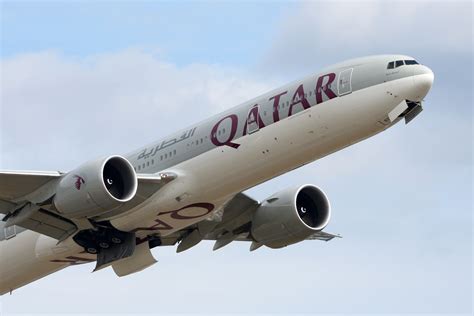
The Marooned Aircraft: A Coast-to-Coast Standstill
The stranded fleet spans the continent. Hartsfield-Jackson Atlanta International Airport (ATL) holds a Qatar Airways A350-1041 (QR755) and an Etihad A350-1041 (EY13). Boston Logan (BOS) has three grounded aircraft, including an Emirates Boeing 777-300ER and a Qatar Airways A350-941.
At Dallas/Fort Worth (DFW), two Qatar Airways Boeing 777-2DZ(LR) aircraft remain idle alongside an Emirates 777-300ER. Seattle-Tacoma (SEA) hosts a Qatar Airways 777-3DZ(ER), while Orlando (MCO) holds Emirates flight EK219 operated by a Boeing 777-31H(ER).
Cargo operations have not been spared. A Qatar Cargo Boeing 777-F sits grounded at Houston George Bush Intercontinental (IAH), underscoring how the disruption extends beyond passenger traffic to global freight logistics.
One particularly notable presence is a Qatar Executive Gulfstream G700 at San Francisco International Airport (SFO). Even private aviation services linked to Gulf carriers are affected, demonstrating that no segment of the aviation spectrum remains insulated.
Strategic Rerouting and Extended Flight Times
Carriers with aircraft capable of ultra-long-haul performance are exploring alternative routing over southern or northern corridors to bypass restricted zones. These detours add one to three hours to already lengthy transcontinental flights, increasing fuel burn and operational complexity.
While aircraft such as the Airbus A350 and Boeing 787 are engineered for extended-range operations, rerouting around closed airspace requires diplomatic clearance, precise fuel planning, and contingency coordination with air traffic control authorities across multiple regions.
The sudden loss of Middle Eastern overflight routes also impacts airlines not based in the Gulf. European and Asian carriers flying between East Asia and Europe often traverse Iranian or Iraqi airspace. With those corridors unavailable, congestion in alternative routes is intensifying.
Political Fallout and Constitutional Debate
The aviation disruption traces back to a broader military escalation initiated under Operation Epic Fury, a coordinated strike campaign targeting Iranian infrastructure. Following reports of civilian casualties and the death of Ayatollah Ali Khamenei, Iran’s Islamic Revolutionary Guard Corps vowed significant retaliation.
President Donald Trump invoked his authority as Commander in Chief to authorize the strikes, citing the need to neutralize imminent threats and prevent nuclear proliferation. Critics argue that the absence of Congressional authorization raises constitutional concerns under Article I of the U.S. Constitution, which grants war-declaring powers to Congress.
Regardless of the political debate, civil aviation finds itself entangled in the consequences. Commercial aircraft are engineered for efficiency and precision scheduling; they are not built to sit idle on foreign soil awaiting geopolitical stabilization.
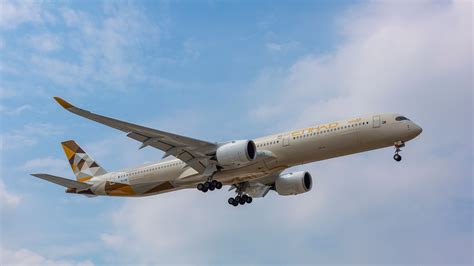
A Global Aviation System Under Strain
Modern aviation operates on narrow margins and synchronized timing. Widebody jets typically spend minimal time on the ground between rotations. When 33 long-haul aircraft remain parked simultaneously, crew rotations expire, maintenance cycles shift, and downstream flights across multiple continents are delayed or canceled.
Each aircraft represents a complex web of passenger itineraries, cargo commitments, and crew scheduling. The longer the airspace closures persist, the more severe the cascading operational impact becomes.
The current standstill serves as a stark reminder that global aviation remains deeply intertwined with geopolitics. Airspace—an invisible highway above sovereign territory—can close in minutes, yet reopening it often requires delicate diplomacy and security assurances.
For now, across 13 North American airports, gleaming Airbus and Boeing widebodies remain silent. Engines that normally power overnight journeys across oceans are dormant. Departure boards display delays without certainty. And the world’s most interconnected region of transit hubs waits for the skies above the Middle East to reopen.