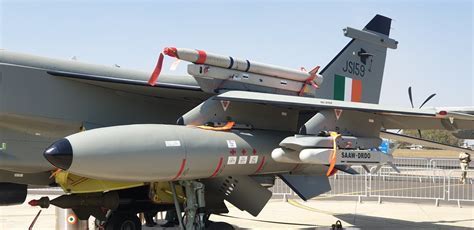
The Indian Air Force (IAF) is poised to enhance its precision strike capability with the imminent acquisition of the satellite-guided variant of the Smart Anti-Airfield Weapon (SAAW), a cutting-edge indigenous system developed by the Defence Research and Development Organisation (DRDO). This development marks a significant leap in India’s defense self-reliance, as the IAF moves closer to deploying homegrown standoff weapons capable of surgically disabling enemy airfields without ever entering contested airspace.
With a strike range of up to 100 kilometers, this 120-kg class glide bomb will be integrated across the IAF’s frontline fighters, including the Su-30MKI, a multirole aircraft known for its deep strike capabilities and adaptability. The strategic upgrade underscores a wider doctrinal shift: India is increasingly prioritizing long-range, high-precision standoff munitions in its combat arsenal to offset conventional disadvantages and enable rapid retaliatory and preemptive operations.
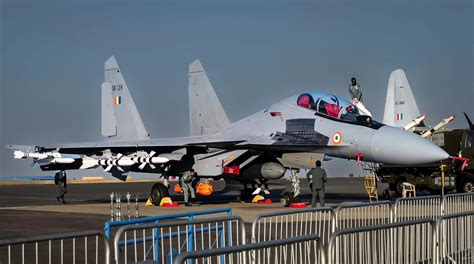
Indigenous Smart Anti-Airfield Weapon (SAAW): Precision Engineered for Strategic Impact
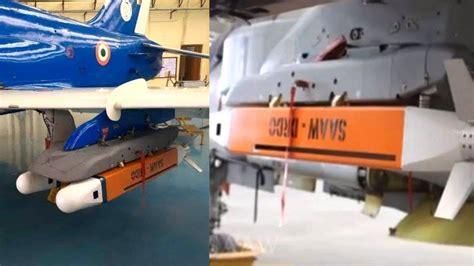
The Smart Anti-Airfield Weapon, first unveiled by DRDO’s Research Centre Imarat (RCI) in Hyderabad, has been designed specifically to degrade enemy air operations without requiring aircraft to enter high-threat zones. By targeting vital airbase assets—including radars, hardened shelters, bunkers, fuel storage, runways, and taxi tracks—the SAAW is engineered to render enemy airfields non-functional in a matter of minutes.
Unlike traditional bombs or missiles, SAAW functions as a glide bomb, relying on its high lift-to-drag aerodynamic design to travel long distances after being released from an aircraft. Its lightweight configuration allows aircraft to carry multiple munitions in a single sortie, maximizing payload efficiency. The new satellite-guided navigation system, likely supported by India’s IRNSS/NavIC constellation, dramatically enhances accuracy, making the SAAW one of the most lethal options in the IAF’s precision strike portfolio.
Operational Significance Amid Rising Regional Tensions
This strategic push for long-range precision weaponry coincides with increasing geopolitical challenges and the need for enhanced air superiority and suppression of enemy air defenses (SEAD) capabilities. The success of standoff munitions was prominently demonstrated during the Balakot airstrikes in 2019, and more recently in Operation Sindoor, where long-range assets were used to hit strategic targets across the border without engaging in aerial dogfights.
As Indian forces prepare for multi-domain, high-intensity conflict scenarios, the demand for indigenous precision-guided munitions has grown exponentially. The SAAW acquisition proposal, currently under consideration by the Ministry of Defence, arrives at a crucial juncture. It promises not only faster deployment through emergency procurement routes but also scalability across different aircraft platforms.
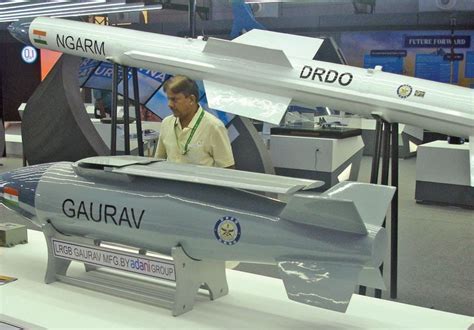
Key Technical Features of the SAAW System
Though exact specifications remain classified, the following performance characteristics are publicly known or deduced from available defense literature:
- Weight: Approx. 120 kg
- Range: Up to 100 km
- Guidance System: Satellite-aided inertial navigation system (likely IRNSS-compatible)
- Warhead: Pre-fragmented high-explosive penetrator type, designed for hardened and semi-hardened targets
- Platform Compatibility: Initially tested on Jaguar and Su-30MKI platforms, with integration expected on Mirage-2000, Tejas Mk1, and future Rafale variants
- Deployment: Air-launched, with glide capability for standoff delivery
This makes the SAAW a force multiplier in battlefield environments that prioritize speed, accuracy, and tactical deception. It reduces dependency on foreign precision systems, an issue that has complicated defense logistics in high-stakes scenarios.
Strategic Value in Modern Warfare Doctrine
What sets the SAAW apart from other glide bombs is its dual-use potential. While optimized for military targets, its ability to strike with minimal collateral damage makes it ideal for limited precision engagements—a crucial factor in today’s asymmetric conflict environments where targets are often located near civilian zones.
The standoff nature of the weapon allows the IAF to conduct pre-emptive strikes without risking pilot lives or expensive multirole jets. In joint operations with the Indian Army and Navy, the SAAW could serve as a first-strike weapon against logistics hubs, command centers, and radar networks during a full-spectrum conflict.
DRDO’s Broader Indigenous Weapon Roadmap
The SAAW is one of several advanced munitions currently in DRDO’s pipeline. This includes the Rudram series of anti-radiation missiles, the BrahMos extended-range air-launched cruise missile, and the upcoming Garuthmaa precision strike weapon.
By consolidating these systems under the ‘Make in India – Defence’ initiative, DRDO and the Indian armed forces aim to develop a modular munitions ecosystem that can adapt to evolving combat requirements while reducing dependency on imports.
Notably, the SAAW has been offered to the IAF under the emergency procurement process, highlighting its operational urgency and production readiness. DRDO’s decision to propose this weapon under such a mechanism reflects its confidence in the weapon’s maturity and the IAF’s readiness to integrate it without extensive testing cycles.
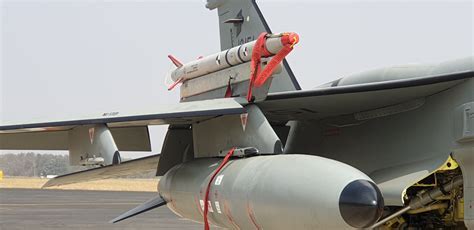
Integration with India’s Fighter Jet Fleet
The IAF plans to arm a wide array of its fighter jets with the SAAW, including:
- Su-30MKI: Backbone of IAF’s long-range strike force, capable of carrying multiple SAAW units
- Jaguar DARIN III: Previously used for early SAAW trials
- Mirage-2000: High-accuracy strike platform
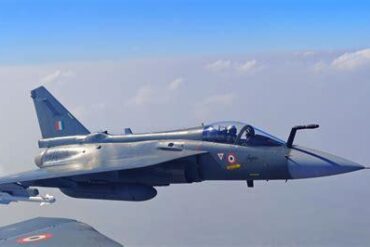
- Tejas Mk1 and Mk1A: Indigenous Light Combat Aircraft, ideal for quick-response missions
Integration with these platforms involves avionics alignment, mission planning software upgrades, and pilot training for glide bomb delivery profiles. The DRDO, along with Hindustan Aeronautics Limited (HAL), is expected to fast-track this integration process through simulation and joint squadron trials.
Conclusion: A Leap Toward Self-Reliant Air Warfare
The impending induction of the Smart Anti-Airfield Weapon into the Indian Air Force signals a paradigm shift in India’s aerial warfare strategy. It demonstrates how indigenous innovation can address critical capability gaps once filled by foreign technologies. More importantly, it aligns with India’s long-term ambition to establish strategic autonomy in high-precision warfare.
With satellite-guided navigation, long-range standoff delivery, and a proven domestic production line, the SAAW is a compelling example of how science, defense policy, and military doctrine are now converging to create smarter, faster, and more reliable weapons tailored for 21st-century threats. As India’s geopolitical challenges grow more complex, the indigenous SAAW ensures that its fighter jets are not just fast and powerful—but also lethally accurate.