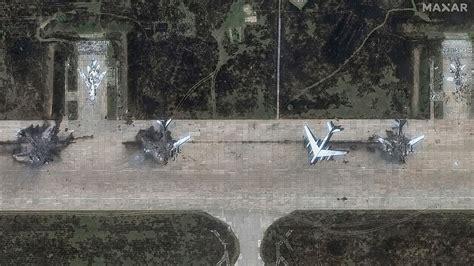
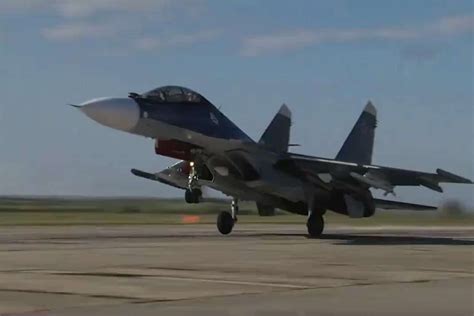
Ukraine’s drone campaign against Russian military aviation crossed a symbolic and strategic threshold in 2025. According to the Security Service of Ukraine (SBU), a coordinated series of long-range drone attacks damaged or destroyed 15 Russian military aircraft, including frontline fighters like the Su-30SM, Su-34, and the high-speed interceptor MiG-31. These were not dogfights in contested skies but precision strikes on aircraft parked on supposedly secure airfields, a vivid illustration of how modern warfare now punishes complacency and rewards ingenuity.
The SBU’s recently released video compilation, filmed directly from drone cameras, offers a stark visual narrative: multi-million-dollar aircraft sitting motionless on the tarmac, suddenly consumed by explosions triggered by drones that can cost less than a luxury wristwatch. The footage reinforces a central reality of the war—air superiority is no longer determined solely by fighter jets and air defence systems, but by who can see, reach, and strike first with the smartest use of technology.
Behind these attacks stands the SBU’s elite “Alpha Group”, formally known as the A Special Operations Centre. In its January 28, 2026 statement, the SBU framed the campaign as a deliberate effort to shatter Russia’s sense of rear-area security. Distance, once Russia’s greatest defensive asset, is now a shrinking concept in a battlespace shaped by long-range unmanned systems and creative operational planning.
The Scale and Significance of the Claimed Losses
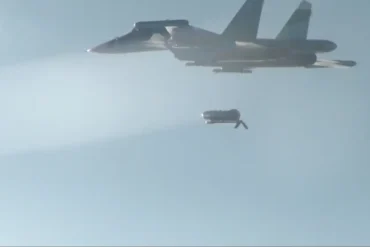
The SBU claims that the 2025 drone blitz resulted in the destruction of 11 fixed-wing aircraft, three helicopters, and one An-26 transport plane, with total damage estimated at $1 billion. While Moscow has neither confirmed nor publicly denied these figures, the types of aircraft listed alone explain why the claim has drawn global attention. The Su-30SM and Su-34 form the backbone of Russia’s tactical aviation, while the MiG-31 plays a critical role in long-range interception and missile delivery.
The inclusion of helicopters such as the Mi-28, Mi-26, and Mi-8 broadens the picture further. These rotary-wing assets are essential for logistics, troop movement, and close air support. Their loss on the ground underscores how drone warfare erodes not just combat power but operational flexibility. Even if some airframes are repairable, the disruption to sortie generation, pilot training, and maintenance cycles can linger for months.
Notably, the SBU did not disclose how it calculated the $1 billion damage estimate. Yet even conservative assessments suggest that replacing or repairing these aircraft, along with destroyed ammunition and fuel depots, would impose a heavy financial and logistical burden on Russian aerospace forces already stretched by prolonged conflict.
Crimea as the Epicentre of the 2025 Drone Blitz
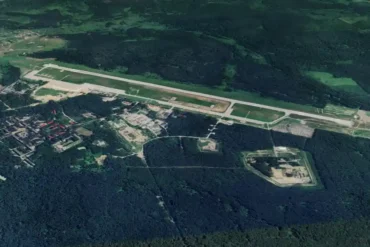
Although the SBU avoided naming specific locations, open-source intelligence (OSINT) analysts and regional media point decisively toward Crimea as the focal point of these attacks. Airfields such as Saky, Kirovskoye, Simferopol, and Belbek—all strategically vital to Russian operations in southern Ukraine—are believed to have been targeted.
The reported strikes on Su-30SM fighters and Su-24 bombers at Saky in January align with satellite imagery and eyewitness accounts suggesting explosions and secondary fires. Crimea’s geography makes it uniquely vulnerable: it is heavily militarised yet geographically compact, offering Ukrainian planners a dense concentration of high-value targets within drone range.
Crucially, these 2025 strikes are distinct from Ukraine’s earlier deep-strike campaign known as Operation Spiderweb. While Spiderweb targeted strategic aviation deep inside Russia, the Crimean attacks focused on degrading tactical and operational aviation assets directly supporting battlefield operations. Together, they form a layered approach to airpower denial.
Cheap Drones, Expensive Consequences
One of the most unsettling aspects for Russian planners is the cost imbalance at the heart of these attacks. Ukraine has developed a diverse ecosystem of one-way attack drones, many reportedly costing under $10,000. These systems exploit gaps in radar coverage, electronic warfare saturation, and human routines at airbases.
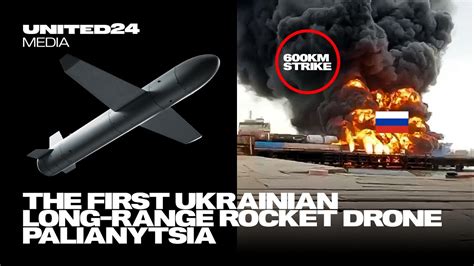
That such inexpensive platforms can bypass advanced Russian air defences highlights a structural vulnerability. Air defence systems are optimised to intercept aircraft and missiles, not swarms of small, low-observable drones approaching from unexpected vectors. Each successful strike forces Russia to spend exponentially more on repairs, dispersal, and additional defensive measures.
The SBU footage showing a MiG-31 under attack is especially symbolic. Designed to hunt threats at extreme speeds and altitudes, the MiG-31 was never meant to defend itself while parked. Drone warfare flips traditional hierarchies, turning prestige platforms into stationary liabilities when base security falters.
From Strategic Depth to Strategic Exposure
Early in the war, Russia relied heavily on its vast territory as a shield. Aircraft were redeployed deeper into Russia, beyond the assumed reach of Ukrainian drones. That assumption began to erode as early as December 5, 2022, when Ukrainian drones struck Dyagilevo and Engels airbases hundreds of miles from Ukrainian territory, allegedly damaging Tu-95, Tu-22M3, and Il-78 aircraft.
This pattern continued. In August 2023, drones flew nearly 600 kilometres to hit Pskov Oblast, destroying Il-76 transport aircraft. In April 2024, swarms targeted airfields in western Russia, including Morozovsk, home to Su-24 and Su-34 bombers. By June 2024, Ukraine even claimed a drone strike on a Su-57 stealth fighter in Astrakhan, backed by satellite imagery showing blast damage.
Each episode chipped away at the myth of invulnerability. By 2025, Russian aviation was no longer merely threatened at the front lines but persistently harassed in its supposed sanctuaries.
Operation Spiderweb and the Evolution of Drone Strategy
The turning point came on June 1, 2025, with Operation Spiderweb, an audacious campaign that rewrote the rulebook. Ukrainian operatives covertly transported 117 FPV quadcopter drones inside prefabricated structures mounted on truck trailers. These mobile launch platforms, driven unknowingly by Russian drivers, positioned drones close to high-value targets.
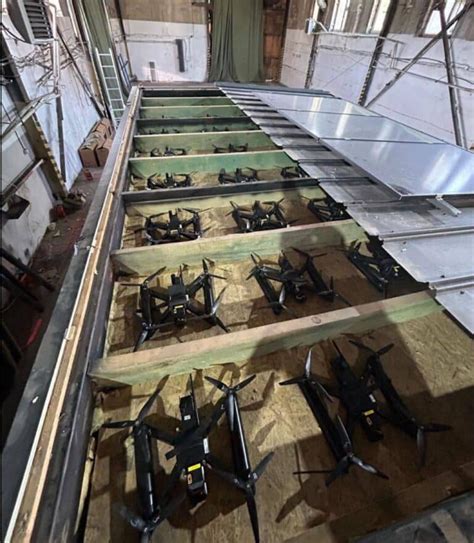
When launched, the drones bypassed much of Russia’s electronic warfare and air defence network, striking airbases in Irkutsk, Murmansk, Ryazan, and Ivanovo. The SBU initially claimed damage to 41 aircraft, including Tu-95MS, Tu-22M3, and an A-50 airborne early warning platform, with losses estimated at $7 billion. While independent analysts later suggested the actual number of destroyed aircraft was likely far lower, the psychological and operational shock was undeniable.
Operation Spiderweb forced Russia to disperse remaining strategic bombers even farther east, temporarily constraining long-range missile operations. More importantly, it demonstrated a scalable model of asymmetric warfare—low cost, high creativity, and relentless pressure.
Attrition, Adaptation, and the New Air War Reality
The latest SBU video underscores that drone warfare did not peak with Spiderweb; it evolved. Unlike that deep-strike operation, the 2025 Crimean attacks focused on concentrated, repeatable strikes against regional airpower hubs. Estimates suggest that 10 to 20 Russian airframes may have been severely damaged or written off due to Ukraine’s 2025 drone campaign as a whole.
For Russia, the challenge is not merely replacing aircraft but protecting them. Hardened shelters, improved base security, and layered drone defences are costly and time-consuming. For Ukraine, the lesson is clear: persistent pressure on aviation assets yields outsized strategic returns, even without achieving total air superiority.
In this emerging air war, the sky is no longer the only battlefield. The tarmac itself has become contested ground, and every parked aircraft is a potential target. Ukraine’s 2025 drone blitz, if even partially accurate, signals a future where airpower is judged not just by what flies, but by what survives when it cannot.