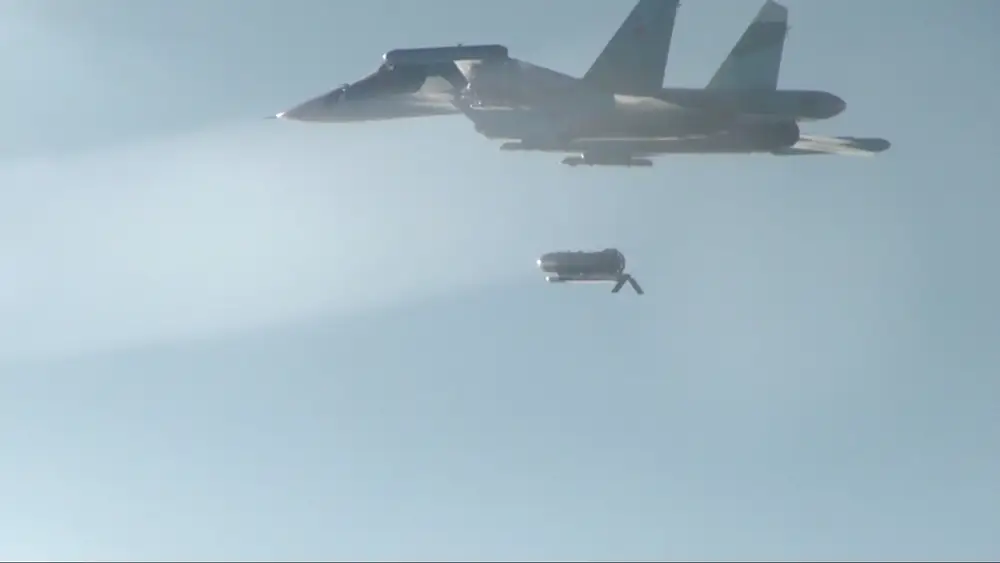
In a daring long-range drone operation, Ukrainian forces successfully struck Russia’s Marinovka airbase, inflicting damage on one of the Kremlin’s key aviation fallback sites. The attack, which destroyed at least two Su-34 fighter-bombers, demonstrates Kyiv’s sharpened focus on crippling the Russian Air Force’s ability to launch devastating glide bomb raids against Ukrainian targets.
Ukraine Hits a High-Value Target Deep Inside Russia
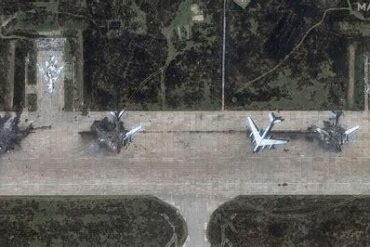
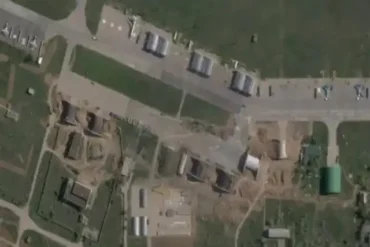
On Friday, June 28, Ukrainian drones penetrated over 270 miles beyond the front lines to hit the Marinovka airbase, located in the Volgograd region of southwestern Russia. This facility is of heightened strategic importance. Not only does it serve daily combat operations, but it has also become a critical fallback location for Russian Su-34 aircraft dispersed from more vulnerable forward airbases.
This airbase gained renewed significance after Morozovsk airbase, closer to the Ukrainian front lines, was hit by a Ukrainian drone strike in August 2024. Following that attack, multiple Su-34s were redeployed to Marinovka, where the Russian military hoped the jets would be less vulnerable to attack. But Ukraine’s deep strike capabilities have steadily evolved, and Marinovka is no longer outside its reach.
The Su-34 ‘Fullback’: A Deadly Threat to Ukraine
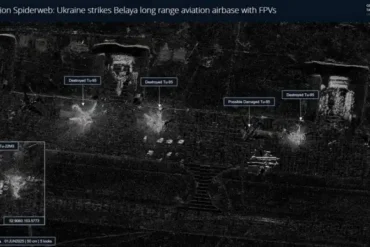
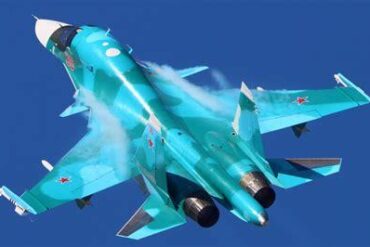
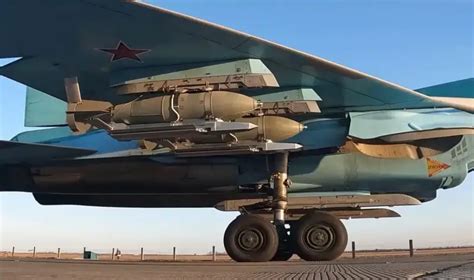
Russia’s Su-34 ‘Fullback’ is a supersonic, twin-seat, all-weather fighter-bomber designed for long-range precision strike missions. The aircraft has become a linchpin of the Kremlin’s air campaign due to its capacity to carry heavy glide bombs — munitions that have wreaked havoc on Ukrainian infrastructure and defensive positions. The British Defense Ministry confirmed in a July 1 intelligence update that at least two Su-34s were destroyed in the Marinovka attack, validating Ukrainian claims.
The Su-34 fleet has launched thousands of glide bomb sorties since the war began, and its lethality is largely due to the nature of the munitions it deploys. These glide bombs are based on older, unguided ‘dumb’ bombs, but are retrofitted with modern kits that add wings and GPS guidance, turning them into precision weapons that are nearly impossible to intercept due to their low radar signatures and unpredictable flight paths.
Destruction in the Heart of Russia
According to Ukraine’s Security Service (SBU), which coordinated the strike along with the Special Operations Forces, the attack destroyed two Su-34s and damaged at least two more. Ukrainian military sources later claimed all four aircraft were rendered inoperable. In addition to direct aircraft damage, the drones reportedly ignited fires in Marinovka’s critical maintenance and repair infrastructure, likely disrupting sortie generation for days, if not weeks.
The strike is emblematic of Ukraine’s pivot toward long-range attritional warfare, seeking to degrade Russia’s ability to project airpower rather than engaging in constant defensive interception. Marinovka, once a safe haven for bombers, has now become a symbol of Russia’s deepening vulnerability.
Russia’s Struggle to Shield Its Warplanes
This incident underscores a persistent issue for the Russian military: inadequate protection of critical air assets, even after multiple relocations and reinforcement of air defense systems. Despite efforts to disperse aircraft away from high-risk zones and place them deeper within Russian territory, Ukraine has demonstrated it can still penetrate these layers with precision and lethality.
The British Ministry of Defence, in its update, noted that even with such dispersal tactics, “Russian aviation remains vulnerable.” The fact that a base as far from the battlefield as Marinovka can be struck so effectively reflects Ukraine’s growing capability in unmanned warfare, specifically long-range drone operations.
The Growing Glide Bomb Crisis for Kyiv
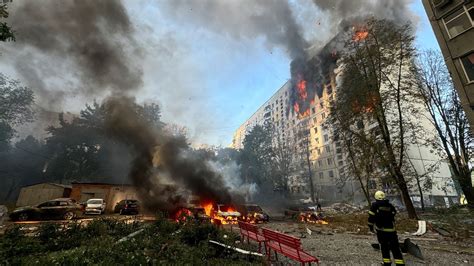
The strike comes at a critical juncture in Ukraine’s effort to neutralize the Su-34 threat. President Volodymyr Zelenskyy, in a press briefing on Sunday, disclosed that Russian jets had launched nearly 1,100 glide bombs in a single week, a staggering figure that underscores the urgency behind targeting launch platforms like the Su-34.
These munitions, especially the larger variants weighing up to 6,000 pounds, are capable of obliterating urban infrastructure, bridges, and defensive bunkers with pinpoint accuracy. Ukrainian air defenses, though robust, struggle to intercept glide bombs due to their small signatures and erratic flight profiles.
The only long-term solution is to destroy the aircraft before they take off, a strategy Ukraine has been aggressively pursuing over the last year. This includes targeting forward airbases like Morozovsk, storage and maintenance facilities, and now, fallback locations like Marinovka.
A Pattern of Deep Strikes to Cripple Russian Aviation
The Marinovka attack is part of a wider campaign by Kyiv to wear down the Russian Aerospace Forces (VKS). In recent months, Ukraine has conducted deep drone strikes across occupied Crimea and within Russia itself, targeting both fixed-wing aircraft and rotary-wing operations.
Over the weekend following the Marinovka strike, another drone attack was launched on a Russian helicopter base in occupied Crimea, further illustrating the broad geographic reach and operational tempo of Ukrainian drone warfare. These are not isolated incidents but components of a cohesive strategic doctrine that prioritizes disruption of Russian aerial dominance.
Mounting Russian Losses: Over 30 Su-34s Destroyed
Western analysts and Ukrainian officials estimate that Russia has lost over 30 Su-34s since the start of its full-scale invasion in February 2022. While the Russian defense industry continues to produce these aircraft, replacing experienced pilots and aircrews is a far slower and more complex process. Each loss, therefore, has a compounding effect on Russia’s combat capabilities.
Russia’s military doctrine heavily depends on massive daily air sorties to maintain pressure on Ukrainian defenses and logistics. As a result, the Su-34 fleet is under constant operational strain, and every aircraft taken out of commission represents reduced firepower and mission flexibility for Moscow.
What Comes Next: Escalation or Adaptation?
The Marinovka strike is likely to trigger a strategic recalibration within the Russian military, especially in how it secures and disperses its aviation assets. This could include further deepening aircraft dispersal into the Russian interior or enhancing passive defenses like camouflage, decoys, and hardened shelters.
However, such shifts come with logistical and operational trade-offs, including longer transit times, increased fuel consumption, and diminished sortie rates. If Russia cannot adequately protect its aircraft even in rear positions, it may be forced to scale back the intensity and range of its air campaigns — a significant win for Ukrainian defense strategy.
At the same time, Ukraine will likely continue to invest in long-range drone systems, satellite intelligence, and collaborative targeting mechanisms involving its security services and special forces. The goal is clear: dismantle the Russian Air Force’s ability to operate with impunity and restore a degree of aerial parity over contested territories.
Conclusion: Turning Point in the Air War
The successful strike on Marinovka airbase marks a critical milestone in Ukraine’s air war against Russia. By hitting not just forward airfields but strategic reserves of aircraft, Kyiv has signaled it can threaten Russian assets anywhere — not just on the front lines, but deep within sovereign Russian territory.
This evolution in tactics may alter the trajectory of the war. If Ukraine continues to undermine Russia’s aerial capabilities, the glide bomb menace could eventually subside, paving the way for more effective counteroffensives and a return to maneuver warfare on more equal footing.
The battle for air superiority is no longer fought solely in the skies, but across intelligence networks, drone control hubs, and the very tarmac of distant bases like Marinovka. And Ukraine has shown it’s willing — and capable — to carry that fight as far as necessary.