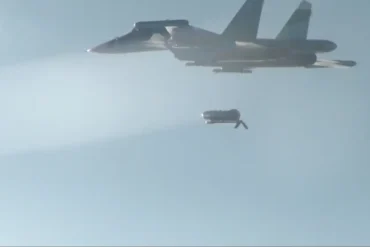
Russia has unleashed the largest aerial assault of the war against Ukraine, launching 479 drones and 20 missiles in a single night, according to the Ukrainian Air Force. This unprecedented barrage marks the most intense drone strike campaign since the full-scale invasion began in February 2022. The Ukrainian military reports that most of the aerial weapons were successfully intercepted, but at least 10 strikes made it through, leading to casualties and structural damage in multiple regions.
Russia’s Strategic Shift: Drone Swarms to Exhaust Air Defenses
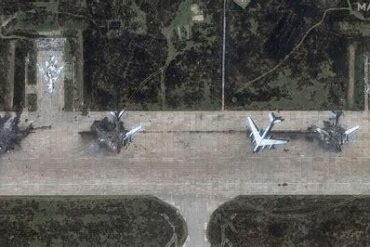
This latest attack, executed overnight on Monday, represents a sharp escalation in Russia’s strategy of attritional warfare. After a series of Ukrainian drone strikes on strategic Russian air bases—particularly on June 1—Russia has responded with increasing force. Ukrainian officials stated that the June 1 attack from Russia had already set a grim record with 472 drones and 7 missiles launched, a threshold shattered just days later by the newest 499-unit offensive.
While Ukraine’s air defense systems—bolstered by Western technologies—continue to perform with remarkable effectiveness, Russia’s evolving tactics aim to saturate these defenses through sheer volume. The intent appears to be twofold: to weaken Ukraine’s missile intercept capabilities and to force Kyiv into depleting its valuable Western-supplied munitions.
Minimal Casualties, But Increasing Pressure
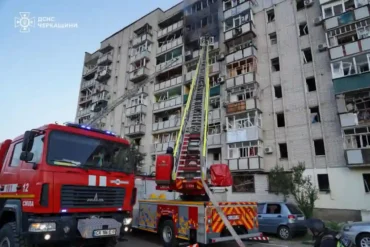
Despite the sheer scale of the attacks, the resulting damage and casualties have been relatively limited. Local officials confirmed that one person was killed in the Rivne region, a private home in the Kyiv region sustained damage, and nine people were injured in the northeastern Sumy region. The bulk of the drones and missiles were neutralized mid-air, underscoring Ukraine’s defensive competence.
But the sheer volume of drone and missile usage underscores a broader shift in Russia’s offensive operations. The targeting of civilian infrastructure and urban centers reflects a continued strategy of psychological pressure, aiming to shake public morale and provoke systemic stress on Ukraine’s internal security apparatus.
New Frontlines and Escalations Beyond the Skies
Simultaneous to the aerial barrage, Russia is pressing offensives on the ground, especially in eastern Ukraine and has recently opened a new front in the northeast. These movements suggest coordinated multi-domain pressure designed to stretch Ukrainian resources thin. Ukrainian military sources report active resistance in these areas, although the scale and success of Russian ground gains remain unclear.
Meanwhile, Ukraine is not remaining passive. It has continued retaliatory strikes inside Russian territory, most notably targeting a Russian airfield in the Nizhny Novgorod region and another site in Cheboksary, east of Moscow. Though these claims are yet to be independently verified, they highlight Ukraine’s deep-strike capabilities, likely involving drones with extended range and precision.
Russian Domestic Impact and Disruption
The Russian Defense Ministry acknowledged the Ukrainian drone incursions, claiming it had either jammed or destroyed 49 Ukrainian drones. This includes temporary airport closures in central Russia, as reported by Rosaviatsia, the federal aviation agency. Four major airports had to halt operations, an indication of how Ukraine’s drone campaign is beginning to erode the illusion of safety within Russian borders.
Such retaliatory strikes have caused growing domestic concern within Russia, as infrastructure once considered safe is now within range. This erodes Moscow’s narrative of control and invulnerability and may have longer-term implications for civilian confidence and logistical continuity in the Russian heartland.
Diplomatic Stagnation: Ceasefire Talks Falter Again
The military escalation comes amid another failed round of peace negotiations. Held earlier this month in Istanbul, the talks yielded only a narrow agreement on a prisoner exchange, with no substantial progress toward a cease-fire. This latest development reinforces the notion that diplomatic avenues are increasingly closed, and military force remains the dominant language of the conflict.
The Trump administration, reportedly applying pressure on both sides to de-escalate, has seen little success. American officials have called for a temporary cease-fire to allow for humanitarian corridors and infrastructure restoration. However, both Kyiv and Moscow appear locked into strategies that hinge on battlefield leverage rather than negotiation.
Prisoner Exchange Amid Chaos
Even amid mounting violence, a symbolic exchange did occur. The Russian Defense Ministry confirmed that a prisoner swap took place on Monday. Details were sparse, but President Volodymyr Zelensky later verified that the exchange involved the wounded, severely wounded, and those under 25 years old. He also noted that this was only the first phase, with more stages expected over the coming days.
“Ukrainians are returning home from Russian captivity,” Zelensky wrote on social media, emphasizing that human life remains a priority, even in the midst of such unprecedented violence. These exchanges, though small in scope, serve as rare moments of shared humanity in a conflict otherwise defined by attrition and hostility.
War by Numbers: Rising Drone Production and Tactical Trends
A key enabler of Russia’s evolving drone strategy is its surging production capability. Where once a nightly barrage might have numbered in the low 300s, the new wave of assaults shows Russia can now produce and deploy nearly 500 drones in a 24-hour period. This pace suggests an industrial scale that may have been underestimated by Western analysts.
Military experts believe Russia is investing heavily in cheaper, mass-produced loitering munitions, likely sourced or engineered with Iranian cooperation, and optimized to target infrastructure with overwhelming frequency. By contrast, Ukraine’s Western allies are being forced to supply more sophisticated and expensive interceptors, creating an asymmetry of cost and replenishment that favors prolonged attrition by Russia.
Psychological Warfare and Civilian Endurance
Repeated nighttime attacks and warning sirens have created a sustained environment of fear across Ukrainian cities. This form of psychological warfare aims to degrade national morale and strain emergency services. Cities like Kyiv, Kharkiv, and Odesa are under near-constant aerial alert, with intermittent strikes disrupting sleep, services, and the perception of safety.
Still, Ukraine’s civilian resilience remains largely unshaken. Volunteer groups, emergency responders, and municipal authorities are well-coordinated in their responses. From rapid drone identification networks to reinforced shelters, Ukraine has developed adaptive civil defense mechanisms that are, so far, withstanding the growing scale of Russian aggression.
The Road Ahead: Escalation Without Resolution
The trajectory of this war appears firmly set on a path of increasingly sophisticated violence, marked by technological acceleration, tactical ingenuity, and deepening resolve on both sides. With no imminent political solution and each side committed to its respective strategic vision, the region faces a protracted and grinding conflict.
Ukraine’s continued defense—both on the ground and in the skies—relies heavily on sustained international support. The West must now consider not only the volume of aid but also the speed and consistency of its delivery, particularly in terms of air defense munitions and drone countermeasures.
Russia, meanwhile, seems emboldened by its ability to rapidly field drone armadas and inflict psychological strain. Unless peace talks are meaningfully resumed and progress past symbolic gestures, the war will likely see further records shattered, not just in drones launched, but in the long-term toll exacted on both nations.
This week’s attack, involving nearly 500 drones and missiles, may not be the last record-breaking strike. But it is a grim milestone, one that signals a dangerous new phase in a war with no clear endpoint.