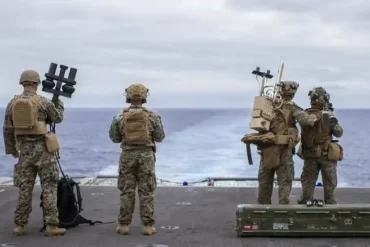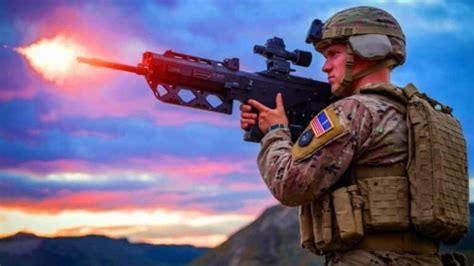
As the Ukraine conflict enters a pivotal phase, the nature of modern warfare is evolving at breakneck speed. Drones—once the exclusive tools of state militaries—have become ubiquitous on the battlefield. Now, handheld counter-drone systems fielded by the U.S. Marine Corps are poised to become a strategic game-changer. These compact devices, resembling oversized rifles, can detect, track, and disable enemy drones—a capability that may alter the war’s trajectory and shake Moscow’s military confidence.
The implications are profound. Russia, which has relied heavily on drone surveillance and aerial munitions throughout the Ukrainian invasion, now faces a new obstacle: on-the-ground electronic defenses that can neutralize its drone advantage instantly. Ukraine, armed with these new U.S. systems, could disrupt Russian operations in real-time, dramatically reducing drone-based artillery coordination and aerial intelligence collection.
The Tactical Revolution in Counter-Drone Warfare
Until recently, most anti-drone operations were limited to radar-guided missile systems or cumbersome jamming arrays stationed at fixed locations. But the Marines’ latest innovation is portable, versatile, and immediate. These shoulder-mounted counter-drone devices give soldiers a critical new option—engagement at the edge. By combining electronic warfare with compact form factors, Marines can now down enemy UAVs without relying on base infrastructure or aerial reinforcements.
This shift in capability didn’t emerge overnight. It’s the result of years of research, driven by a clear shift in global warfare dynamics. Drones are cheap, fast, and difficult to detect—especially the small quadcopters used for both reconnaissance and targeted strikes. In Ukraine, these devices have been used with terrifying effect to drop grenades, locate positions, and guide precision artillery.
Lt. Gen. Benjamin Watson, speaking at the Navy League’s annual Sea, Air, and Space Exposition, emphasized that drones have ended the monopoly of traditional air superiority. “We are no longer guaranteed control of the skies,” he admitted. This candid assessment marked a notable departure from the decades-long assumption that U.S. air dominance would always prevail.
Ukraine: The New Testing Ground for Military Tech
The war in Ukraine has become a proving ground for the latest generation of battlefield technologies. From Starlink-based communications to autonomous ground robots and now handheld drone zappers, the battlefield is now as much about silicon as it is about steel. The U.S. Marines’ new deployment strategy reflects this evolution.
By placing these systems in the hands of ground units, the military aims to flatten the battlefield response time. Instead of calling in a drone strike or air defense team, a Marine can now simply aim and neutralize a drone within seconds. This not only protects forces in the immediate vicinity but also preserves operational momentum, especially during urban combat or open-field maneuvers.
Russian Dependence on Drones Creates Strategic Vulnerability
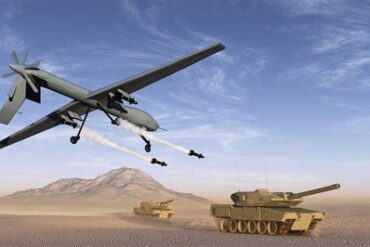
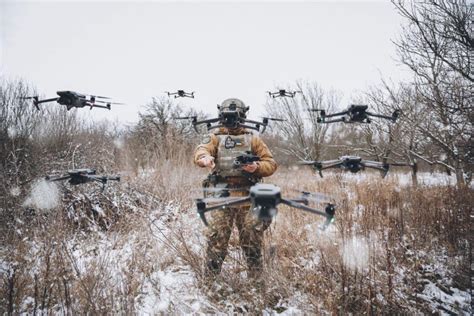
Moscow’s reliance on drone fleets—many of them supplied by Iran or domestically produced—has exposed a structural dependence that these new countermeasures threaten to exploit. From the Orlan-10 used for artillery spotting to the Shahed-136 kamikaze drones, Russia’s aerial advantage has often come not from advanced fighter jets, but from swarms of cheap, expendable UAVs.
But Russia’s technological edge in drone warfare is slipping. Recent reports suggest that Ukrainian forces, equipped with NATO-supported jamming and interception tech, have successfully neutralized hundreds of drones monthly. The addition of U.S. Marine counter-drone gear could supercharge Ukraine’s defense posture, particularly in contested zones like Kharkiv and Donetsk.
Concealment, Camouflage, and the Death of the Static Frontline
With drones surveilling battlefields from low altitudes, static defenses are becoming obsolete. Lt. Gen. Watson pointed to the growing importance of concealment and movement, noting that future success will depend not just on firepower but on stealth, agility, and anti-drone readiness. Units are being trained to operate under constant drone exposure—covering vehicles, masking heat signatures, and now, employing mobile jamming devices to fight back.
This evolution isn’t unique to the U.S. or Ukraine. Across the globe, military doctrines are being rewritten to account for the presence of autonomous aerial threats. The battlefield is no longer a chessboard of tanks and infantry—it’s a constantly shifting web of drone paths, electromagnetic pulses, and infrared signals. And in this arena, handheld EMP-capable weapons like those now being tested by U.S. forces are becoming indispensable.
Operational Secrecy: A Deliberate Omission
Not much has been disclosed about the exact specifications of these drone-zappers, and for good reason. Operational security is essential. Revealing too much would allow adversaries to begin designing countermeasures or deploying decoys to overwhelm or deceive the systems. What is clear, however, is that the technology relies on directed energy and signal interference, offering a rapid takedown with minimal power consumption and low logistical footprint.
Sources familiar with the program hint that multiple variants exist—some focused on broad-spectrum jamming, others on precision disruption, potentially even targeting specific drone frequencies or control signals. This kind of modularity would give frontline units immense flexibility depending on the type of threat they face.
Implications for the Broader NATO Alliance
While the devices are being championed by the U.S. Marines, their deployment has implications for NATO as a whole. In joint operations, interoperability and shared defense ecosystems are essential. If the Marine devices prove successful, we can expect rapid adoption across allied militaries, especially those in Eastern Europe where the threat of Russian aggression looms largest.
Moreover, these tools could reshape air defense procurement strategies across the globe. Rather than focusing solely on multi-billion dollar missile defense platforms, militaries might now turn to swarm-capable jammers, portable interception gear, and even AI-powered early warning systems tailored for drone warfare.
Russia’s Calculus is Changing
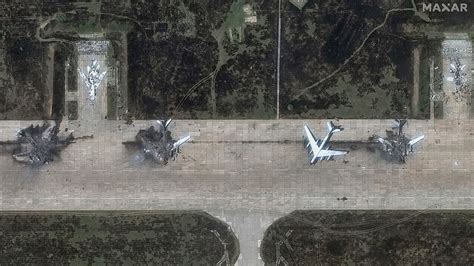
For the Kremlin, the implications are dire. The emergence of mobile counter-drone systems neutralizes one of the few areas where Russia has maintained a disruptive edge. With its conventional forces stretched and its economy battered by sanctions, the loss of drone effectiveness may tip the strategic balance.
Indeed, some intelligence analysts believe the Russian military has already begun shifting tactics—reducing reliance on mass drone swarms in favor of more manually piloted reconnaissance units or satellite-guided cruise missiles. But these are costly and harder to deploy at scale.
The Road Ahead: Escalation or Adaptation?
As Ukraine integrates these Marine-deployed systems into its defensive grid, the next few months could mark a dramatic shift in battlefield conditions. What was once a cat-and-mouse game of drone attacks and evasive maneuvers may now become a direct clash between signal supremacy and electromagnetic defense.
What remains to be seen is whether Russia will escalate in response—perhaps deploying more advanced drone variants or targeting the production lines of these countermeasures—or whether it will attempt to match the innovation pound for pound. Given the current industrial constraints and a mounting personnel crisis, adaptation may not come easily.
The U.S., meanwhile, is already eyeing the next frontier. Military insiders suggest that future versions of the Marine devices may integrate autonomous threat detection, longer range engagement, and even data-sharing across units, enabling a real-time, networked air defense shield that adapts on the fly.
Conclusion: A Strategic Crossroads for Modern Warfare
The deployment of shoulder-mounted drone-zappers by U.S. Marines in Ukraine is more than a tactical upgrade—it is a strategic statement. As Russia grapples with the erosion of its drone advantage, the balance of power on the Eastern Front is beginning to tilt. These devices, wielded by individual soldiers but powered by years of high-tech innovation, represent a new form of battlefield agency.
In a world where conflicts are increasingly fought with silicon, software, and signal strength, the nation that controls the electromagnetic spectrum may soon control the outcome of wars. With Ukraine now fielding tools that challenge even the most advanced drone fleets, the future of modern warfare is not in the skies—it’s in the hands of the soldier on the ground.