At a time of delicate diplomatic equilibrium and simmering tensions along the Line of Actual Control (LAC), India’s commissioning of the Nyoma Airfield represents not merely an infrastructural achievement but a tectonic shift in its strategic deterrence against China. Positioned at a staggering 13,700 feet, this world’s highest operational fighter base embodies a blend of cutting-edge engineering, tactical foresight, and geopolitical acumen.
The Geopolitical Significance of Nyoma Airfield
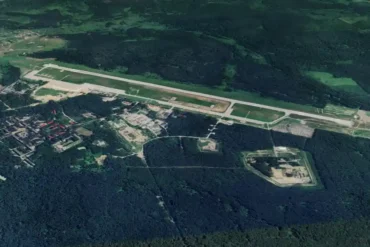
Nestled a mere 25 to 50 kilometers from the contested LAC, Nyoma’s location was chosen with painstaking precision. It lies just 100 kilometers from China’s G219 highway, a critical artery linking Tibet to Xinjiang, and less than 180 kilometers from the Ngari Kunsa airbase, China’s dual-use airport in the Tibet Autonomous Region.
This proximity grants India not only superior air surveillance capabilities over key Chinese supply and military routes but also the ability to launch fighter aircraft and helicopters within minutes of an alert. Nyoma thus delivers a decisive edge in time-sensitive conflict scenarios, which previously depended on rearward bases such as Leh or Srinagar.
From Dirt Strip to High-Altitude Stronghold
The transformation of Nyoma into a fully operational airbase has been decades in the making. The Indian Air Force first made history in 2009 when an AN-32 transport aircraft landed on the rudimentary strip, signalling its latent potential. It wasn’t until the 2020 Galwan standoff, however, that the urgency to modernize Nyoma accelerated.
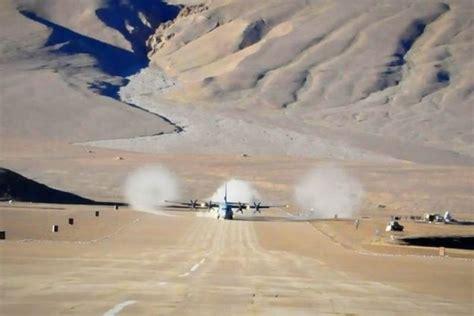
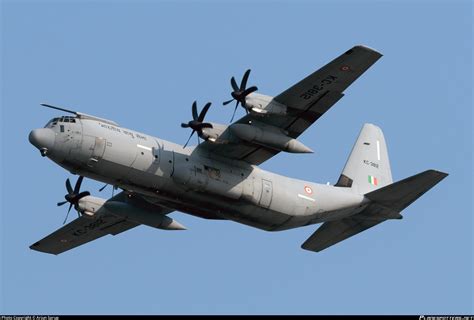
In September 2023, under the looming spectre of renewed conflict and infrastructural race with China, Defence Minister Rajnath Singh laid the foundation stone for the current airbase. One year later, in a powerful display of progress and resolve, Chief of Air Staff Air Chief Marshal A.P. Singh landed a C-130J Hercules to officially inaugurate the facility.
Engineering a Marvel in the Mountains
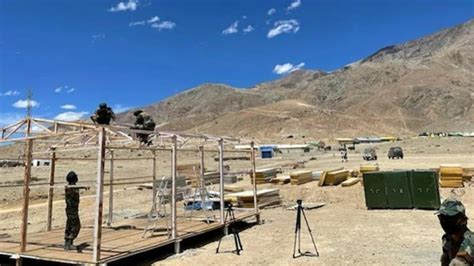
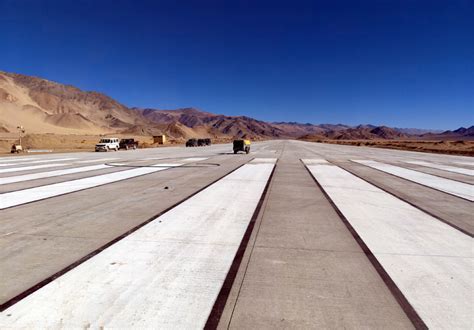
Constructing a full-fledged airbase at 13,700 feet is no ordinary feat. Engineers from the Border Roads Organisation (BRO) braved freezing temperatures plunging to –35°C, fierce winds, and oxygen-deprived air to pave a 2.7-kilometre runway, erect hardened aircraft shelters, and establish logistics facilities that can support operations year-round.
Every drop of aviation fuel must be heated, and technical personnel operate in full arctic gear. Spare parts, electronics, and lubricants require special high-altitude handling. The operational window for maintenance spans barely seven months, dictated by extreme winters that render both the ground and machinery inert.
Military Versatility: A Multi-Domain Launchpad
Nyoma’s versatility is perhaps its most defining trait. Unlike traditional forward airbases limited to rotary operations, Nyoma can host the entire spectrum of IAF assets, including:
- Su-30 MKI: The backbone of India’s fighter fleet.
- C-17 Globemaster III and IL-76: Heavy lifters capable of transporting troops, artillery, and even tanks.
- Apache and Chinook Helicopters: Already active along the LAC since the 2020 standoff.
- Rafale and MiG-29 UPG: Likely to be deployed during future tactical escalations.
The airfield’s strategic utility extends beyond combat. ISR (Intelligence, Surveillance, Reconnaissance) missions using drones and unmanned aerial vehicles (UAVs) will benefit from the base’s vantage location, enabling 24/7 monitoring of friction points like Depsang, Chushul, and Demchok.
Veteran Insights: Why Nyoma is a Game Changer
Air Marshal Anil Chopra (Retd) aptly describes Nyoma as a “forward arm” that turns a once-primitive strip from the 1962 era into a formidable bastion. With instantaneous launch capability for Su-30s, Chinooks, and cargo aircraft, Nyoma is poised to deliver swift retribution or reinforcement in the event of skirmishes.
Air Marshal Anil Khosla (Retd), former Vice Chief of Air Staff, noted that “Nyoma complements other airfields, providing redundancy and responsiveness”—a critical requirement in wartime logistics and strategic deception. He emphasized the value of layered planning and the symbolic significance of such a high-altitude launchpad.
Tactical Superiority Over PLA Infrastructure
China, too, has ramped up its border build-up. Satellite images from 2024–2025 reveal dual-use Xiaokang villages, new air-defence installations near Pangong Lake, cement factories, and communication towers, all strategically peppered across its western frontier.
Despite the October 2024 disengagement pact, China’s drills with drones, exoskeletons, and all-terrain vehicles in early 2025 reaffirmed that its intentions remain ambiguous. India’s swift commissioning of Nyoma is a direct response, providing a real-time tactical node that not only watches but counters China’s grey zone provocations.
Operational Challenges in Thin Air
Running an airbase at this height poses considerable hurdles:
- Extreme Cold: With temperatures dipping to –40°C, mechanical systems and human endurance are constantly tested.
- Hot & High Operations: Summer conditions lead to low air density, requiring longer runways or reduced payloads.
- Exposure to Artillery and Drones: Nyoma is within 155mm artillery range from the Chinese side, prompting the need for dispersal, hardened shelters, and counter-UAS (Unmanned Aircraft System) defences.
Air Marshal Chopra summarized the situation: “Every mechanic works in arctic gear, every gallon of fuel is pre-heated, and yet the base must remain operationally agile and resilient.”
Strategic Integration with Ladakh Air Grid
Nyoma is not an isolated base. It now forms a critical node within India’s Ladakh Air Grid, synergizing with Leh, Kargil, Thoise, Daulat Beg Oldie (DBO), and Fukche. This network enables:
- Sustained round-the-clock air operations
- Rotation of fighter squadrons and drone fleets
- Rapid response to any fresh Chinese ingress attempts
This composite air-ground coordination framework ensures that the Indian military is no longer playing catch-up in Ladakh—it is, in fact, defining the tempo.
Long-Term Implications for Indo-China Dynamics
While both sides have resumed diplomatic niceties—resuming tourist visas, direct flights, and ministerial exchanges—the ground situation remains fraught with mistrust and contested cartography. As China’s 2025 defence budget balloons to $245 billion, India’s strategy has shifted from reaction to proactive posturing.
Nyoma symbolizes this new doctrine. It is not just an airfield—it is a geopolitical signal, an engineering marvel, and a military deterrent built to withstand the Himalayan wrath and geopolitical volatility.
As Squadron Leader Vijainder K. Thakur (Retd) observed, during conflict the base may not house fighters permanently, but its sheer presence shortens response timelines, adds strategic ambiguity, and redefines aerial supremacy in eastern Ladakh.
Conclusion: A Sentinel Above the Clouds
In the shadows of snow-capped peaks and against a backdrop of shifting alliances, Nyoma Air Base stands as a sentinel of sovereignty. Its creation underscores the Indian Air Force’s resolve and the nation’s refusal to be tactically outpaced. Whether in times of peace or provocation, Nyoma’s elevation isn’t just physical—it’s symbolic of India’s unflinching preparedness.