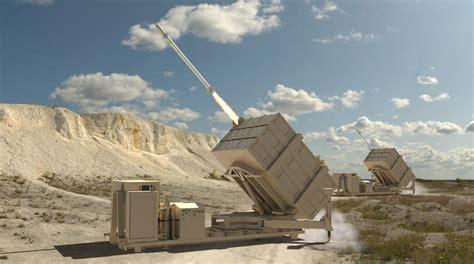
The U.S. Army’s push to modernize its air defense capabilities is accelerating with the forthcoming production of the Indirect Fire Protection Capability (IFPC) Increment 2 system in early 2026, a move aimed at significantly enhancing the force’s ability to defend against an increasingly diverse and sophisticated range of aerial threats. With initial operational capability expected by mid-2027, this mobile, ground-based system marks a pivotal advancement in layered defense strategy, delivering a much-needed solution to fill the gap between short-range and strategic missile defense architectures.
The Strategic Imperative Behind IFPC Inc 2
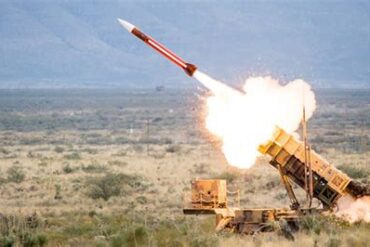
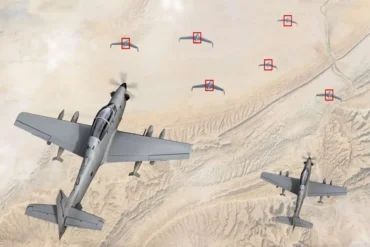
In an era where loitering munitions, low-cost drones, and precision-guided cruise missiles are redefining modern warfare, the U.S. Army’s traditional air defense tools have proven insufficient for covering the full spectrum of airborne threats. The battlefield lessons from Ukraine’s ongoing conflict have vividly illustrated this shortfall. Russian forces have successfully leveraged swarms of inexpensive drones to confuse air defenses, followed by more devastating cruise missile strikes. In response, the IFPC Inc 2 system is emerging as a crucial middle-tier defense—one designed to bridge the capability gap between short-range platforms like Maneuver-SHORAD and strategic assets such as the Patriot and THAAD systems.
A Modular, Scalable Air Defense Solution
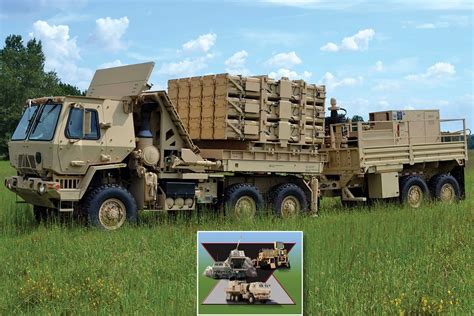
At the heart of the IFPC Inc 2 system is a networked, modular approach that offers maximum flexibility for dynamic combat environments. Developed by Dynetics, a Leidos company, and integrated with cutting-edge technologies, the system is built to defend fixed and semi-fixed infrastructure like command centers, logistics hubs, and forward operating bases—locations that are increasingly at risk from long-range and low-observable threats.
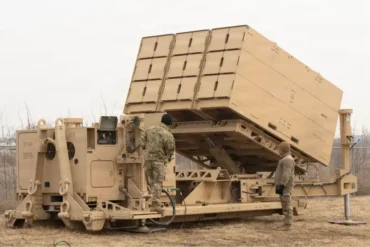
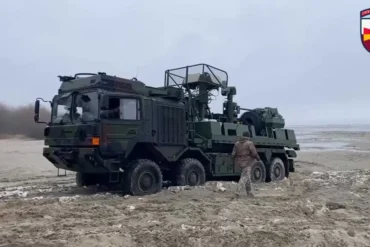
A key feature of IFPC Inc 2 is the multi-mission launcher, designed for high mobility and ease of deployment. This platform can host various missile interceptors and features vertical launch cells, enhancing its adaptability for future upgrades. This ensures the system remains relevant as the threat landscape evolves. Its ability to relocate swiftly also aligns with the Army’s operational doctrine emphasizing maneuverability and survivability.
Enhanced Detection with Sentinel A4 Radar
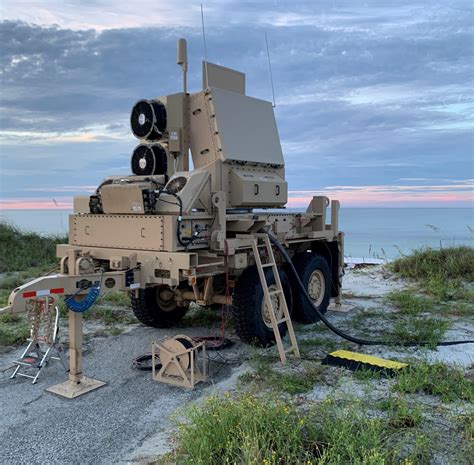
The system’s efficacy begins with its sensing capabilities, anchored by the Sentinel A4 radar, a next-generation surveillance and tracking radar developed by Lockheed Martin. Sentinel A4 offers 360-degree coverage, specifically tuned to detect low-flying, small radar cross-section targets—like drones, cruise missiles, and RAM projectiles. Its high-resolution imaging and advanced discrimination features allow it to track multiple threats simultaneously, providing early warning and precision tracking that are essential in a layered defense ecosystem.
Seamless Integration via IBCS
One of the most transformative elements of the IFPC Inc 2 is its full integration with the Integrated Air and Missile Defense Battle Command System (IBCS). This digital command-and-control network enables real-time fusion of sensor data across domains, optimizing intercept decisions and ensuring the most efficient use of available firepower. With IBCS, operators can assess incoming threats using multiple data points, dramatically improving the probability of intercept and reducing reaction time.
This level of sensor-shooter integration is especially critical in an environment saturated with multi-vector attacks, where milliseconds can determine success or failure in intercepting fast-moving targets. IBCS empowers commanders to make informed decisions rapidly, leveraging a shared operational picture that spans not only Army assets but can be expanded to joint and allied forces as well.
Lethal Interception with AIM-9X Sidewinder
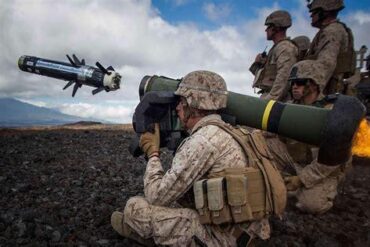
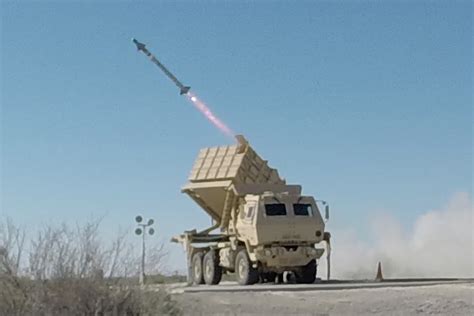
To engage threats, the IFPC Inc 2 system relies on the AIM-9X Sidewinder, a highly agile infrared-guided missile repurposed from air-to-air missions for ground-based launch. The missile’s advanced imaging infrared seeker and off-boresight capability make it exceptionally well-suited to counter maneuverable, low-signature threats such as drones and cruise missiles. It is one of the few interceptors that can engage targets without requiring them to be directly in front of the launcher, offering flexibility in high-intensity environments.
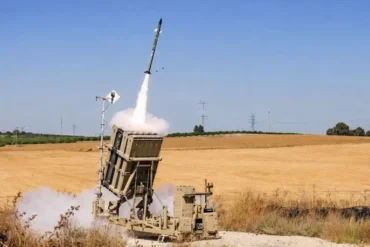
Future configurations are also being developed to support interceptors like Tamir from the Israeli Iron Dome, further enhancing the system’s modularity. This interoperability means commanders can tailor their defensive posture based on mission-specific threats and available logistics, ensuring that cost-effectiveness is preserved without sacrificing coverage.
Program Timeline and Contractual Milestones
The path toward full-rate production of the IFPC Inc 2 has followed a rigorous multi-phase testing and validation roadmap. Developmental testing commenced in January 2024, with Phase 3 concluding in August 2024, where engineers successfully validated launcher performance and data link functionality within a system-of-systems framework. The final phase—Phase 4—is currently underway, with completion expected in early 2025.
This critical validation process is designed to ensure the system is not only operationally effective but also resilient in varied combat conditions. It also clears the way for transition into the Major Capability Acquisition (MCA) pathway, which governs the procurement of systems deemed essential to national defense.
In November 2024, the U.S. Army awarded a production contract valued at $4.1 billion to Dynetics, covering both low-rate initial production (LRIP) and full-scale manufacturing. The first batch of 18 launchers is scheduled for delivery through 2029, with supporting infrastructure for engineering, logistics, and sustainment built into the agreement. This approach guarantees not only acquisition but long-term viability of the system.
Operational Role in Future Conflicts
The IFPC Inc 2 system is not just a tool for today’s threat environment—it is a hedge against future battlefield conditions where technological parity with peer adversaries like China and Russia becomes increasingly probable. By providing a scalable, mobile, and cost-efficient option for defending against saturation drone attacks, multi-pronged missile barrages, and artillery-based area denial strategies, it positions the Army to maintain both strategic deterrence and operational freedom.
In future deployments, IFPC Inc 2 will likely play a central role in defending U.S. and allied installations in Indo-Pacific theaters, Eastern Europe, and Middle Eastern flashpoints. The capability to rapidly deploy and configure for diverse missions makes it ideal for joint-force operations, multinational exercises, and even rapid-reaction scenarios following a crisis.
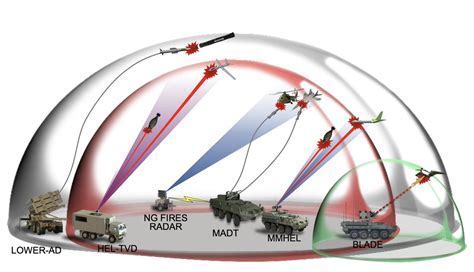
Learning from Ukraine: Why IFPC Matters Now
The war in Ukraine has revealed a key vulnerability in 21st-century warfare: the difficulty of defending static or semi-static infrastructure from persistent, mixed-type air attacks. Russian tactics often involve waves of small, hard-to-detect drones followed by more lethal cruise missiles and loitering munitions. These tactics aim to overwhelm traditional air defense systems, especially those that rely on expensive interceptors and limited radar coverage.
For the U.S. Army, the lesson is clear. It must develop a layered defense system that is agile, interoperable, and cost-effective. The IFPC Inc 2 achieves this by combining advanced detection, integrated battle command, and affordable missile options in a mobile, modular package. It ensures that high-end systems like Patriot aren’t wasted on low-value threats and that base-level defenses aren’t left exposed.
Conclusion: The Future of Army Air Defense Begins Now
As 2025 unfolds, the U.S. Army’s investment in IFPC Inc 2 signals a strategic shift in air and missile defense philosophy. With production on the horizon and fielding slated for mid-2027, the system will play a pivotal role in protecting American and allied interests worldwide. It is more than just a weapons system—it is a cornerstone of future operational readiness in a world where airborne threats are more numerous, faster, and harder to detect than ever before.
By integrating precision sensing, multi-domain command architecture, and a modular launch platform capable of accommodating various interceptors, IFPC Inc 2 provides exactly the kind of resilient, layered defense the modern battlefield demands. In the years ahead, it will be a critical line of defense—not just for strategic infrastructure but for the credibility of the Army’s broader warfighting capability in an era of rapidly evolving threats.