The rapid ascent of SpaceX continues to redefine the boundaries of space infrastructure, and its latest milestone underscores just how aggressively the company is scaling its ambitions. With the deployment of additional satellites into low Earth orbit, its subsidiary Starlink has now exceeded 10,000 active satellites—an achievement that reshapes not only connectivity on Earth but also the very composition of the skies above.
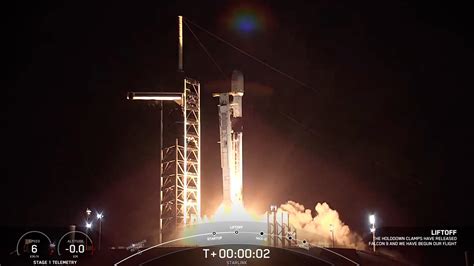
This milestone was cemented earlier in March 2026, when two Falcon 9 launches delivered 54 new satellites into orbit. That addition pushed the constellation beyond a symbolic threshold, placing Starlink far ahead of any competitor in terms of satellite count. The scale is staggering: roughly 70% of all operational satellites orbiting Earth now belong to Starlink, making it the single most dominant presence in near-Earth space.
What makes this accomplishment even more striking is the pace. As recently as October 2025, the constellation stood at around 8,400 satellites. In just a few months, SpaceX accelerated deployment at an average rate of approximately 320 satellites per month. This industrialized launch cadence is not accidental—it reflects a vertically integrated system where rocket reusability, streamlined manufacturing, and launch frequency converge into a powerful expansion engine.
The implications of such rapid growth extend far beyond raw numbers. Starlink’s network is designed to provide high-speed, low-latency internet access to regions traditionally underserved by terrestrial infrastructure. Remote communities, maritime operations, aviation routes, and even military applications are increasingly reliant on this expanding orbital grid. While performance inconsistencies and coverage gaps still exist, the system’s reach continues to improve as density increases.
Yet, beneath the momentum lies a more complex reality. Not all satellites remain operational indefinitely. At least 10 Starlink satellites are currently nonfunctional, and more than 1,500 have already deorbited and burned up in Earth’s atmosphere. This constant cycle of deployment and decay is built into the system’s lifecycle, ensuring that aging units are replaced by more advanced iterations. It also highlights the immense logistical challenge of maintaining such a vast constellation.
Looking ahead, SpaceX shows no intention of slowing down. Under authorization from the Federal Communications Commission, the company is approved to deploy up to 12,000 satellites. However, filings are already in place to expand that number dramatically—to as many as 42,000. Such a figure would further cement Starlink’s dominance, effectively turning low Earth orbit into a densely populated digital infrastructure layer.

Even more controversial are discussions of future orbital expansions beyond communications. SpaceX has explored the concept of deploying space-based data centers, potentially scaling into the hundreds of thousands or even one million units. This idea has drawn skepticism from industry leaders like Jensen Huang of NVIDIA, who question both feasibility and necessity.
Critics also warn of broader consequences. Astronomers, including voices from organizations such as the Royal Astronomical Society, argue that an overcrowded orbit could severely impact ground-based observations. A sky filled with artificial satellites risks diminishing humanity’s view of the cosmos, turning a once-pristine night sky into a grid of moving lights.
SpaceX’s 10,000-satellite milestone is undeniably a technological triumph, but it also marks a turning point. The race to connect the planet is accelerating—but so is the debate over how much of space should be occupied in the process.