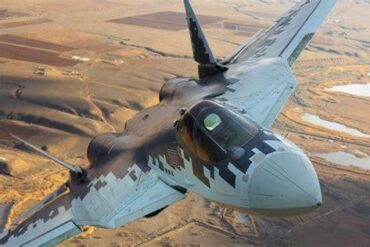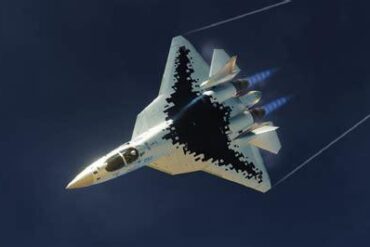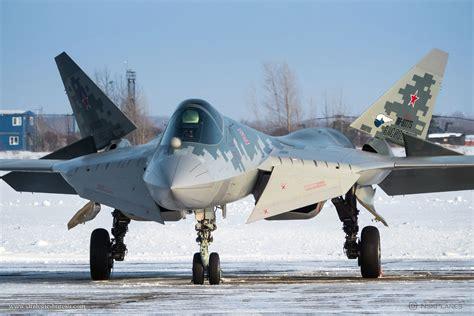
The Sukhoi Su-57 Felon remains the centerpiece of Russia’s ambition to assert dominance in next-generation air combat, despite production setbacks, sanctions, and fierce Western competition. While global eyes often fixate on the American F-22 Raptor or F-35 Lightning II, Russia’s determination to evolve and sustain the Su-57 program speaks volumes about its military-industrial resolve and strategic priorities.
By prominently showcasing the Su-57 at the LIMA 2025 defense exhibition, Rosoboronexport signaled once again that the Felon is more than a symbol—it’s a commitment.
A Fighter to Replace Generations and Define a New Era
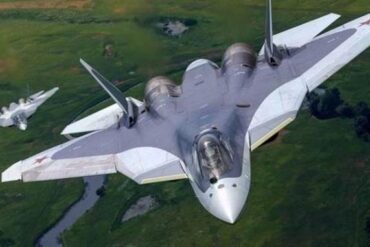
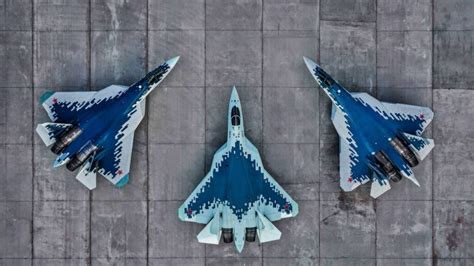
Developed by the Sukhoi Design Bureau, the Su-57 is not merely an upgrade from the Su-27 or Su-35. It is Russia’s first foray into true fifth-generation stealth technology. Designed to replace older platforms within the Russian Aerospace Forces (VKS), the Su-57 is engineered for comprehensive multi-role capabilities: air superiority, ground attack, SEAD missions, and eventual manned-unmanned teaming with UCAVs.
This flexible mission profile reveals the Felon’s intended position as a long-term force multiplier. With its stealth shaping, internal weapon bays, and a full-spectrum combat role, Russia’s intent is clear—the Su-57 is built not just to fight wars but to deter them through persistent threat projection.
Stealth and Survivability: Not Just Surface Deep
While often criticized for being less stealthy than its U.S. counterparts, the Su-57 leverages a unique approach to radar evasion. Approximately 25% of its airframe is built from composite materials, with specialized radar-absorbing coatings and internal weapons storage reducing its radar cross-section. Unlike the F-22’s near-invisible profile, the Su-57 trades a bit of stealth for greater agility and sensor coverage.
Key specifications reinforce its physical dominance:
- Length: 19.8 meters
- Wingspan: 13.95 meters
- Height: 4.74 meters
- Max Take-Off Mass: 34,000 kg
- Max Speed: Mach 2 (up to 2,950 km/h)
- Combat Radius: 1,250 km
- Ferry Range: 4,000 km
- Service Ceiling: ~19,000 meters
The aircraft’s unique airframe—with its swept wings, canard foreplanes, and 3D thrust-vectoring nozzles—delivers stunning agility. Capable of withstanding up to 9g and flying at extreme angles of attack beyond 60°, the Su-57 prioritizes dogfighting performance in contested airspace, not just long-range engagements.
Engines of Evolution: From AL-41F1 to Izdeliye 30
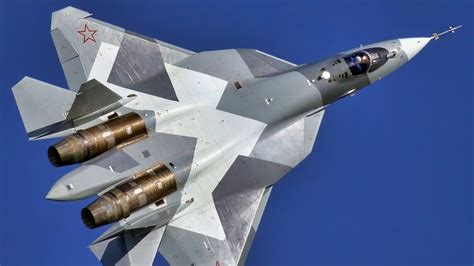
The current Su-57 is powered by two AL-41F1 turbofan engines, producing over 142 kN with afterburner. These engines represent a significant leap from the Su-27’s AL-31F, providing better thrust-to-weight ratios and improved afterburning capabilities.
However, the future lies in the ‘Izdeliye 30’ (AL-51F), expected to debut with the Su-57M variant. This engine promises:
- 25% more dry thrust
- 17% more afterburner thrust
- Supercruise capability (supersonic flight without afterburners)
- Better fuel efficiency and range
Combined, these enhancements could make the Su-57M a stealthier, faster, and more sustainable platform for 21st-century combat.
Sensor Fusion and Electronic Warfare Superiority
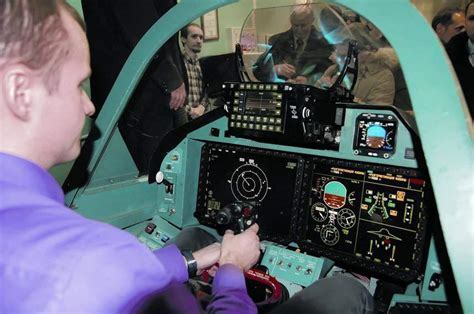
The Su-57’s avionics package has matured to offer what Russia claims is a sensor-integrated, information-dominant cockpit. The heart of its sensor suite is an X-band AESA radar, supported by L-band radars on the wing roots—a configuration potentially useful for detecting stealth aircraft.
Other features include:
- “Intelligent skin”: distributed sensors across the fuselage for 360° awareness
- Infrared Search and Track (IRST) for passive tracking
- Integrated Electronic Warfare suite with decoys and jammers
- Glass cockpit with a large multifunction display, helmet-mounted sight, and HUD
With these systems, the Su-57 is able to communicate, designate targets, and assign enemy contacts across its formation, functioning as a tactical force leader.
Armament Suite: Built for Versatility and Lethality
The Su-57 is armed to handle nearly any target set—from airborne threats to hardened ground installations. It features both internal and external payload capacity, with low-observable bays holding up to six air-to-air missiles internally and six external hardpoints available for non-stealth missions.
Key munitions include:
- Air-to-Air: RVV-BD, RVV-SD, RVV-MD2
- Air-to-Ground: Kh-38MLE, Kh-58UShKE, Kh-69, Kh-35UE
- Guided Bombs: KAB-250LG-E, UPAB-1500BE, K08BE
- Cannon: GSh-30-1 30mm internal autocannon
This enables the Su-57 to operate as a multirole strike platform, transitioning seamlessly from interdiction to close air support, depending on mission requirements.
Program Timeline: From Soviet Roots to Modern Realities
The roots of the Su-57 go back to late Cold War-era discussions, but its formal birth came in 2002 when Sukhoi was chosen to lead the PAK FA (Prospective Aviation Complex of Frontline Aviation) project. The prototype’s maiden flight took place in January 2010, ushering in years of rigorous testing.
However, the path was far from smooth. Delays were frequent, and one prototype caught fire during trials. The limitations of the AL-41F1 engine and development cost overruns forced Russia to rethink its supply chains and even consider foreign partnerships—including a briefly pursued joint effort with India, which ultimately dissolved.
Despite the turbulence, serial production is now underway. An order for 76 aircraft has been placed for three VKS regiments, with initial deliveries beginning in 2020. The pace of assembly remains limited but steady.
Su-57M and the Unmanned Future
The Su-57M is more than an upgrade—it represents Russia’s step into next-generation cockpit automation, AI integration, and UAV coordination. Expected advancements include:
- Voice-command capabilities
- Eye-tracking controls
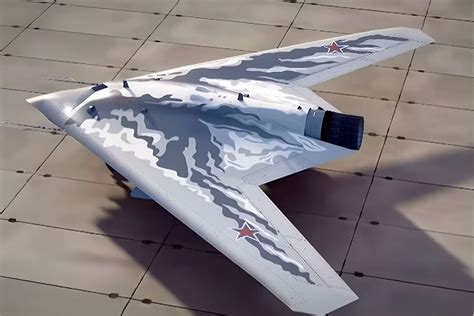
- Integration with Okhotnik UCAVs
- Refined stealth shaping and better radar cross-section management
Together, these features aim to make the Su-57M not just a pilot’s aircraft, but a networked combat node, fully integrated within Russia’s evolving digital battlespace.
Combat Experience: Real-World Missions in Ukraine
In a significant milestone for credibility, the Su-57 became the first non-U.S. fifth-generation fighter to see confirmed or semi-confirmed combat. Russian sources claim that Su-57s have conducted air-to-ground strikes, air defense suppression, and possibly air-to-air engagements during the conflict in Ukraine.
Though limited by operational secrecy and conflicting reports, these missions provide Russia with data-driven validation of the Felon’s capabilities and areas for improvement. Western analysts remain skeptical of the scope, but the move marks an important inflection point for Russian aerospace doctrine.
Global Interest and Export Challenges
Rosoboronexport markets the Su-57E export variant, designed with modified systems and compliance for foreign use. While countries like Algeria and Vietnam have shown interest, concerns over engine maturity, maintenance infrastructure, and sanction-related constraints have delayed procurement.
Nevertheless, the Felon’s unique combination of super-maneuverability, robust weapon variety, and comparatively lower operational cost continues to attract potential buyers seeking alternatives to U.S. or Chinese platforms.
Conclusion: Russia’s Relentless Vision for the Su-57
The Su-57 Felon is not perfect, nor is it produced at a volume comparable to Western fighters. But it represents something more profound: a technological leap from within a sanctioned, resource-constrained military-industrial ecosystem. Through iterative upgrades, real combat deployment, and an unwavering commitment to fielding a fifth-generation system, Russia has shown that it won’t give up on the Su-57.
As the Su-57M nears readiness, and as unmanned teaming becomes operational doctrine, the Felon will serve as the keystone of Russia’s airpower projection strategy—one that blends stealth, speed, and brutal survivability in contested airspace for decades to come.