The F-15 Eagle and Su-57 Felon represent two distinct generations of fighter aircraft, embodying the technological philosophies of the United States and Russia. While the F-15 has long been a benchmark of fourth-generation air superiority fighters, the Su-57 stands as Russia’s first operational fifth-generation stealth aircraft. Comparing these two aircraft requires an in-depth analysis of their stealth capabilities, avionics, weapons systems, maneuverability, combat roles, and operational effectiveness.
Generational Differences and Stealth Capabilities
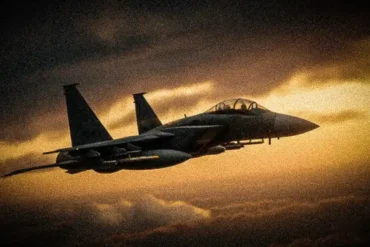
The most striking difference between the F-15 and Su-57 lies in their stealth characteristics. The F-15 Eagle, designed in the 1970s, prioritizes high maneuverability, large payload capacity, and all-weather combat but lacks stealth technology. Its Radar Cross-Section (RCS) ranges from 10 to 15 square meters, making it highly visible to modern radar systems.
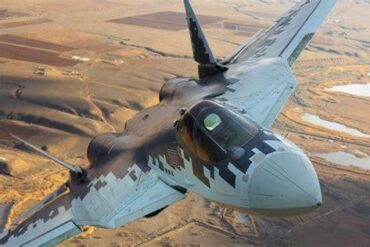
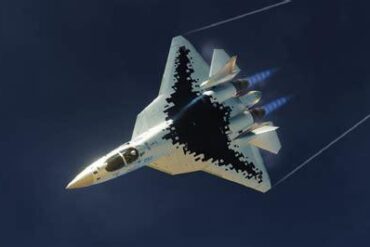
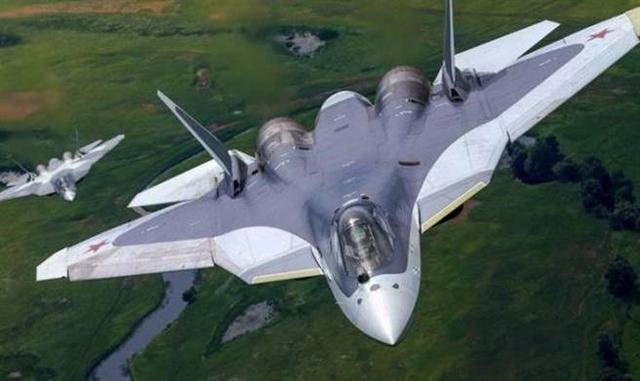
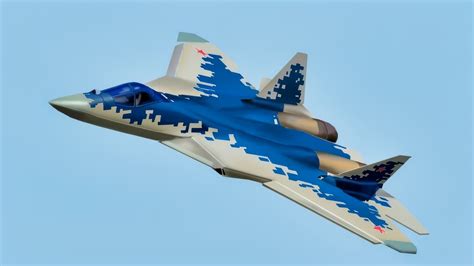
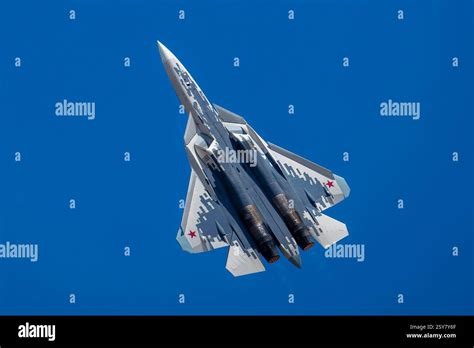
In contrast, the Su-57 Felon incorporates stealth-oriented features, including a diamond-shaped fuselage, internal weapons bays, and radar-absorbent coatings. While its RCS is estimated to be between 0.1 and 1 square meters, making it less stealthy than the F-35 Lightning II (0.001 square meters), it still holds a significant advantage over non-stealth aircraft like the F-15. This reduced RCS allows the Su-57 to engage targets at longer ranges while delaying detection.
Tactical Implications of Stealth
The Su-57’s stealth provides a clear advantage in Beyond Visual Range (BVR) combat, enabling it to detect and engage threats before being detected itself. In contrast, the F-15 relies on advanced radar and infrared sensors to compensate for its lack of stealth. The integration of the APG-63(V)3 AESA radar and the Legion infrared search and track (IRST) pod enhances its ability to detect stealth aircraft like the Su-57.
Avionics and Sensor Systems
F-15 Eagle: Upgraded Legacy Systems
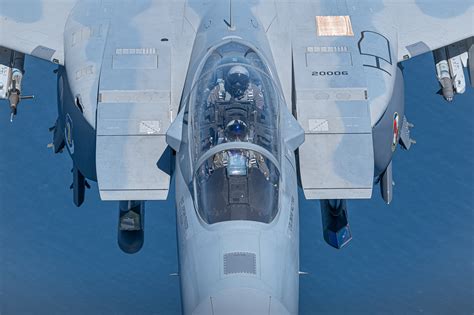
The F-15 was originally equipped with the AN/APG-63 radar, but modern variants such as the F-15EX feature an AN/APG-82 AESA radar capable of tracking multiple targets at extended ranges. It also benefits from integration into the U.S. military’s sensor fusion networks, allowing real-time data sharing with AWACS, satellites, and other aircraft.
Su-57 Felon: Advanced Multi-Sensor Suite
The Su-57 is equipped with the N036 Byelka radar system, which consists of X-band AESA radars in the nose and L-band radars in the wings. This multi-band radar setup enhances its ability to detect stealth aircraft like the F-22 Raptor and F-35 Lightning II, which are optimized against X-band radar detection.
Additionally, the Su-57 features an advanced infrared search and track system (IRST), which allows passive detection of enemy aircraft based on their heat signatures.
Weapons and Combat Effectiveness
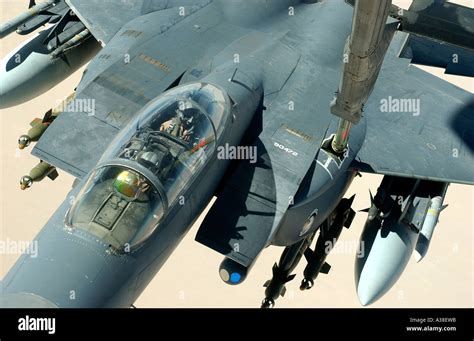
F-15 Eagle: Heavy Payload and Proven Firepower
The F-15 is renowned for its exceptional weapons loadout, with a maximum payload of 7.3 tons. It can carry:
- AIM-120D AMRAAM (160 km range) for BVR combat
- AIM-9X Sidewinder for short-range engagements
- JDAM precision-guided bombs for ground attack missions
Su-57 Felon: Advanced Russian Armament
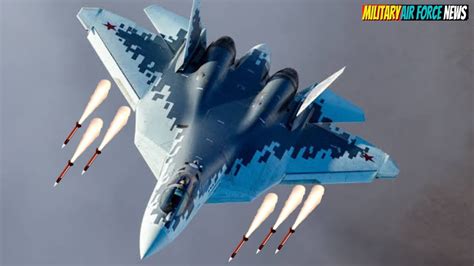
The Su-57 carries weapons primarily in internal bays to maintain its stealth profile. Its arsenal includes:
- R-77M BVR missiles (193 km range), equivalent to the AIM-120D
- R-74M short-range missiles, similar to the AIM-9X
- Kh-59MK2 stealth cruise missiles, capable of striking ground targets
A key difference is that the Su-57 prioritizes a balanced role between air superiority and strike missions, whereas the F-15 is primarily designed for air dominance but has adapted to multi-role operations.
Maneuverability and Dogfighting Capabilities
F-15 Eagle: Classic Aerodynamic Superiority
The F-15 is one of the most maneuverable fourth-generation fighters due to its high thrust-to-weight ratio and large control surfaces. It can sustain high-speed dogfights and perform high-G maneuvers effectively. However, it lacks thrust vectoring, which limits its ability to perform advanced post-stall maneuvers.
Su-57 Felon: Supermaneuverability with Thrust Vectoring
The Su-57 is equipped with “Izdeliye 30” engines, which provide three-dimensional thrust vectoring. This allows the aircraft to perform advanced maneuvers such as:
- Pugachev’s Cobra
- Kulbit (somersault)
- Flat spins and high-angle-of-attack maneuvers
These capabilities give the Su-57 a significant edge in close-range engagements, making it extremely difficult to target with conventional missile-tracking systems.
Combat Readiness and Operational Use
F-15: Battle-Proven Experience
The F-15 has been used extensively in combat, boasting a 104:0 kill ratio. It has been deployed in:
- The Gulf War
- Kosovo War
- Iraq and Afghanistan conflicts
With decades of combat testing, the F-15 remains a reliable platform that continues to receive upgrades.
Su-57: Limited Combat Experience
The Su-57 has seen limited combat deployments, with reports of its use in the Syrian Civil War and Ukraine conflict. However, its full operational potential remains unproven, and questions persist about its stealth coatings, production delays, and electronic warfare systems.
Cost and Maintenance Considerations
- F-15EX: Estimated cost of $80 million per unit, with extensive but costly upgrades
- Su-57: Officially priced at $50 million, though real-world costs could be higher due to maintenance complexity and sanctions on Russian defense industries
Nations considering procurement must weigh the battle-tested reliability of the F-15 against the potential but unproven capabilities of the Su-57.
Conclusion: Cross-Generation Competition
The F-15 and Su-57 represent different eras of air combat. The F-15 Eagle continues to evolve with modern sensors and weaponry, maintaining relevance despite its lack of stealth. The Su-57 Felon, while possessing stealth and supermaneuverability, faces operational and reliability challenges. In a real-world engagement, factors such as supporting electronic warfare, pilot training, and strategic doctrine would ultimately determine the outcome.
FAQ
1. Can the F-15 defeat the Su-57 in combat?
It depends on combat conditions. In BVR engagements, the Su-57’s stealth gives it an advantage, but in a networked combat environment, the F-15EX with AESA radar and data-sharing capabilities could counter the Su-57.
2. Why is the Su-57 considered less stealthy than the F-35?
The Su-57’s design incorporates some stealth features but lacks the strict radar signature management of the F-35, making it more detectable compared to Western fifth-generation aircraft.
3. Which aircraft is more cost-effective?
The Su-57 appears cheaper, but maintenance complexity, sanctions, and unproven reliability could increase long-term costs, whereas the F-15’s well-established maintenance infrastructure ensures continued effectiveness.