For decades, airline WiFi felt like a technological compromise passengers reluctantly tolerated rather than genuinely enjoyed. Travelers boarding long-haul flights prepared themselves for painfully slow download speeds, endless buffering wheels, dropped connections, and expensive access fees that somehow delivered less performance than a crowded airport café. That reality is now collapsing at astonishing speed. In 2026, the global airline industry is racing toward a new competitive frontier where high-speed inflight internet is no longer a luxury perk but a core expectation shaping customer loyalty, premium branding, and even airline profitability.
The catalyst behind this transformation is SpaceX’s Starlink, a low-Earth orbit satellite network that is fundamentally redefining how aircraft connect to the internet while cruising at 35,000 feet. Airlines once dependent on aging geostationary satellite systems are aggressively replacing legacy hardware with sleek, low-profile Starlink terminals capable of delivering broadband-like performance across entire cabins. The result is a dramatic leap in passenger experience, enabling everything from uninterrupted Netflix streaming and live sports to cloud-based productivity tools and real-time gaming.
The speed of adoption has shocked even aviation analysts. Legacy carriers, low-cost airlines, and international flag operators are now engaged in a high-stakes race to modernize fleets before passengers begin viewing outdated connectivity as unacceptable. In an industry where differentiation is notoriously difficult, fast and free WiFi is rapidly becoming one of the few features passengers immediately notice and remember.
The transition is also arriving during a period when airlines are under immense pressure to modernize the cabin experience without dramatically increasing fares. Instead of treating inflight internet as an optional add-on, carriers increasingly see connectivity as the digital backbone of future air travel.
Why Traditional Airline WiFi Failed Passengers For Years
The frustrations passengers experienced with older inflight internet systems were rooted in physics as much as technology. Traditional airline connectivity relied heavily on geostationary satellites, commonly called GEO satellites, positioned roughly 22,000 miles above Earth. While these satellites provided broad coverage areas, the enormous distance between aircraft and orbiting hardware introduced severe latency issues.
Every signal had to travel thousands of miles into space and back again before completing even the simplest task. Opening an email, refreshing a webpage, or sending a message often involved delays exceeding 600 milliseconds. Activities requiring real-time responsiveness became nearly impossible. Video conferencing stuttered endlessly, cloud applications froze, and streaming quality collapsed whenever multiple passengers attempted to use bandwidth simultaneously.
Passengers tolerated these limitations partly because alternatives did not exist. Airlines marketed internet access as a premium convenience, charging fees despite inconsistent performance. Some carriers even restricted activities like streaming entirely because their systems simply could not support the traffic demands of modern digital habits.
Low-Earth orbit technology changes this equation completely. Starlink satellites orbit approximately 340 miles above Earth instead of 22,000. That dramatic reduction in distance slashes latency to below 30 milliseconds in many cases, creating an experience far closer to home broadband than traditional aircraft internet.
This technological leap matters enormously because modern travelers no longer distinguish between online behavior on the ground and online behavior in the air. Passengers expect seamless connectivity everywhere, especially on flights lasting six to fourteen hours. Airlines unable to deliver that experience increasingly risk appearing outdated.
The Technical Advantage That Makes Starlink So Disruptive
The enormous excitement surrounding Starlink is not merely marketing hype. The underlying engineering genuinely represents one of the biggest changes in aviation connectivity since satellite internet first appeared onboard commercial aircraft.
Unlike older satellite systems dependent on a handful of distant GEO satellites, Starlink operates through a massive constellation exceeding 9,000 low-Earth orbit satellites. These satellites move dynamically across the sky, handing off connections between one another while maintaining continuous coverage.
This architecture provides several major advantages:
- Extremely low latency suitable for video calls and gaming
- High bandwidth capacity capable of supporting entire cabins simultaneously
- Improved global coverage, including oceans and remote regions
- Reduced congestion in crowded flight corridors
- Gate-to-gate connectivity with minimal interruption
Perhaps the most important improvement is consistency. Older systems often performed adequately when only a handful of passengers connected. Once dozens of travelers attempted to stream videos or browse simultaneously, speeds collapsed. Starlink’s network design distributes demand across thousands of satellites, dramatically improving scalability.
The physical aircraft hardware has also evolved. The newest Starlink aeronautical terminal weighs approximately 85 pounds and features a low-profile electronically steered antenna mounted atop the fuselage. Compared with older satellite domes, the flatter design reduces aerodynamic drag and helps airlines minimize additional fuel consumption.
Even so, installations remain expensive. Airlines typically spend between $170,000 and $300,000 per aircraft depending on fleet compatibility and retrofit complexity. Despite these costs, carriers increasingly view connectivity investment as unavoidable rather than optional.
United Airlines Is Moving Faster Than Almost Everyone
Among global carriers, United Airlines has emerged as one of the most aggressive adopters of Starlink technology. The airline recognized early that regional aircraft represented one of the weakest points in its passenger experience.
For years, travelers flying smaller regional jets endured either poor connectivity or no WiFi at all. Business travelers especially viewed these aircraft as frustrating technological dead zones despite often paying premium fares on short-haul corporate routes.
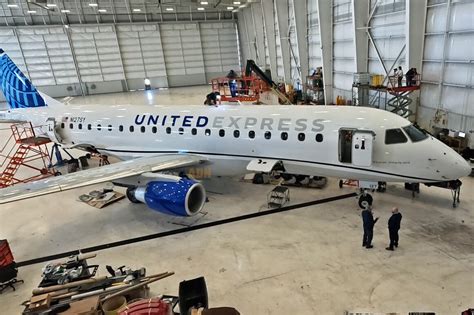
United’s response has been ambitious. By early 2026, the airline had already equipped more than 300 regional aircraft with Starlink systems, including Embraer E175 jets that traditionally lacked competitive onboard internet performance.
The scale of the retrofit operation is staggering. United aims to equip approximately 800 aircraft before the end of 2026, requiring carefully coordinated maintenance schedules across multiple hubs and maintenance facilities.
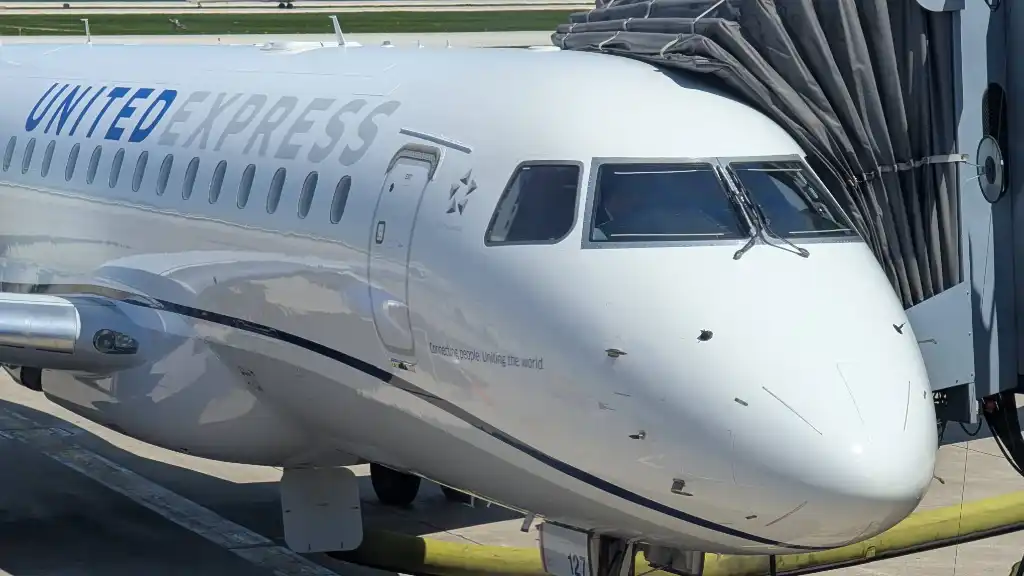
The airline’s strategy extends beyond speed alone. United is aggressively simplifying the passenger experience by removing traditional paywalls and login friction. Rather than forcing passengers through complicated purchase screens, the airline increasingly treats connectivity as an integrated component of the ticket itself.
This approach is particularly effective for corporate travelers who prioritize uninterrupted productivity. Executives can now join video meetings, access cloud systems, and collaborate online almost as if they were sitting in an office rather than crossing the continental United States at cruising altitude.
The competitive implications are enormous. Airlines have spent decades competing through seat comfort, onboard meals, and loyalty programs. Connectivity is becoming equally influential, especially among younger travelers and frequent flyers who consider internet access non-negotiable.
Southwest Airlines Is Reinventing Its Digital Identity
Southwest Airlines built its reputation on simplicity, affordability, and operational efficiency. Yet even Southwest recognized that outdated connectivity risked alienating passengers accustomed to modern digital lifestyles.
Historically, the airline relied on providers such as Anuvu and Viasat, but customer feedback increasingly highlighted inconsistent performance. Travelers wanted reliable streaming, messaging, and entertainment regardless of whether they were flying above Texas, the Rocky Mountains, or remote areas of Mexico.
In response, Southwest announced a major shift toward Starlink in 2026. The airline plans to retrofit more than 300 Boeing 737 aircraft by year’s end, eventually extending the technology across much larger portions of its fleet.
The transition aligns with Southwest’s broader strategic evolution. The carrier is simultaneously experimenting with assigned seating, premium seating concepts, and expanded loyalty offerings. Fast and free internet complements that modernization effort perfectly.
Starlink’s lower-profile antenna system also appeals to Southwest’s operational mindset. Traditional satellite domes created additional drag and weight penalties that directly impacted fuel costs across high-frequency operations. The newer Starlink hardware offers a more aerodynamic solution with reduced efficiency penalties.
Passengers stand to benefit tremendously. Southwest intends to support streaming-heavy applications including live sports, cloud gaming, and high-definition entertainment throughout flights. Partnerships with companies like T-Mobile may subsidize portions of the service, helping the airline provide free access for Rapid Rewards members.
This matters because Southwest increasingly competes not only with ultra-low-cost carriers but also with premium airlines targeting business travelers. Reliable internet access helps close that gap.
Qatar Airways And Global Airlines Are Raising The Stakes
The Starlink revolution is not confined to North America. International airlines are rapidly embracing low-Earth orbit connectivity as a defining feature of premium travel.
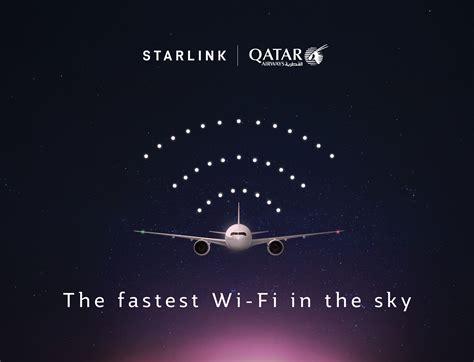
Few carriers illustrate this trend better than Qatar Airways. Widely regarded as one of the world’s most luxurious airlines, Qatar is integrating Starlink across widebody aircraft including Boeing 777s and Airbus A350s.
For Qatar Airways, high-speed connectivity perfectly complements the airline’s celebrated Qsuite business-class product. Premium travelers increasingly expect aircraft cabins to function as mobile offices, entertainment hubs, and personal living spaces simultaneously.

The implications for long-haul productivity are profound. A passenger flying from Doha to New York can now maintain near-continuous digital engagement during a fourteen-hour journey. Lost productivity time — historically accepted as unavoidable during international travel — shrinks dramatically.
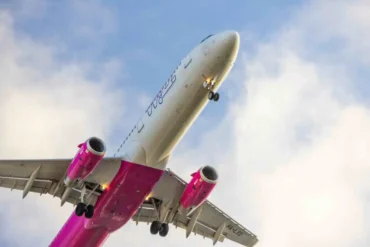
In Asia, Japanese airline Zipair became one of the region’s earliest Starlink adopters. The carrier aggressively targets tech-savvy transpacific travelers flying between Tokyo and North America. Offering free high-speed internet helps differentiate the airline within an intensely competitive long-haul market.
Elsewhere, carriers including British Airways, Lufthansa, and Air New Zealand are actively testing or deploying next-generation LEO systems. European airlines especially see connectivity as essential for competing against increasingly efficient rail networks on short-haul routes.
Many airlines are also embracing Airbus’s HBCplus platform, which enables carriers to switch between satellite providers with minimal hardware changes. This flexibility protects airlines from technological obsolescence while future-proofing billion-dollar fleet investments.
Why Budget Airlines Are Still Hesitating
Not every airline is eager to join the Starlink race. Ultra-low-cost carriers remain deeply skeptical about whether premium connectivity aligns with their business models.
For airlines like Ryanair and Spirit Airlines, every kilogram of additional aircraft weight translates directly into higher operating costs. When multiplied across hundreds of aircraft operating multiple daily flights, even minor fuel penalties become financially significant.
Installation costs present another obstacle. Outfitting an entire fleet can require hundreds of millions of dollars in capital expenditure before generating meaningful returns. For carriers obsessed with minimizing ticket prices, those economics remain difficult to justify.
Ryanair CEO Michael O’Leary has repeatedly argued that most passengers prioritize cheaper fares over inflight internet. From his perspective, customers would rather save money on tickets than gain access to streaming services while airborne.
That philosophy may eventually face pressure as passenger expectations continue evolving. Younger travelers increasingly assume constant connectivity everywhere they go. Over time, airlines lacking WiFi may begin appearing technologically outdated, even within budget travel segments.
Still, for now, the divide remains clear. Premium and legacy carriers largely view Starlink as essential infrastructure, while ultra-low-cost airlines continue viewing it as an unnecessary operational burden.
The Battle Between Starlink And Amazon Project Kuiper
Although Starlink currently dominates aviation headlines, competition is rapidly approaching. Amazon’s Project Kuiper is preparing for full commercial deployment beginning in 2027, setting the stage for an intense battle over airline connectivity contracts.
Airlines welcome this competition enthusiastically because it promises lower bandwidth costs, improved hardware innovation, and greater flexibility. Carriers no longer want to depend entirely on a single provider controlling critical digital infrastructure.
JetBlue has already committed to integrating Project Kuiper technology in future fleet upgrades, signaling that airlines are carefully evaluating alternatives even while Starlink enjoys early momentum.
The emergence of competing networks may ultimately accelerate industry-wide adoption. Lower prices could make high-speed inflight internet financially viable even for more cost-sensitive airlines.
At the same time, satellite internet is evolving beyond passenger entertainment alone. Airlines increasingly envision aircraft as fully connected nodes within global digital ecosystems.
Future applications may include:
- Real-time baggage tracking
- Predictive maintenance monitoring
- Biometric passenger processing
- Dynamic crew coordination
- Instantaneous rebooking during disruptions
- Personalized onboard retail experiences
Connectivity is becoming deeply integrated into airline operations themselves, not merely passenger convenience.
The End Of Inflight Dead Zones
One of the most transformative aspects of modern LEO connectivity is the elimination of traditional coverage gaps. Older satellite systems frequently struggled over oceans, polar regions, mountainous terrain, or sparsely populated areas.
Starlink’s expanding constellation dramatically improves reliability across previously difficult regions. Airlines can now maintain strong connectivity over transoceanic routes and remote corridors that once represented digital black holes.
This capability is especially valuable for carriers operating long-haul international flights where passengers spend ten or more hours onboard. Consistent internet access across entire journeys fundamentally changes passenger expectations about what air travel should feel like.
The psychological effect is equally important. Modern travelers increasingly experience anxiety when disconnected from work, communication, or entertainment for extended periods. Reliable onboard internet reduces that friction and makes flying feel less isolating.
Airlines understand this clearly. Connectivity has shifted from novelty to emotional reassurance. A passenger boarding a Starlink-equipped aircraft knows they can remain digitally connected to family, colleagues, news, and entertainment throughout the flight.
That expectation will likely become universal within the next decade.
Airline WiFi Is Becoming A New Battlefield For Passenger Loyalty
The airline industry has always searched for ways to differentiate largely similar products. Seats, schedules, loyalty programs, and cabin service matter, but competitors frequently imitate one another quickly.
High-speed connectivity represents something more powerful because passengers immediately notice it and actively use it throughout the journey. Unlike subtle seat improvements or revised meal options, internet performance is impossible to hide.
A fast connection transforms the emotional rhythm of flying itself. Travelers no longer feel trapped in digital limbo for hours at a time. They can work, relax, communicate, stream, and remain productive continuously.
That transformation explains why airlines are investing so aggressively despite substantial upfront costs. The carriers moving fastest understand that inflight internet is becoming part of their brand identity.
In 2026, the airlines winning the Starlink race are not merely upgrading WiFi. They are redefining what passengers expect from modern air travel altogether.