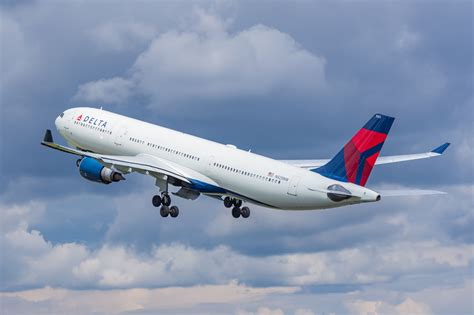
The race to dominate inflight connectivity has quietly transformed into one of the most strategically significant battles in modern aviation, and Delta Air Lines’ decision to pivot toward Amazon’s low Earth orbit (LEO) network signals far more than a routine vendor change. Beneath the surface, this move reveals a calculated shift toward deep digital integration, scalable infrastructure, and long-term operational control, rather than simply chasing headline-grabbing internet speeds.
For years, inflight WiFi has been marketed as a passenger perk—an optional extra designed to make long journeys more tolerable. That framing is now obsolete. Airlines like Delta are treating connectivity as core infrastructure, as essential as engines, avionics, or fuel efficiency. In this new paradigm, the real value lies not just in faster browsing, but in how connectivity reshapes data flow, operational intelligence, and passenger experience at scale.
What makes Delta’s move particularly compelling is not that it rejected Starlink—a system already proven in aviation—but that it chose a less mature yet more strategically aligned platform in Amazon’s Project Kuiper. That decision hints at a future where airlines no longer bolt connectivity onto aircraft, but instead weave it into the very fabric of airline operations.
Why Delta Walked Away From Starlink’s Early Lead
At first glance, turning away from Starlink might seem counterintuitive. The network has already demonstrated impressive performance metrics, including low latency and high throughput, and has secured partnerships with multiple global carriers. In a purely technical comparison, Starlink offers a compelling, ready-to-deploy solution.
But Delta’s decision wasn’t about choosing the fastest option today—it was about selecting the most adaptable ecosystem for tomorrow.
Amazon’s Kuiper platform introduces a fundamentally different philosophy. Rather than focusing solely on satellite bandwidth, it emphasizes end-to-end integration with cloud services, data pipelines, and enterprise systems. This distinction matters enormously for an airline operating nearly 1,000 aircraft across diverse mission profiles, from short-haul domestic hops to ultra-long-haul international routes.
A system that works brilliantly for one aircraft type or route structure may struggle to scale across such diversity. Delta appears to have prioritized a platform capable of evolving alongside its operations, even if that meant sacrificing short-term maturity.
This is less a rejection of Starlink and more a declaration of intent: connectivity must serve the airline, not just the passenger.
Amazon’s Aviation Antenna: Small Hardware, Massive Implications
At the center of Amazon’s aviation offering sits a deceptively simple piece of hardware: a low-profile, electronically steered antenna designed specifically for aircraft integration. Measuring just 2.6 inches in height, the antenna minimizes aerodynamic drag—a detail that might sound trivial but carries measurable implications for fuel consumption over thousands of flights.
Traditional satellite systems rely on mechanically steered antennas, which physically move to track satellites. These systems introduce weight, complexity, and maintenance overhead, all of which scale unfavorably across large fleets. Amazon’s phased-array design eliminates moving parts entirely, replacing them with electronic beam steering that maintains continuous connectivity without mechanical wear.
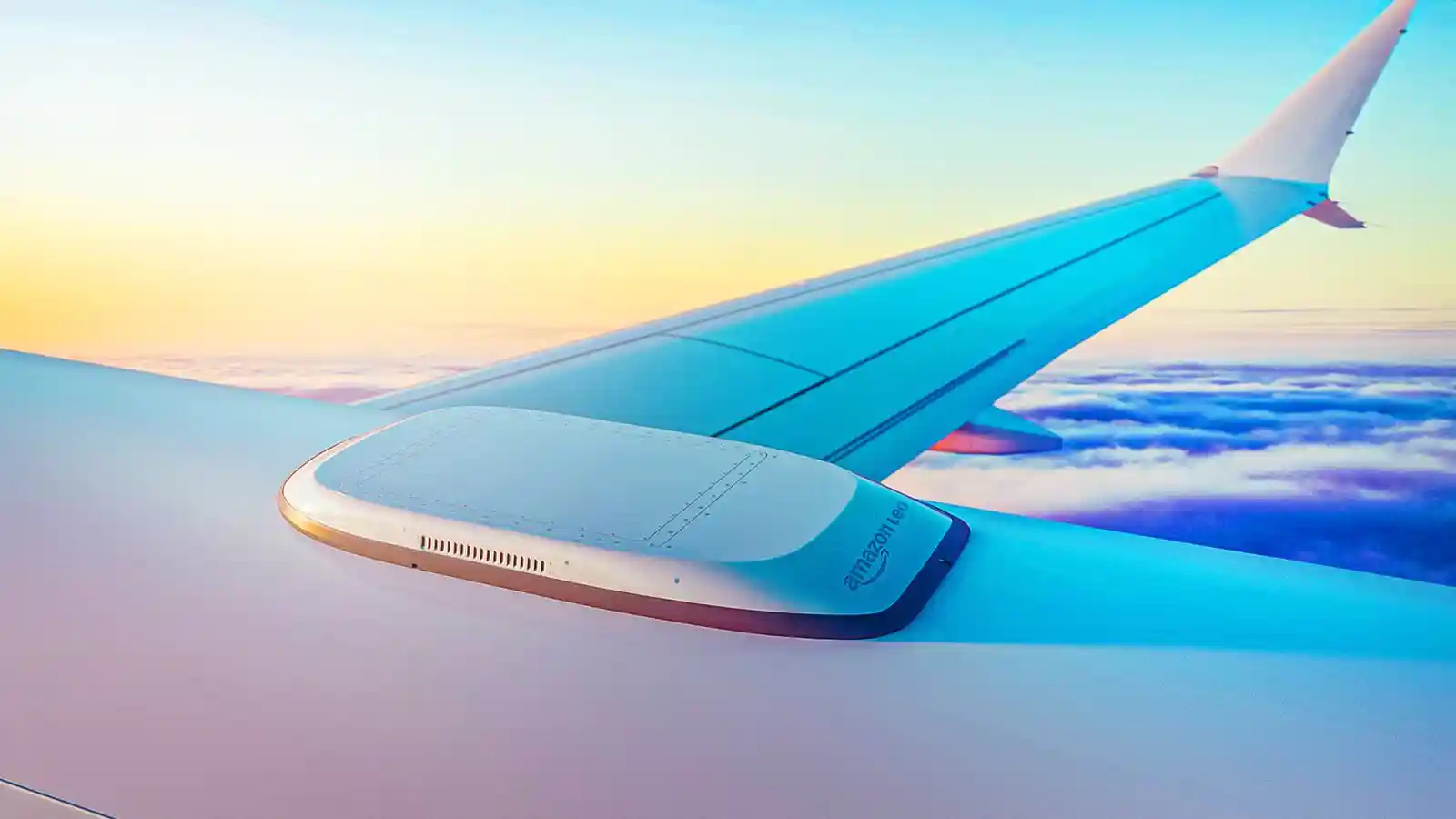
The result is a system that aligns neatly with airline priorities: reliability, efficiency, and reduced lifecycle costs. Fewer moving components mean fewer failures, less downtime, and lower maintenance expenses—factors that can quietly save millions over time.
Performance is equally ambitious. Amazon targets download speeds up to 1 Gbps and upload speeds reaching 400 Mbps, numbers that push inflight connectivity into territory once reserved for ground-based fiber networks. This leap is not مجرد incremental; it fundamentally changes what passengers—and airlines—can do in the air.
Installation Speed: The Underrated Competitive Advantage
If there’s one bottleneck that has historically slowed the adoption of new inflight technology, it’s installation. Retrofitting aircraft with connectivity systems often requires extended downtime, complex certification processes, and significant operational disruption.
Amazon’s approach tackles this challenge head-on with a design philosophy centered on rapid deployment. The Aviation Antenna integrates modem functionality and simplifies system architecture, enabling installation in as little as a single day.
That number carries enormous weight when multiplied across Delta’s fleet. With nearly 1,000 aircraft in service and hundreds slated for upgrades, even a one-day reduction per aircraft translates into massive gains in fleet availability and revenue continuity.
Beyond initial rollout, simplicity continues to pay dividends. Systems with fewer components are easier to maintain, upgrade, and troubleshoot, allowing Delta to sustain high aircraft utilization rates without sacrificing reliability.
In an industry where margins are razor-thin and schedules tightly optimized, this kind of operational efficiency isn’t just beneficial—it’s transformative.
From WiFi to Cloud: The Real Power Behind Kuiper
The most profound shift enabled by Amazon’s platform lies not in the cabin, but behind the scenes. By connecting aircraft directly to Amazon Web Services (AWS), Kuiper transforms inflight connectivity into a real-time data backbone.
This capability unlocks a new generation of operational intelligence. Aircraft systems can continuously stream data to ground teams, enabling predictive maintenance that identifies potential issues before they escalate into costly delays or cancellations. Flight paths can be dynamically adjusted using live weather and traffic data, improving both fuel efficiency and on-time performance.
Inside the cabin, the impact is equally compelling. Passengers gain access to a connectivity experience that mirrors life on the ground, supporting high-definition streaming, cloud-based work, and real-time collaboration tools. More importantly, airlines can personalize services using live data, tailoring content and offers to individual travelers in ways that were previously impossible.
For Delta, which has invested heavily in its SkyMiles ecosystem and digital platforms, this level of integration represents a natural extension of its broader strategy: creating a seamless, data-driven travel experience from booking to arrival.
A Fleet-Wide Transformation Across 500 Aircraft
Delta’s commitment to deploying Amazon’s connectivity system across 500 aircraft starting in 2028 underscores the scale of its ambition. This is not a pilot program or limited trial—it’s a fleet-wide transformation that will redefine the airline’s digital capabilities.
Executing such a rollout requires careful coordination across multiple aircraft types, each with unique configurations and operational demands. From Airbus A321neos operating high-frequency domestic routes to A350-900 widebodies flying ultra-long-haul missions, the system must deliver consistent performance under vastly different conditions.
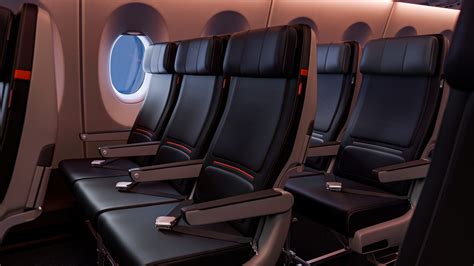
For passengers, the implications are immediate and tangible. Faster speeds and lower latency enable a broader range of applications, from seamless video conferencing to uninterrupted streaming. As Delta continues to position WiFi as a complimentary service for loyalty members, the upgrade becomes not just a feature, but a defining element of the airline’s value proposition.
The expectation gap between ground and air connectivity is rapidly closing—and Delta is positioning itself to eliminate it entirely.
Rising Competition in the LEO Connectivity Arena
Delta’s partnership with Amazon intensifies competition in an already crowded LEO satellite market. Starlink remains a formidable player, with established airline partnerships and a growing network of satellites delivering proven performance.
But Amazon brings something different to the table: a vertically integrated ecosystem combining satellites, cloud computing, and global infrastructure expertise. This combination has the potential to reshape the competitive landscape, pushing rivals to innovate not just in speed, but in integration, scalability, and cost efficiency.

As more airlines evaluate their connectivity strategies, the decision will increasingly hinge on long-term strategic alignment rather than short-term performance metrics. Delta’s move may well influence the broader industry, encouraging carriers to think beyond bandwidth and toward holistic digital ecosystems.
The Future of Inflight Connectivity Is Already Taking Shape
Delta Air Lines’ decision to align with Amazon’s Kuiper platform marks a turning point in how the aviation industry approaches connectivity. This is no longer about offering passengers a faster way to browse the internet—it’s about building a fully connected aircraft that functions as a node within a global data network.
The implications extend across every aspect of airline operations, from maintenance and flight planning to customer experience and revenue generation. Connectivity becomes the thread that ties everything together, enabling a level of coordination and intelligence that was previously out of reach.
As deployment begins in 2028 and scales across hundreds of aircraft, the industry will be watching closely. If successful, Delta’s strategy could redefine the standard for inflight connectivity, shifting expectations from “good enough” to seamlessly integrated, always-on, and indistinguishable from life on the ground.
And in that future, the real winner won’t just be the airline with the fastest WiFi—it will be the one that understands how to turn connectivity into a competitive advantage woven through every layer of its operation.