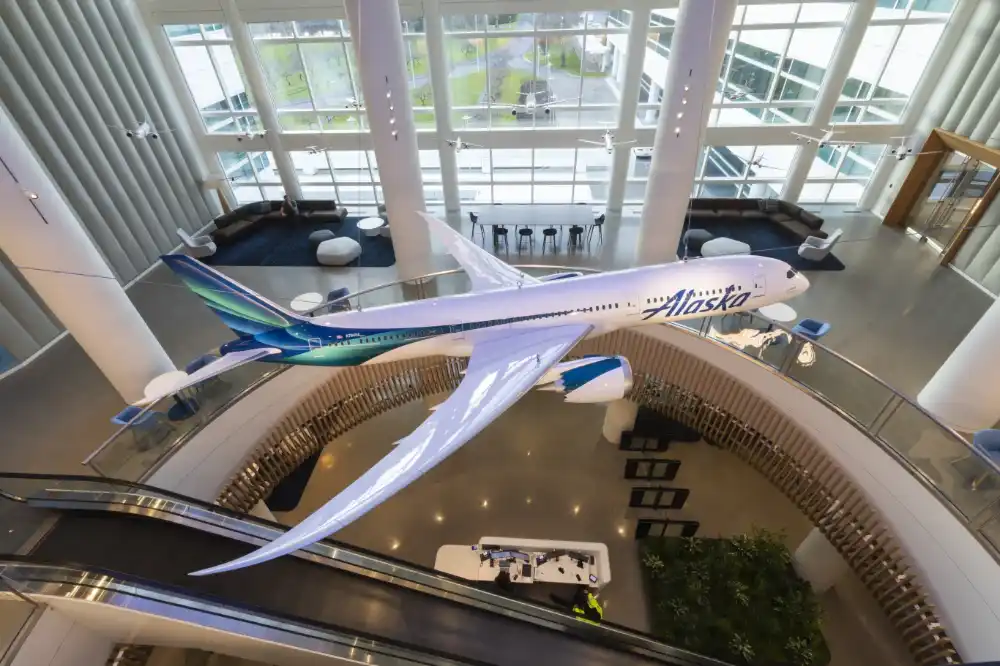
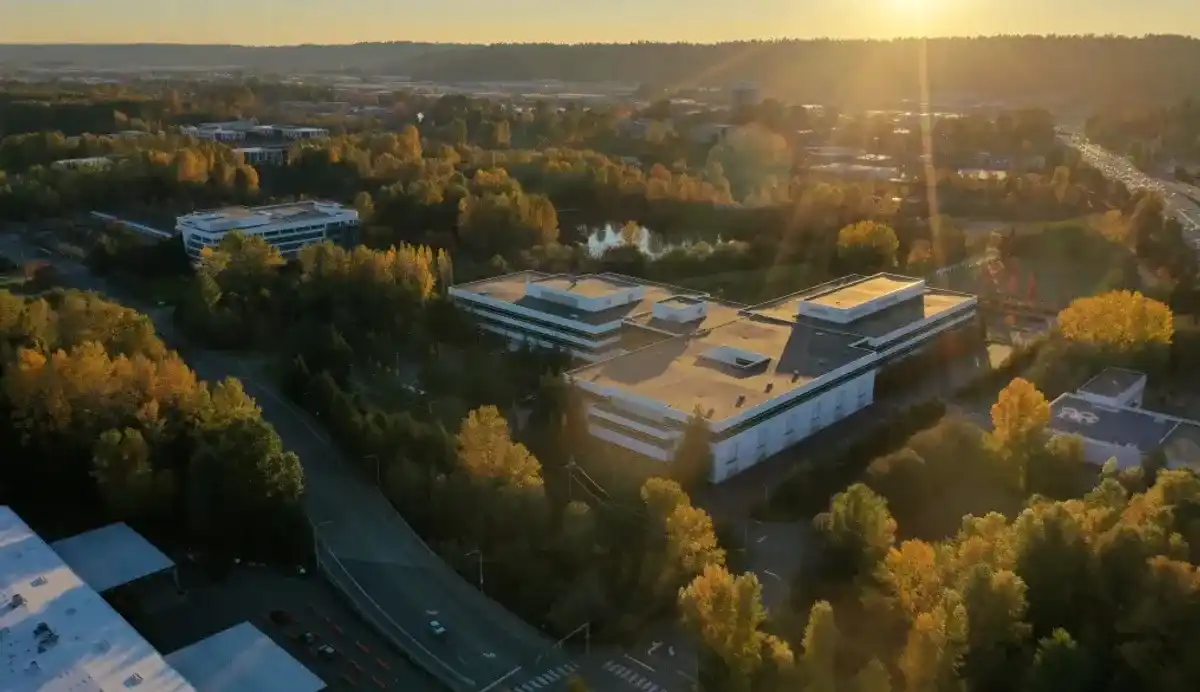
Alaska Airlines has opened the doors to what may be one of the most consequential investments in its nearly century-long history: a $200 million Global Training Center in Renton, Washington, designed to reshape how the airline trains, integrates, and scales its workforce. This is not just a new building with classrooms. It is a strategic statement about where the airline is heading, how it plans to grow, and how seriously it takes the craft of aviation in an era defined by complexity, technology, and fierce competition.
Spanning 660,000 square feet across three stories, the campus occupies a former Boeing facility, a detail that feels symbolically appropriate. Where aircraft were once engineered, Alaska Airlines is now engineering people—pilots, flight attendants, customer service agents, and operational leaders—under one roof. Located only minutes from Alaska’s Seattle headquarters, the center is positioned to function as the airline’s operational heartbeat.
The scale alone signals ambition. Thousands of employees will cycle through the campus every week, while roughly 550 staff members from 14 workgroups will be permanently based on site. For Alaska Airlines, training is no longer a decentralized necessity. It has become a centralized, purpose-built ecosystem.
A Campus Designed Around People, Not Just Performance
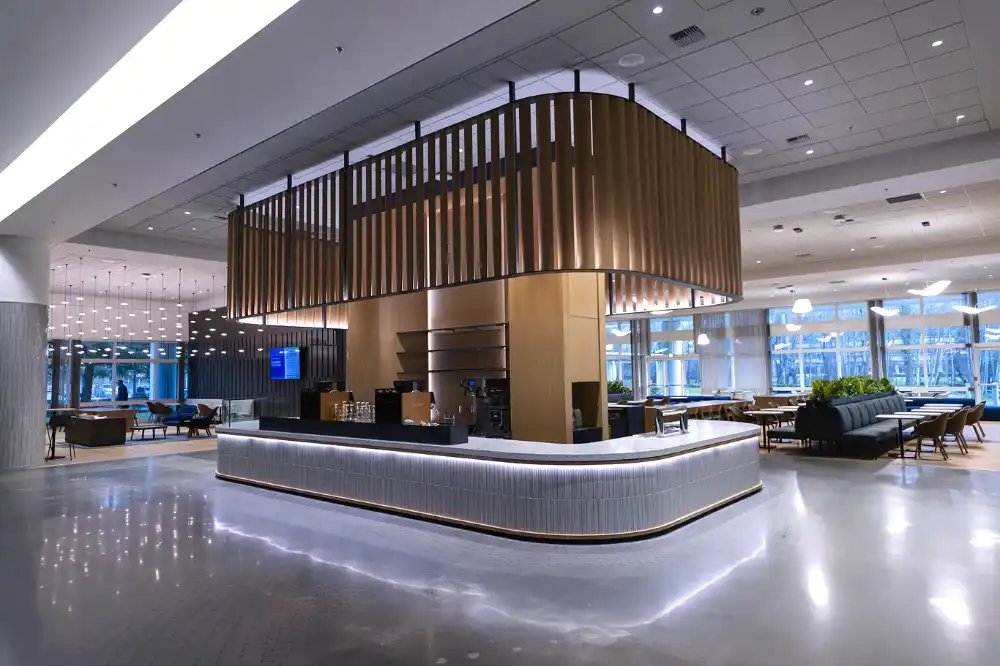
The design of the Global Training Center draws heavily from the Pacific Northwest, blending wood textures, natural light, and a color palette inspired by forests and mountains. This is not aesthetic indulgence. It reflects a deliberate attempt to make long, intensive training days feel human and grounded, rather than clinical.
Inside, the numbers are striking: 89 classrooms, 34 conference rooms, and a 140-seat auditorium anchor the academic core of the campus. Yet the real story lies in how these spaces are used. Alaska Airlines has intentionally designed the facility to encourage cross-functional interaction, an approach that becomes especially important as the airline deepens its integration with Hawaiian Airlines.
For the first time in Alaska’s 95-year history, frontline employees across different workgroups—and from two airlines—will train together in a single location. According to Chief Operating Officer Jason Berry, this marks a fundamental cultural shift, breaking down silos that traditionally separate cockpit, cabin, and ground operations.
Simulating Reality at Full Scale
The Global Training Center moves far beyond lecture-based instruction. It is a fully immersive environment built to replicate the pressures and unpredictability of real airline operations.
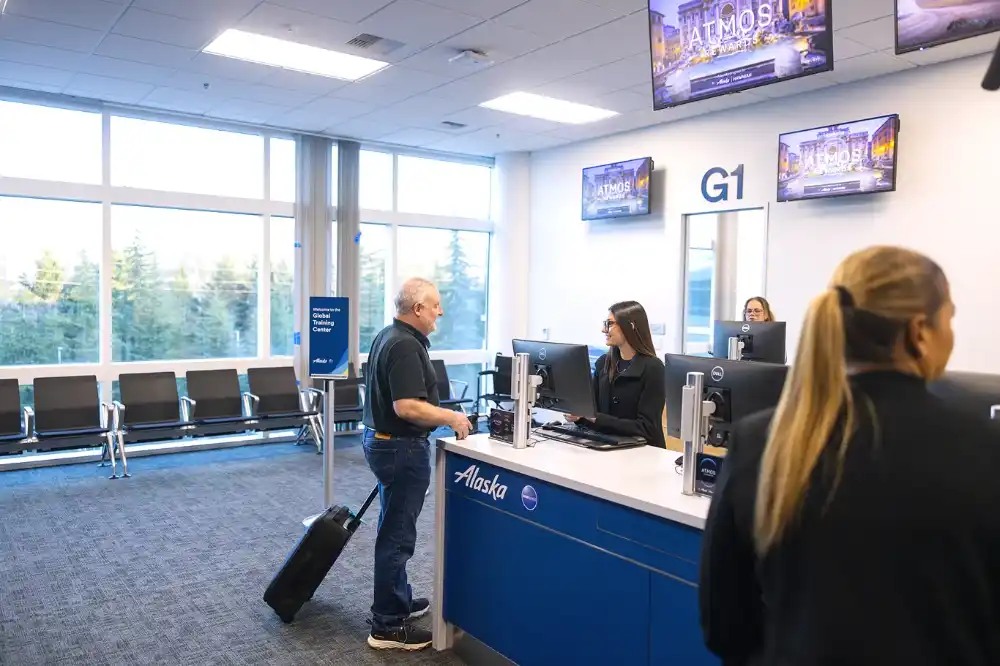
Customer service agents train at full-scale mock boarding gates and departure lounges, complete with counters, seating areas, and spatial layouts that mirror live airports. Flight attendants have access to five mock aircraft bays engineered for emergency procedure drills, as well as a fully functional aircraft galley where service routines can be practiced down to the smallest detail.
This realism matters. Training errors made here never reach passengers, and muscle memory built here carries directly onto the aircraft.
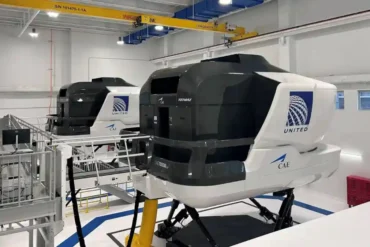
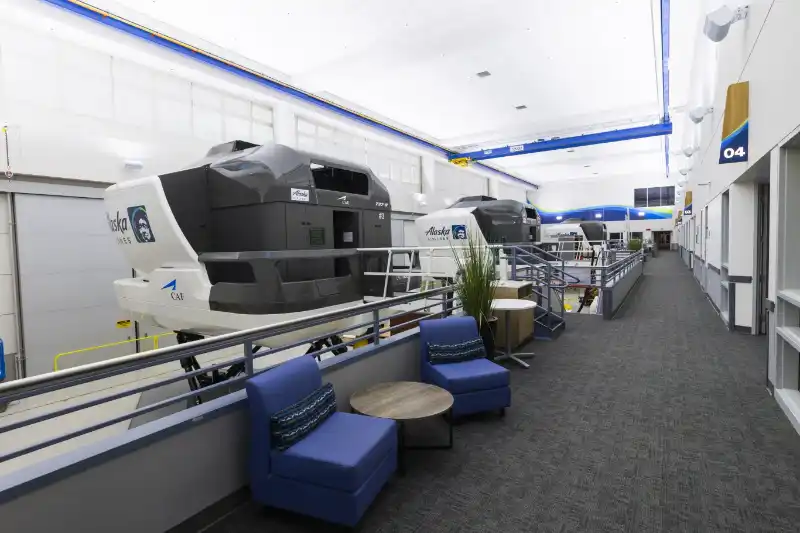
At the center of the facility’s technical capabilities are ten full-motion Level D flight simulators, the highest certification standard available. Nine are dedicated to the Boeing 737 fleet, the backbone of Alaska Airlines’ operations. The tenth is a brand-new Boeing 787 Dreamliner simulator, signaling a clear pivot toward widebody, long-haul flying.
Preparing for the Boeing 787 Era
The inclusion of a 787 simulator is not speculative. Alaska Airlines has already taken delivery of its first 787-9 Dreamliners, with additional aircraft transferring from Hawaiian Airlines later this year. These jets will underpin the airline’s first-ever transatlantic services, including Seattle–London Heathrow and Seattle–Paris, launching in the spring.
Pilots transitioning to the 787 face a radically different aircraft philosophy, from fly-by-wire systems to long-haul crew management. Training for this shift cannot be improvised. The Renton campus ensures that Alaska can control every variable, from initial type ratings to recurrent training, without relying on external facilities.
Adding another layer, the airline has integrated virtual reality (VR) training rooms into the pilot curriculum. These systems allow crews to rehearse procedures, cockpit flows, and abnormal scenarios in a highly repeatable, low-risk environment. VR does not replace full-motion simulators, but it dramatically expands training flexibility and frequency.
More Than Classrooms: A Working Community
What sets the Renton campus apart is that it functions as a daily workplace, not a sterile training hall. Employees have access to a cafeteria, café and bar, a fitness center, and even a one-mile outdoor walking trail that loops around the eight-acre site. These amenities are not perks for show. They are designed to support long training cycles and reduce burnout in a high-stakes industry where human performance directly affects safety.
The building itself was acquired in 2024 from Unico Properties, having previously belonged to Boeing. Alaska Airlines has stated that training in Renton will complement—not replace—existing pilot and flight attendant facilities in Honolulu, particularly for Pacific operations.
A Strategic Bet on the Future
This campus is a physical pillar of Alaska’s broader “Alaska Accelerate” strategic plan, which aims to streamline the integration with Hawaiian Airlines and solidify the combined group as the fourth-largest airline in the United States. Training, often treated as an operational cost, is being reframed as a competitive advantage.
In an industry facing pilot shortages, evolving aircraft technology, and rising passenger expectations, Alaska Airlines is betting that better-trained, better-integrated employees will translate into operational resilience and brand loyalty. The Renton Global Training Center is not about today’s schedule or next quarter’s results. It is about building institutional muscle for decades to come.
In aviation, steel and software matter. But people still sit at the controls, open the doors, manage the cabin, and solve problems at 35,000 feet. Alaska Airlines has just built a place designed entirely around that reality—and made it unmistakably clear that training is no longer backstage. It is center stage.